Forklift Fleet Decarbonization & Scope 1 Reduction: An ESG Manager’s Guide to Li-ion Electrification, Carbon Audits, and ROI
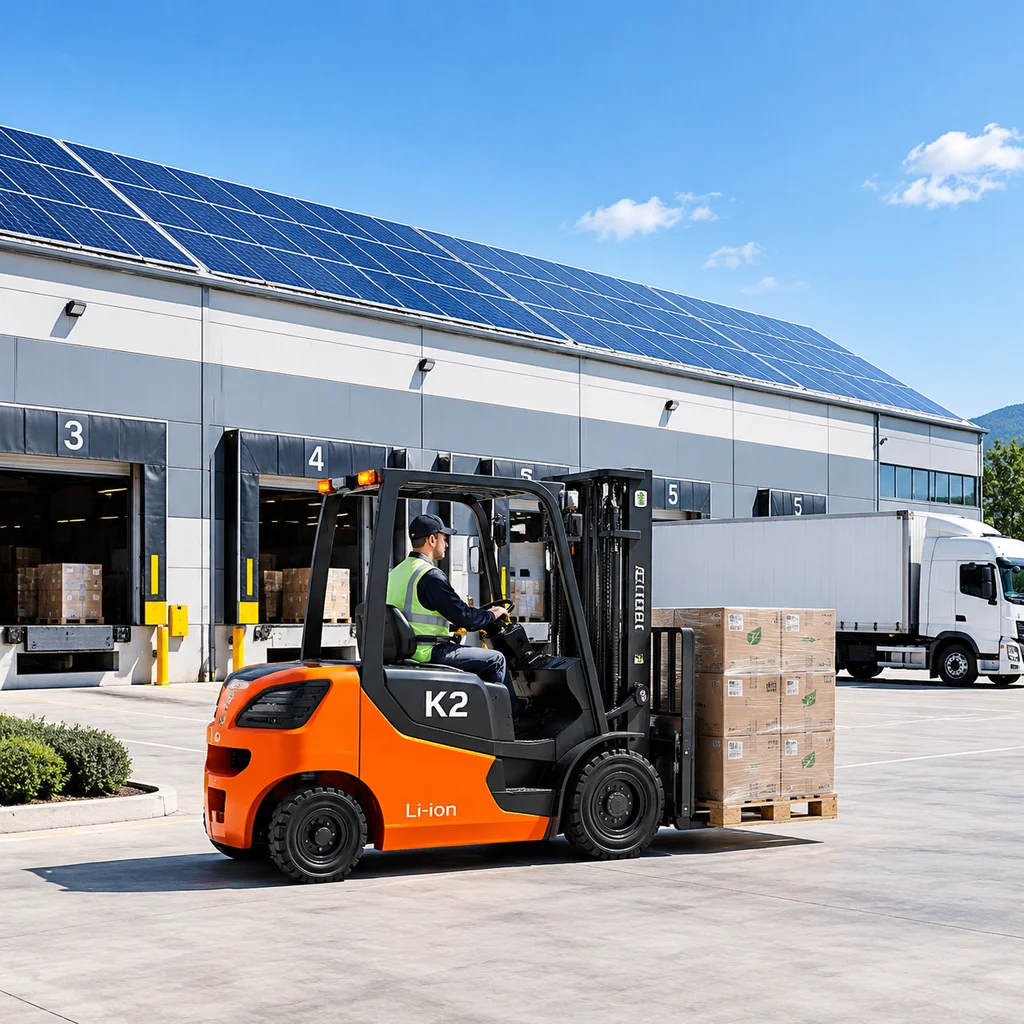
Forklift Fleet Decarbonization: An ESG Manager’s Guide Forklift fleet decarbonization is a practical pathway to reduce Scope 1 combustion emissions, improve indoor air quality, control energy costs, and strengthen ESG reporting. This guide from Sarah Johnson, Sustainability and Environmental Affairs Manager at LT FORKLIFT, connects Li-ion electrification, carbon audits, solar microgrids, and green-fleet ROI. Scope […]
Diesel vs. Lithium-Ion Forklifts for Heavy & Outdoor Operations: The Field Guide to Duty Cycles, Weather Limits, and 5-Year TCO
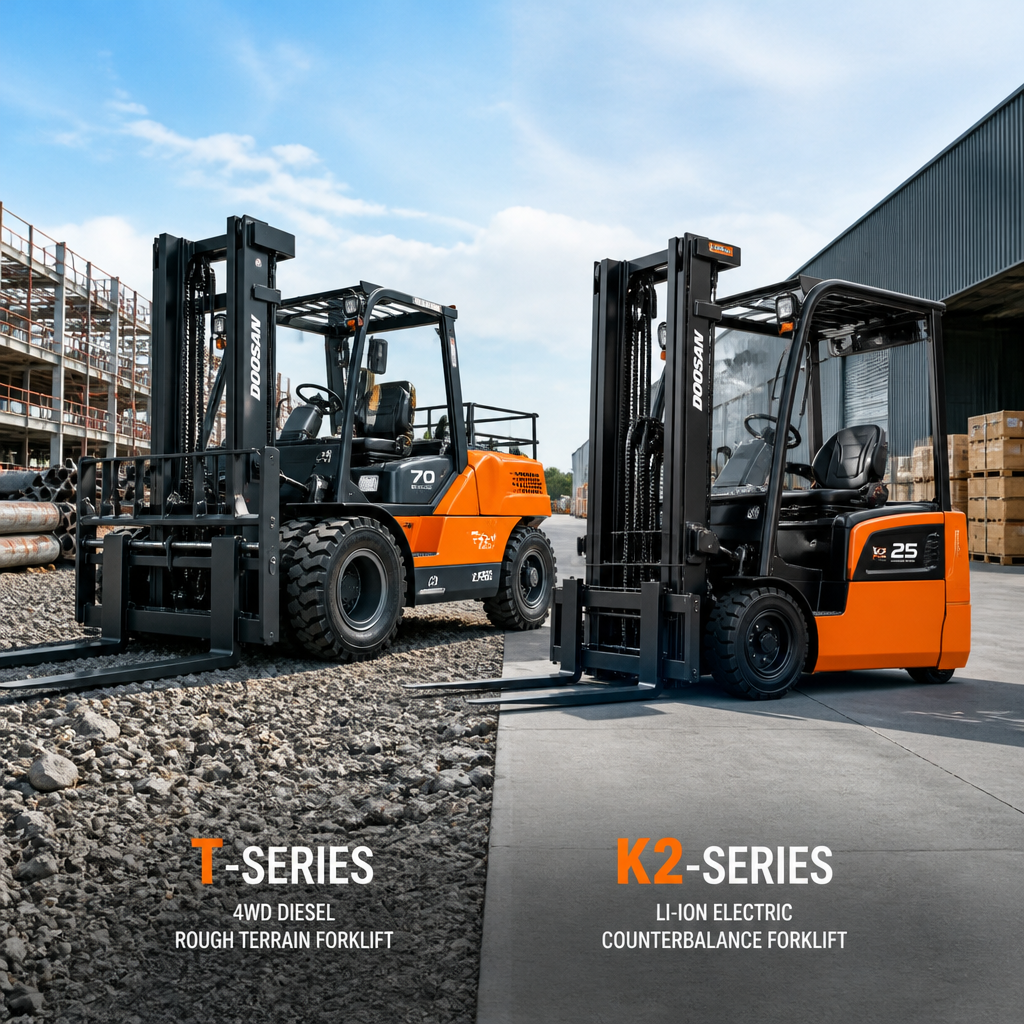
By David Liu, Product Applications Specialist, LT Forklift Every week, an operations manager somewhere asks us a version of the same question: should we buy diesel or lithium-ion forklifts for our yard? The honest answer is that there is no universal winner — but there is a correct answer for your specific duty cycle, climate, […]
The Truth About Forklift Load Capacity & Derating: How Load Centers, Mast Heights, and Attachments Change True Lifting Power
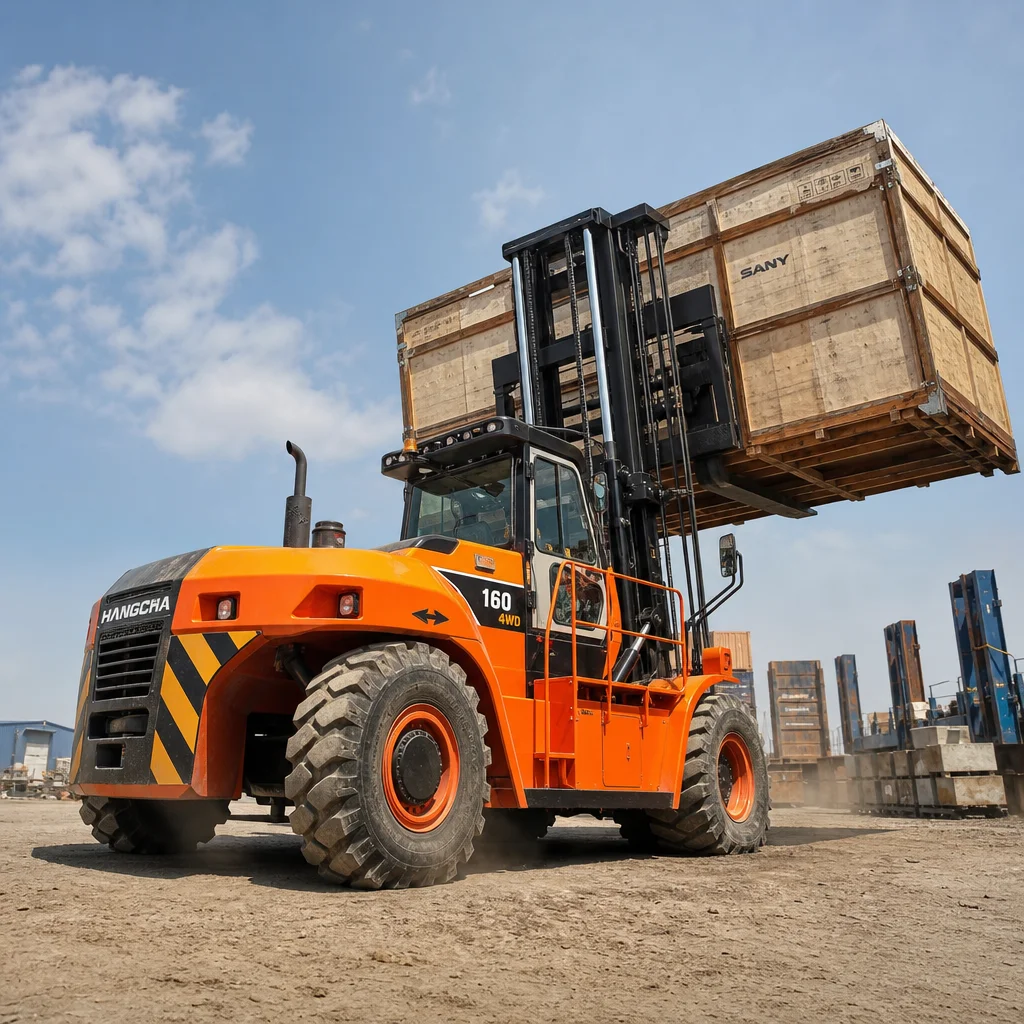
Every forklift leaves the factory with a data plate that states a rated capacity. That number is real, but it is also conditional. It assumes a specific load center, a specific lift height, a specific mast, and no attachment bolted to the carriage. Change any one of those variables and the true lifting power of […]
4WD Rough Terrain vs. Industrial Counterbalance Forklifts: A Field Application Guide to Terrain Matching, Sizing, and TCO
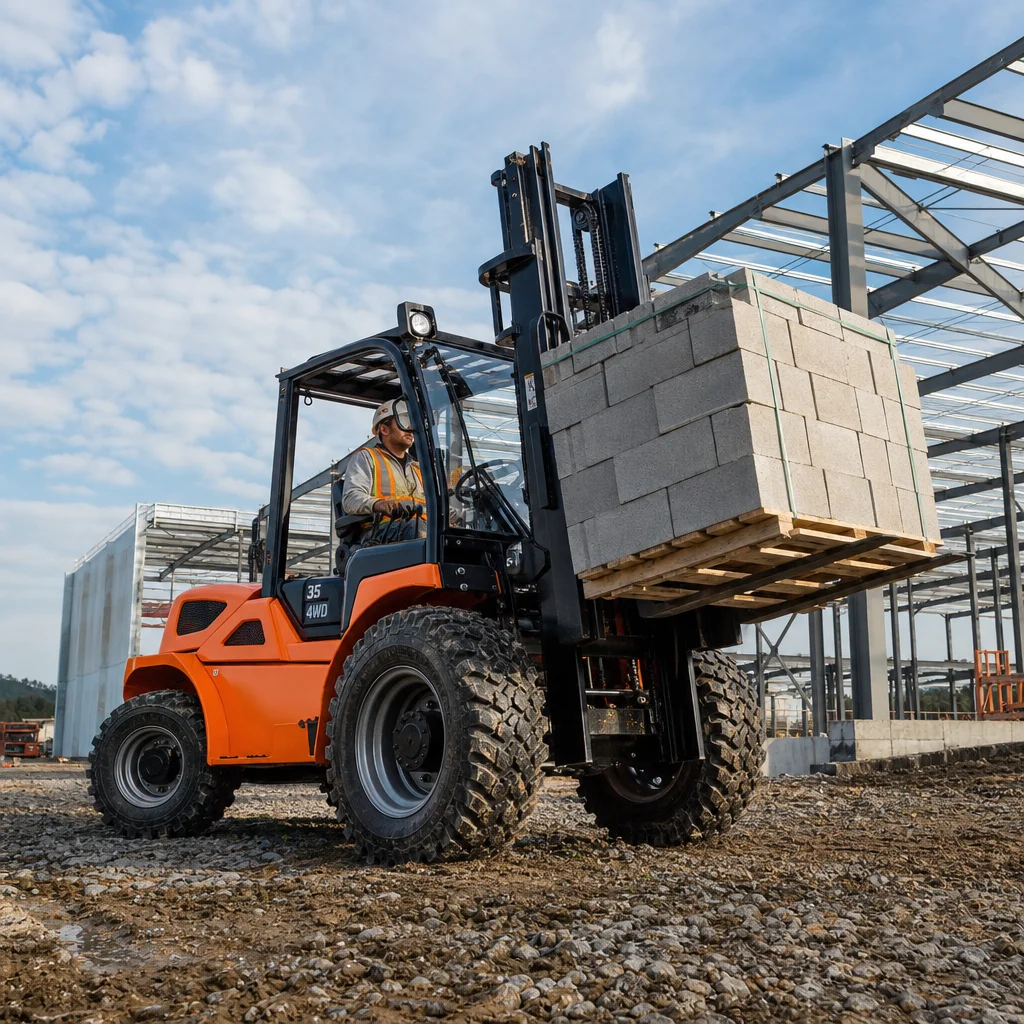
Choosing between a 4WD rough terrain forklift and an industrial counterbalance forklift is rarely a question of which machine is “better.” It is a question of which machine matches your terrain, load profile, duty cycle, and total cost of ownership (TCO). Get that match wrong and you pay for it every shift — in stuck […]
3–5 Ton Rough-Terrain Forklift Buying Guide: How to Choose an LT-Forklift for Real Worksites
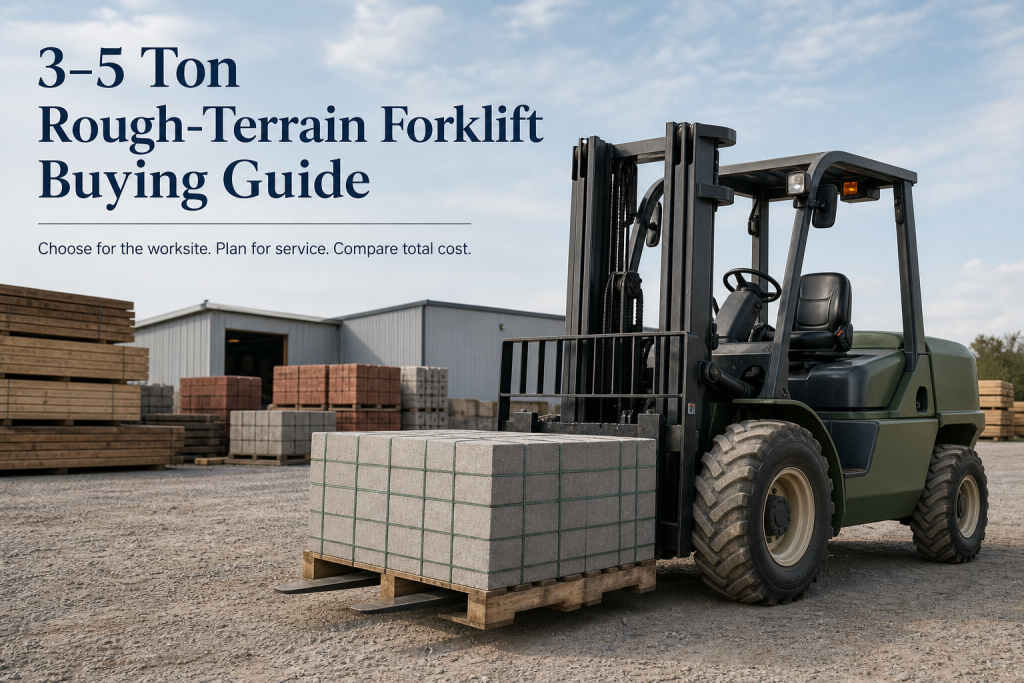
Quick answer: what should buyers prioritize in a 3–5 ton rough-terrain forklift? A good 3-5 ton rough terrain forklift buying guide starts with the worksite rather than the brand name. Buyers should first define the real load, load center, lift height, terrain, daily operating hours, attachment, transport method, and local compliance requirements. Then they should […]
Vertical Mast Rough Terrain Forklift: Where It Fits and How to Specify One
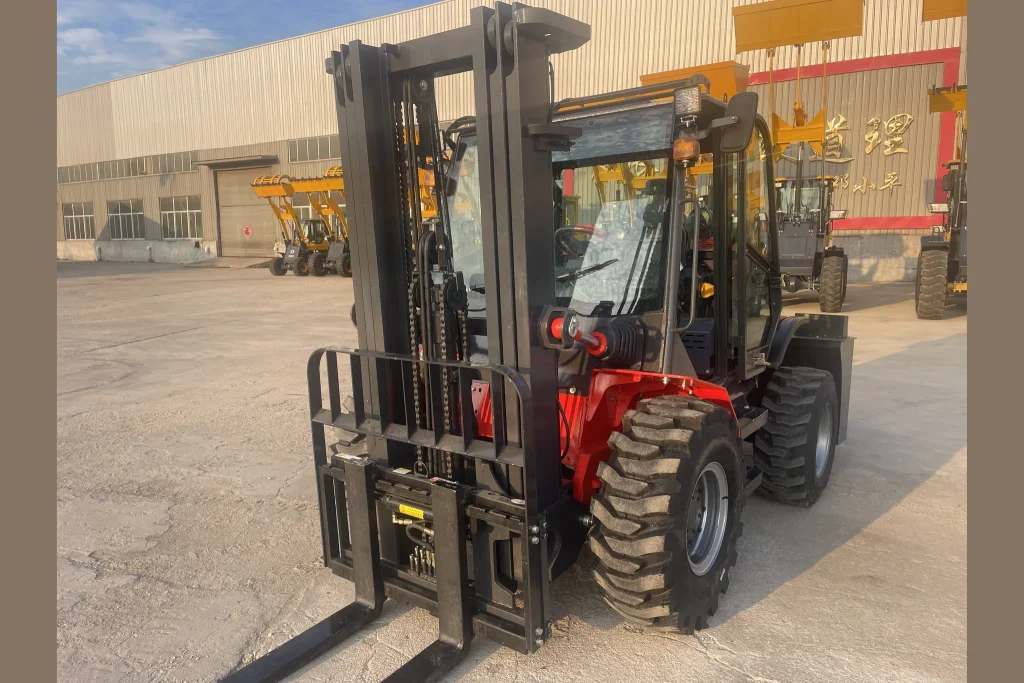
A vertical mast rough terrain forklift is an outdoor lift truck concept that combines a forward lifting mast with a rough-terrain chassis and tire package. It is considered when a buyer needs vertical load placement beyond a smooth warehouse floor but does not want to treat every outdoor job as a heavy-duty or telescopic-handler application. […]
Rough Terrain Forklift: Types, Classes, and How to Choose
A rough terrain forklift is a powered industrial truck designed to move and lift loads on outdoor, uneven, or unpaved ground. Compared with a warehouse forklift, it typically uses a higher-clearance chassis, off-road tires, and an outdoor-oriented powertrain and drivetrain. The right model depends on more than lifting capacity: buyers must also match the truck […]
What Is a Counterbalance Forklift? The Complete Guide
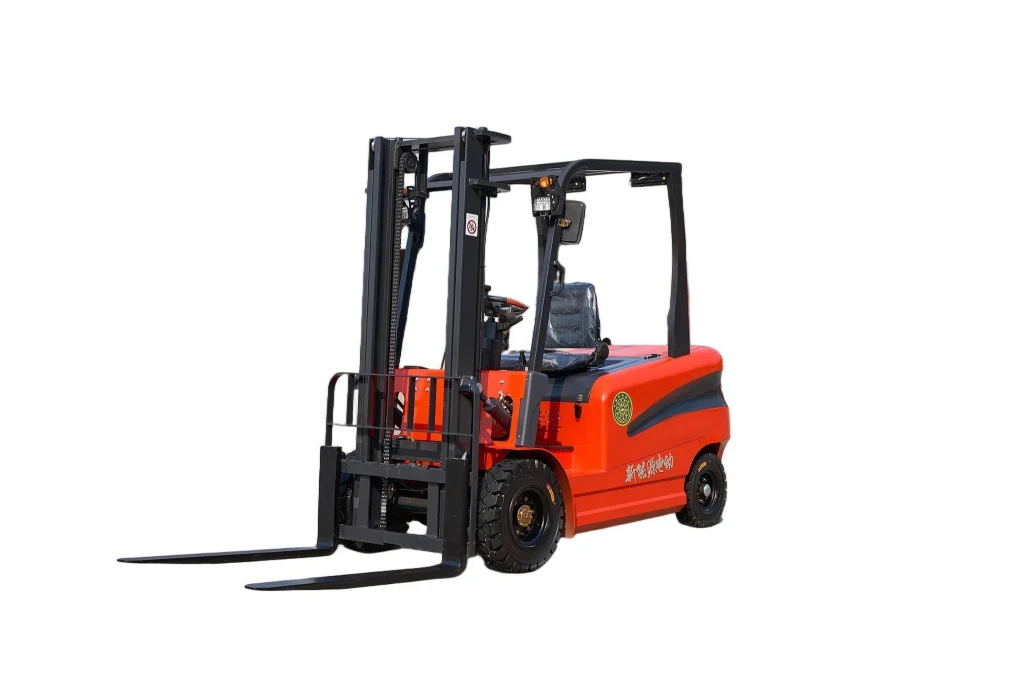
A counterbalance forklift is the most common type of forklift truck: it uses a heavy counterweight built into the rear of the chassis to offset (balance) the load carried on the front forks. Because the weight at the back cancels out the weight at the front, the truck needs no outrigger legs or stabilizing arms […]
Beyond the Machine: How to Choose the Right Forklift Solutions for Construction and Mining
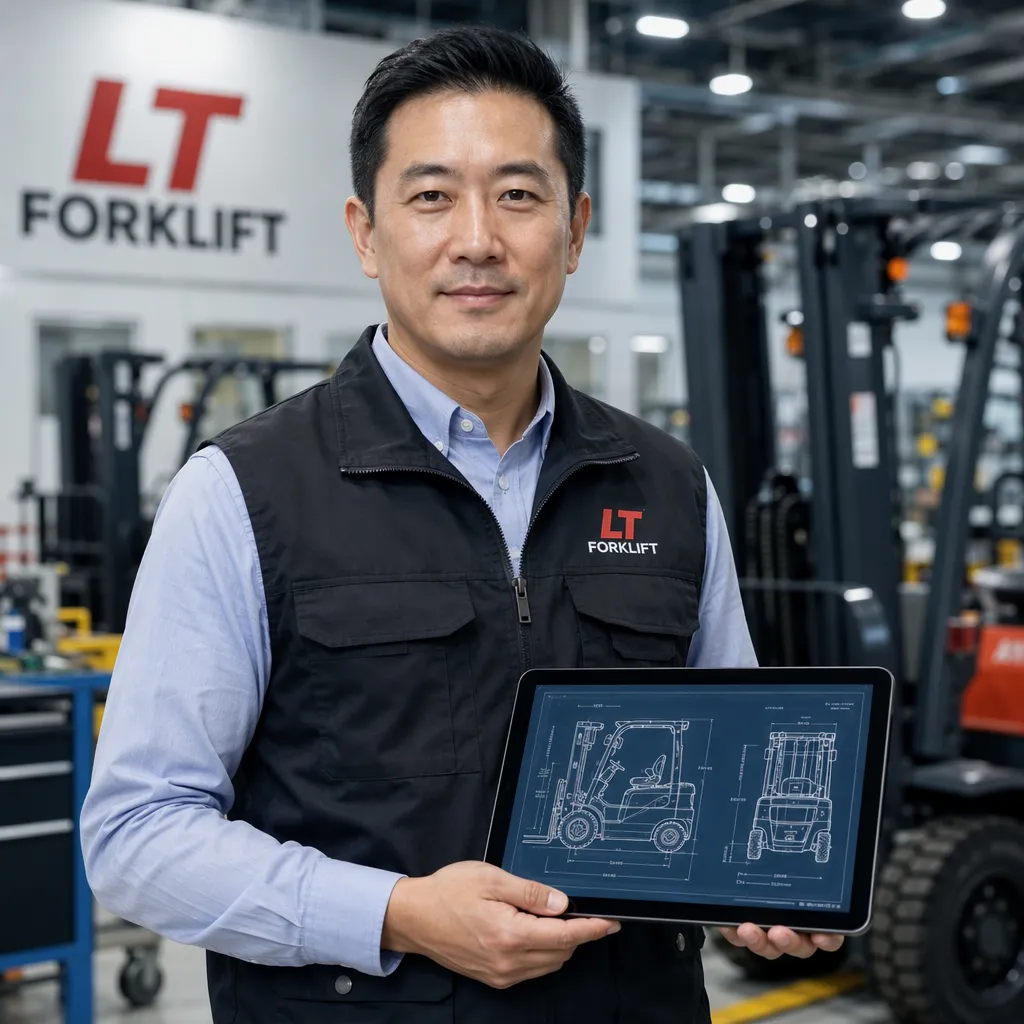
Expert David Liu explains how to choose forklift solutions for construction & mining. Explore rough terrain specs, material handling equipment, and ROI optimization.
Why Diesel Articulated Rough Terrain Forklifts Outperform Standard Models: A Complete Guide
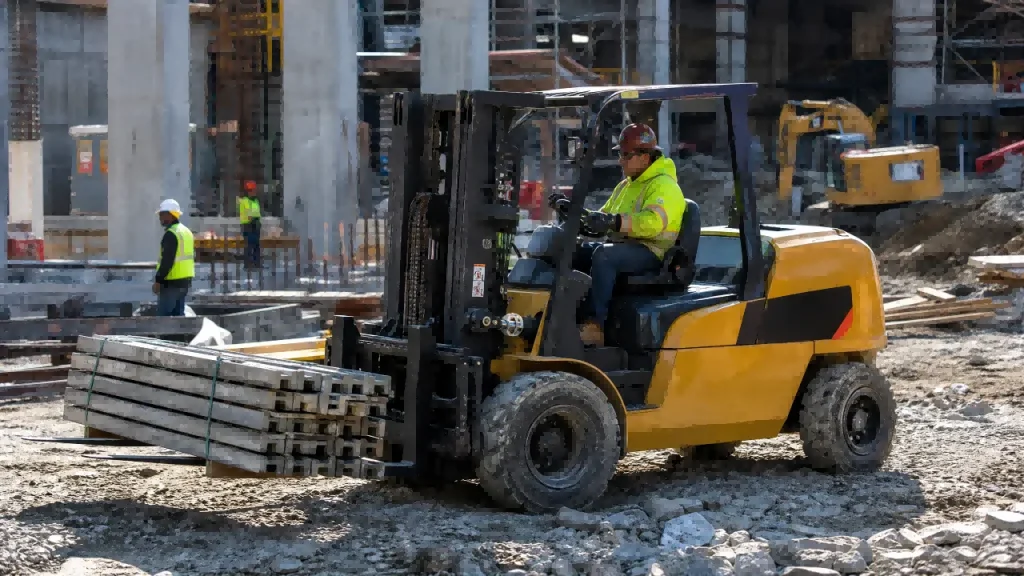
Introduction A diesel articulated rough terrain forklift combines a diesel powertrain with an articulated chassis designed for demanding outdoor material handling. Buyers consider this configuration when uneven ground, heavy loads, slopes, turning space, and long duty cycles make a standard warehouse forklift unsuitable. The final choice still depends on the load chart, site assessment, safety […]