Forklift Fleet Decarbonization & Scope 1 Reduction: An ESG Manager’s Guide to Li-ion Electrification, Carbon Audits, and ROI

Modern sustainable logistics warehouse with rooftop solar panels and electric forklift fleet

Forklift Fleet Decarbonization: An ESG Manager’s Guide

Forklift fleet decarbonization is a practical pathway to reduce Scope 1 combustion emissions, improve indoor air quality, control energy costs, and strengthen ESG reporting. This guide from Sarah Johnson, Sustainability and Environmental Affairs Manager at LT FORKLIFT, connects Li-ion electrification, carbon audits, solar microgrids, and green-fleet ROI.
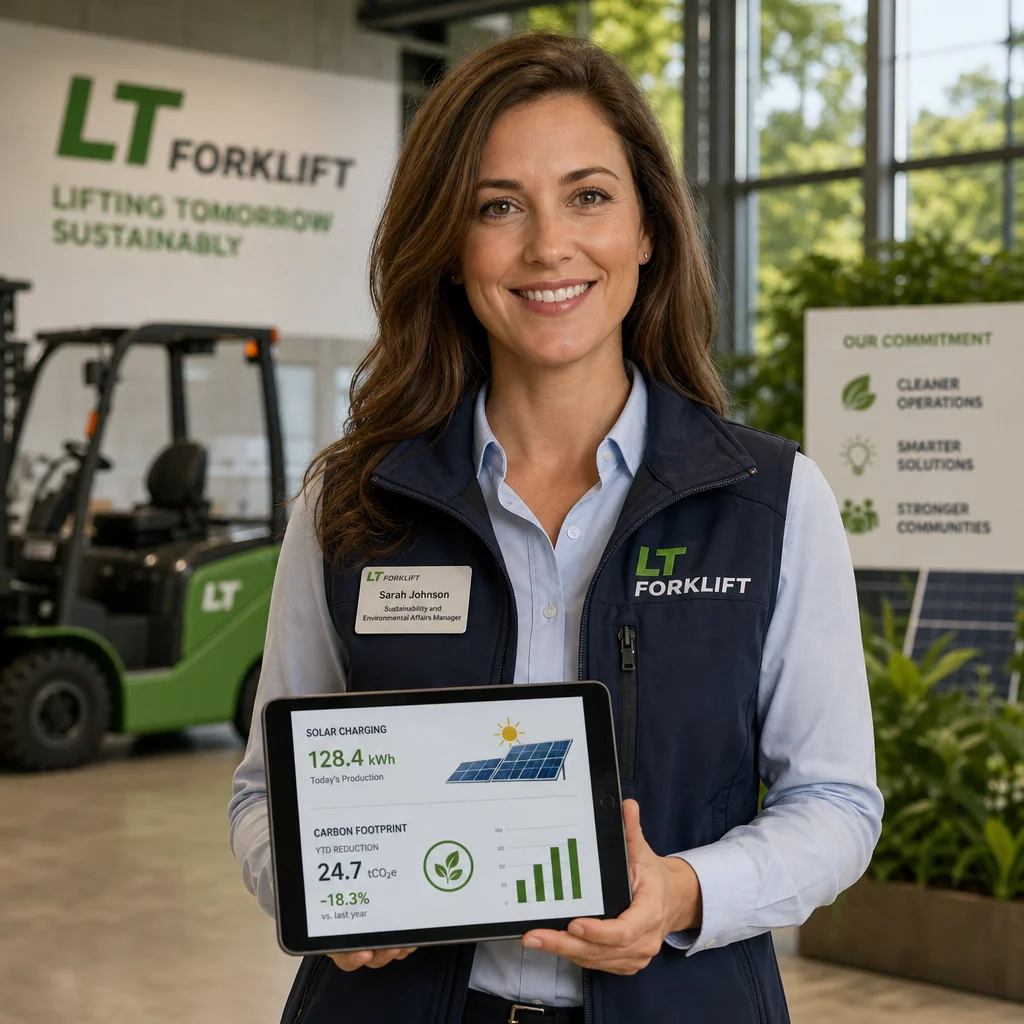
Sarah Johnson, Sustainability and Environmental Affairs Manager at LT FORKLIFT, reviewing fleet carbon metrics

Scope 1 and Scope 2 carbon audits

Diesel and LPG forklifts generally create direct mobile-combustion Scope 1 emissions. Battery-electric forklifts eliminate tailpipe emissions at the truck and move operating energy to purchased electricity, which is normally reported as Scope 2. A defensible baseline reconciles fuel invoices, utility meters, charger data, telematics, maintenance records, operating hours, payload, and pallets moved. Report location-based and market-based electricity results according to the organization’s accounting policy, and document renewable certificates or exported solar power to avoid double counting.
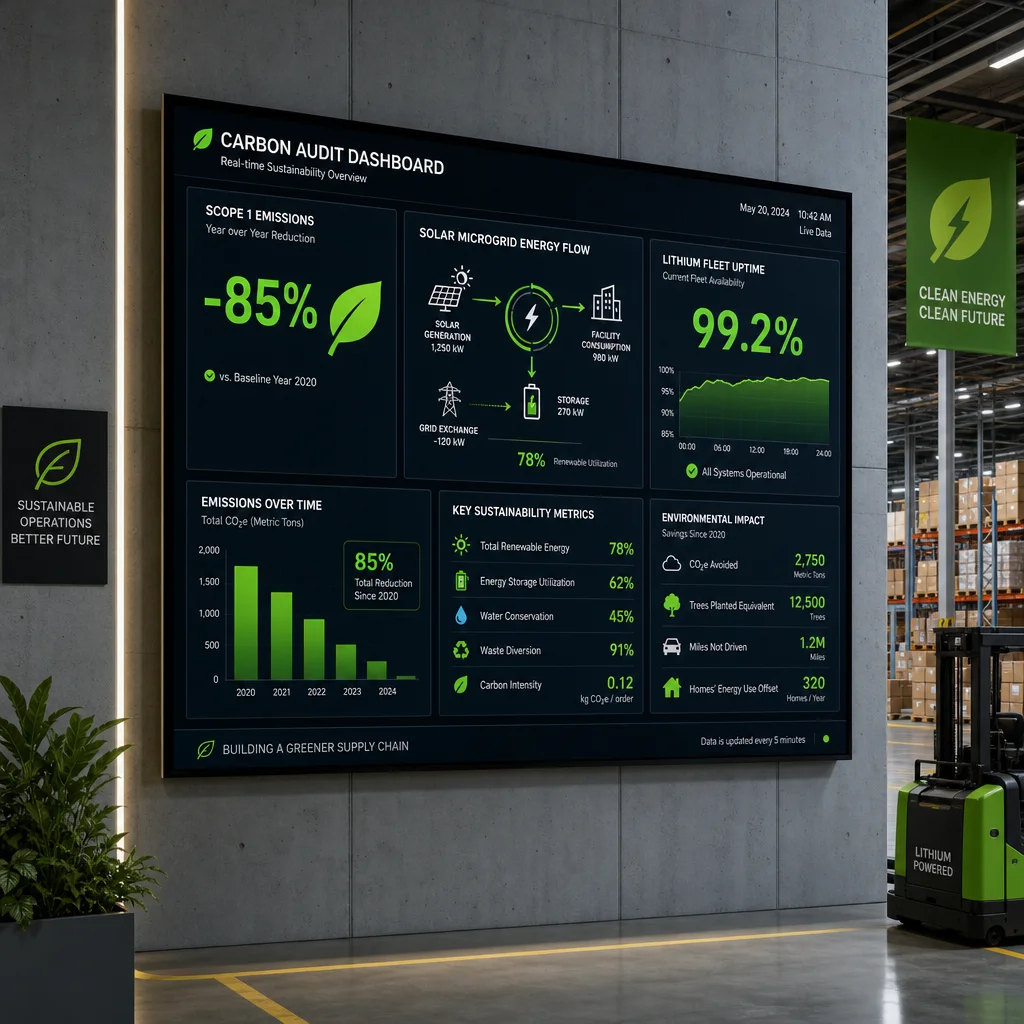
Warehouse carbon audit dashboard showing Scope 1 emissions reduction and solar energy flow

Li-ion electrification and solar microgrids

Li-ion and LiFePO4 batteries can support opportunity charging, high utilization, predictable maintenance, and zero tailpipe emissions. Select chemistry and charger capacity from the real duty cycle: shift length, lift cycles, temperatures, payload, idle time, and available charging windows. Pair chargers with load management, safe cable routing, metering, emergency procedures, and battery state-of-health monitoring. Solar generation and storage can reduce grid imports and demand peaks, but sizing must use interval data rather than annual energy totals.
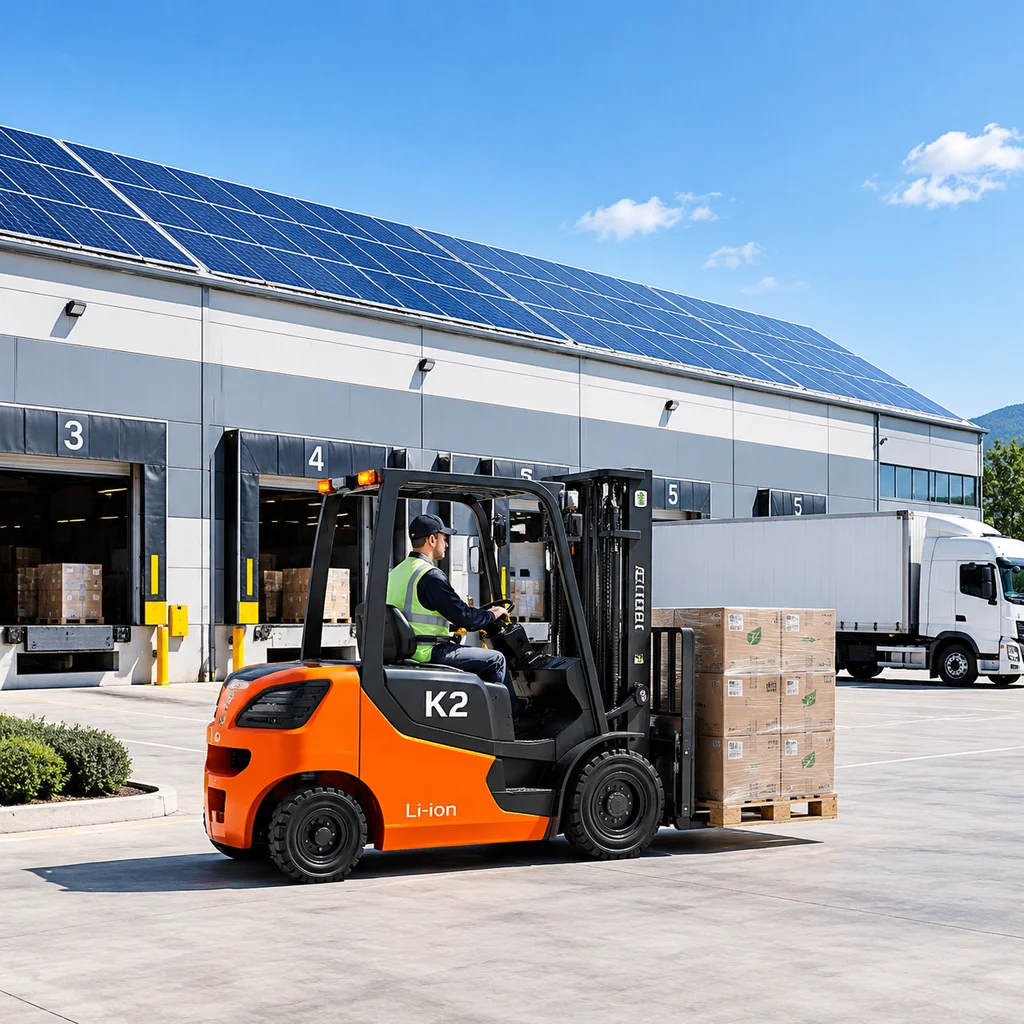
Modern sustainable logistics warehouse with rooftop solar panels and electric forklift fleet
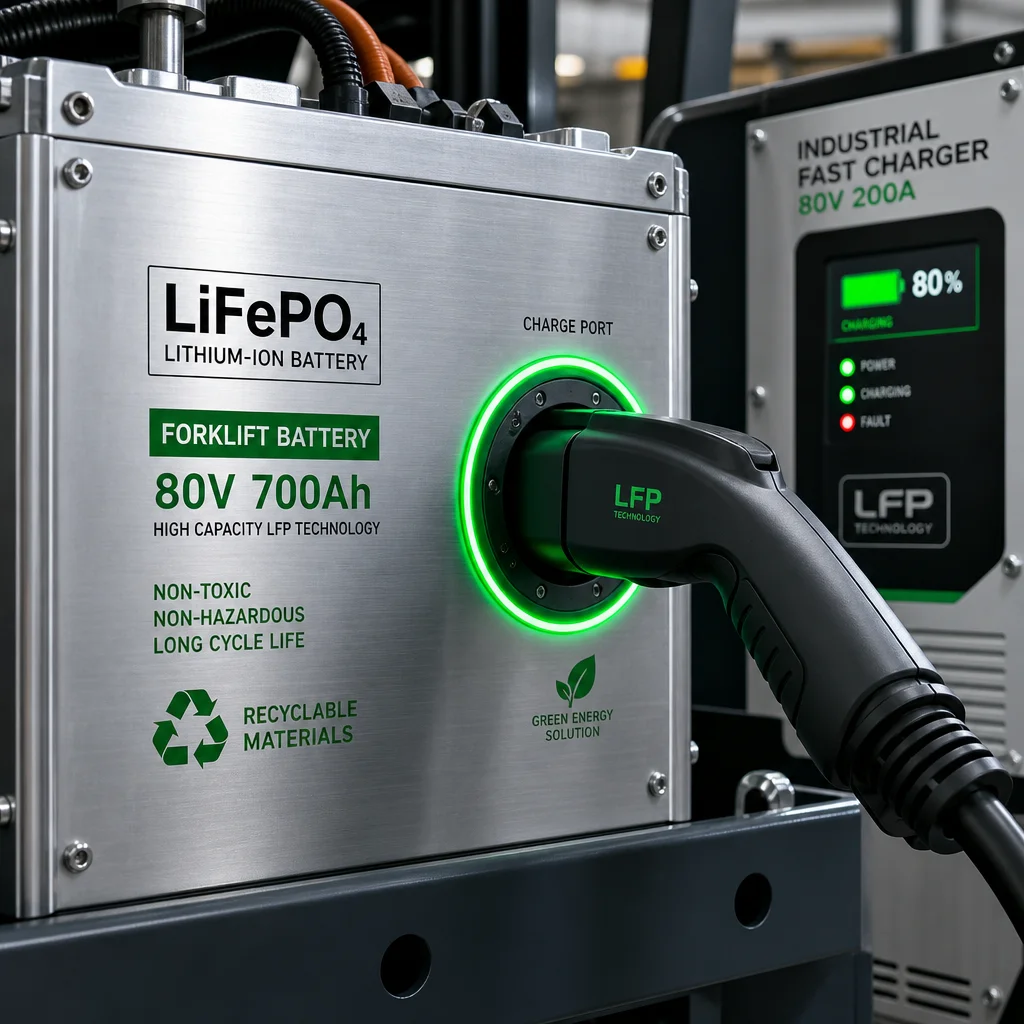
High-capacity recyclable LiFePO4 forklift battery connected to an industrial fast charger

Carbon and green-ROI comparison

PathwayPlanning emissionsReporting categoryKey audit evidence
DieselDirect fuel combustionScope 1Fuel invoices, tank records, telematics
Grid electricGrid factor × charger kWhScope 2Utility bills, submetering, charger data
Solar microgridResidual grid/import energy plus documented lifecycle assumptionsScope 2 policy dependentPV, storage, import/export, certificate records
Five-year model itemDiesel baselineGrid-electric transitionSolar-assisted LFP transition
Truck, battery, charger and energy CAPEXBaselineHigher upfront CAPEXHighest upfront CAPEX
Fuel versus electricityFuel-price exposureElectricity tariff exposureLower imports plus demand management
HVAC and maintenanceBaselinePotential savingsPotential savings
Payback periodNot applicableModel from measured duty cycleModel from solar yield, tariff and storage
ChemistryCycle lifeSustainability considerationRecycling
LFPTypically long, application dependentThermally stable; no lead; manage cold chargingUse approved recovery and supplier take-back
Lead-acidTypically shorter, application dependentLead, acid, watering and ventilation controlsMature recycling, but compliant collection is essential
NMCApplication dependentHigh energy density; robust thermal management requiredVerify nickel, cobalt, lithium and copper recovery chain

Four-step roadmap and audit checklist

  • Baseline: inventory trucks, fuels, batteries, chargers, shifts, energy, maintenance, and work output; define boundaries and evidence owners.
  • Diagnose: measure duty cycles, idle time, payload, temperatures, charging windows, electrical capacity, safety controls, and renewable potential.
  • Implement: pilot the highest-impact segment, commission chargers and controls, train operators and technicians, and establish battery take-back.
  • Verify: reconcile meters, invoices, telematics, and work orders monthly; separate Scope 1 reductions from Scope 2 changes; review KPIs quarterly.

Trusted resources and fleet next steps

Use the GHG Protocol Corporate Accounting and Reporting Standard for accounting boundaries and terminology, the EPA SmartWay supply chain sustainability program for logistics context, and U.S. Department of Energy industrial fleet electrification data for electricity and charging considerations.

Explore zero-emission lithium-ion counterbalance forklifts, review customized green fleet solutions, or request a fleet decarbonization audit. A measured baseline turns electrification into a verifiable Scope 1 reduction and a durable operating improvement.
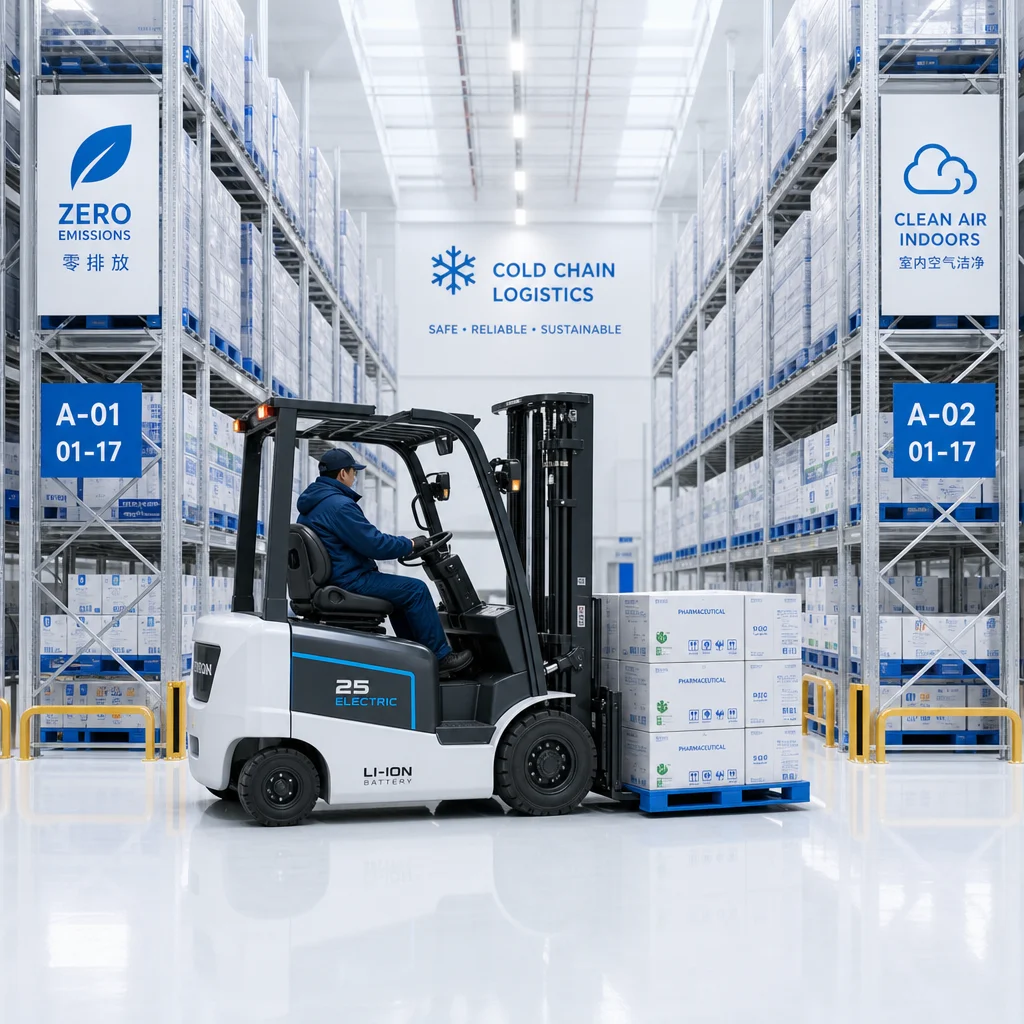
Clean zero-emission electric forklift operating in a pharmaceutical cold-chain warehouse
Facebook
Twitter
LinkedIn
Email
Telegram

Liu, David

David Liu is an expert in LT FORKLIFT's product solutions department, with over 10 years of experience in forklift sales and application.
He has a deep understanding of the logistics needs of various industries and is able to provide customized forklift solutions for different customers.
He often shares successful customer cases and industry best practices.

Frequently Asked Questions

How much carbon emissions can electric forklifts reduce?

Carbon emission reduction depends on multiple factors, including forklift type, usage intensity, and local power grid energy composition. According to industry research, a 48V electric forklift equipped with a 700AH battery can reduce approximately 7 tons of CO2 emissions annually compared to an equivalent diesel forklift. For a warehouse with 50 forklifts, converting all to electric could reduce annual carbon emissions by approximately 350 tons, equivalent to 75 vehicles’ annual emissions. Additionally, electric forklifts reduce other pollutants such as nitrogen oxides and particulate matter, improving indoor air quality. From a global perspective, if all warehouse forklifts were converted to electric, it could reduce global logistics industry carbon emissions by 5-10%.

While electric forklifts produce zero emissions during operation, the entire lifecycle environmental impact must be considered. Lifecycle assessment (LCA) includes:

(1) Manufacturing stage (mining, producing batteries and components);

(2) Transportation stage (factory to user);

(3) Use stage (charging, maintenance);

(4) End-of-life and recycling stage. Research shows that even accounting for battery production environmental costs, electric forklifts’ entire lifecycle carbon emissions are 50-70% lower than diesel forklifts.

The key is battery sourcing—if electricity comes from renewable sources (such as wind or solar), environmental advantages are even greater. Additionally, with advances in battery recycling technology, electric forklifts’ environmental advantages will further increase.

Forklift battery recycling is an important environmental issue. The correct handling process includes:

(1) Safe storage (in fireproof, ventilated locations, avoiding short circuits);

(2) Classification (lead-acid and lithium batteries require separate handling);

(3) Processing by certified recyclers (ensuring compliance with environmental standards);

(4) Material recovery (lead, sulfuric acid, lithium, etc. can be recycled).

Most countries have regulations regarding battery recycling. For example, in the EU, battery recovery rate must reach 65%. A certified recycling facility can recover over 95% of materials from a waste battery. Additionally, advanced recycling technologies are developing “second life” applications, using recovered batteries for stationary energy storage systems.

Beyond using electric forklifts, establishing a green warehouse requires considering:

(1) Energy efficiency (LED lighting, smart HVAC systems, solar roofs);

(2) Building design (natural lighting, improved insulation, rainwater collection);

(3) Waste management (recycling programs, packaging reduction);

(4) Employee transportation (encouraging public transit, bicycle parking, EV charging stations);

(5) Supply chain optimization (reducing transportation distance, route optimization);

(6) Water resource management (efficient cleaning systems, water recovery).

A comprehensive green warehouse can reduce carbon emissions by 40-60% while improving work environment and employee satisfaction.

Developing a sustainable procurement strategy requires the following steps:

(1) Assess current state (number, type, age, and operating costs of existing forklifts);

(2) Set goals (such as converting 80% to electric within 5 years);

(3) Cost analysis (including initial investment, operating costs, environmental benefits);

(4) Infrastructure planning (charging stations, grid upgrades);

(5) Employee training (operators and maintenance personnel);

(6) Supplier evaluation (selecting reliable manufacturers and service providers);

(7) Monitoring and reporting (tracking carbon emission reduction, cost savings, safety improvements).

Many businesses find that phased implementation (such as updating 20% of forklifts annually) better manages costs and risks. Additionally, many governments and organizations offer subsidies or tax incentives to support green equipment procurement.

Although electric forklifts have higher initial purchase costs (typically 20-30% higher), the total cost of ownership (TCO) is usually lower. TCO includes purchase, fuel, maintenance, insurance, and disposal costs. According to industry analysis:

Cost ItemElectric ForkliftDiesel Forklift
Initial Purchase CostHigherLower
Annual Fuel Cost$800-1,200$2,000-3,000
Annual Maintenance Cost$1,500-2,000$2,500-4,000
Tire ReplacementLess Frequent (Lighter)More Frequent
5-Year Total Cost$35,000-45,000$40,000-55,000

Over a 5-7 year usage cycle, electric forklifts’ TCO is typically 15-25% lower than diesel forklifts. Additionally, as battery costs decline and electricity prices remain relatively stable, electric forklifts’ economic advantages will further increase.

Related Content

Related Products

Select a country...
Customization Category (Select all that apply)
Select quantity range...
Select timeline...
Describe your customization needs, target market, and any specific requirements...