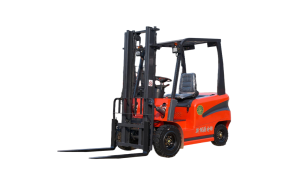
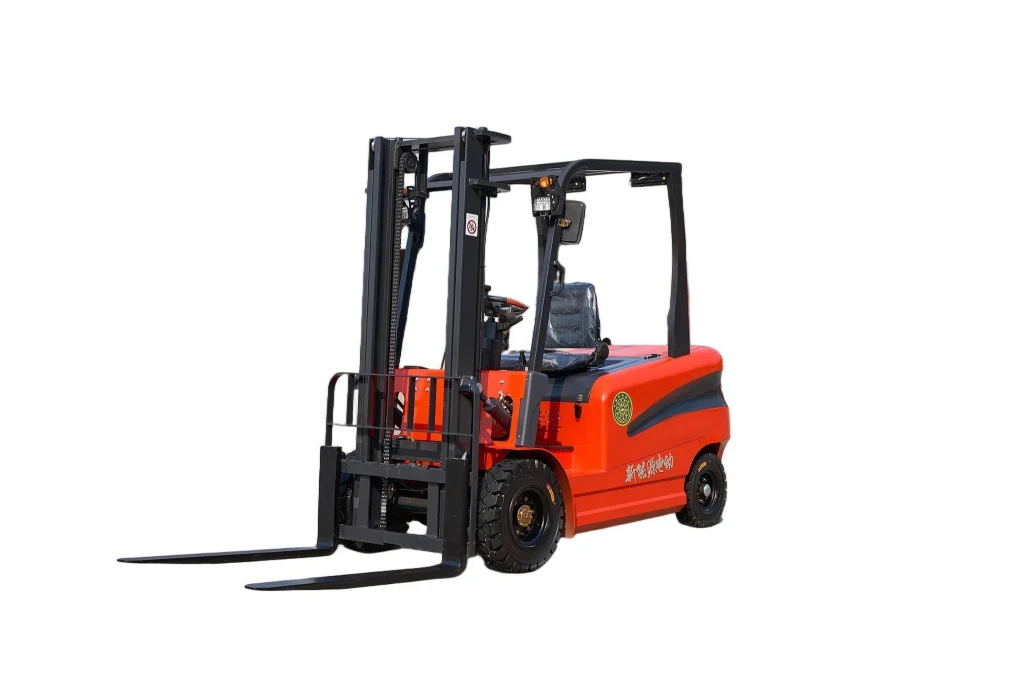
A counterbalance forklift is the most common type of forklift truck: it uses a heavy counterweight built into the rear of the chassis to offset (balance) the load carried on the front forks. Because the weight at the back cancels out the weight at the front, the truck needs no outrigger legs or stabilizing arms — the forks protrude directly from the front, letting the operator drive straight up to a rack, trailer, or pallet and lift the load. Typical capacities range from 1.5 to 5 tons, with electric, diesel, and LPG/gas power options.
If you have ever seen a “standard” forklift working in a warehouse or loading dock, you were almost certainly looking at a counterbalance forklift truck.
By David Liu, Product Solutions & Applications Specialist at LT FORKLIFT — based on 10+ years of matching forklift configurations to customer operations across 80+ countries.
How Does a Counterbalance Forklift Work?
A counterbalance forklift works on the lever principle — exactly like a seesaw.
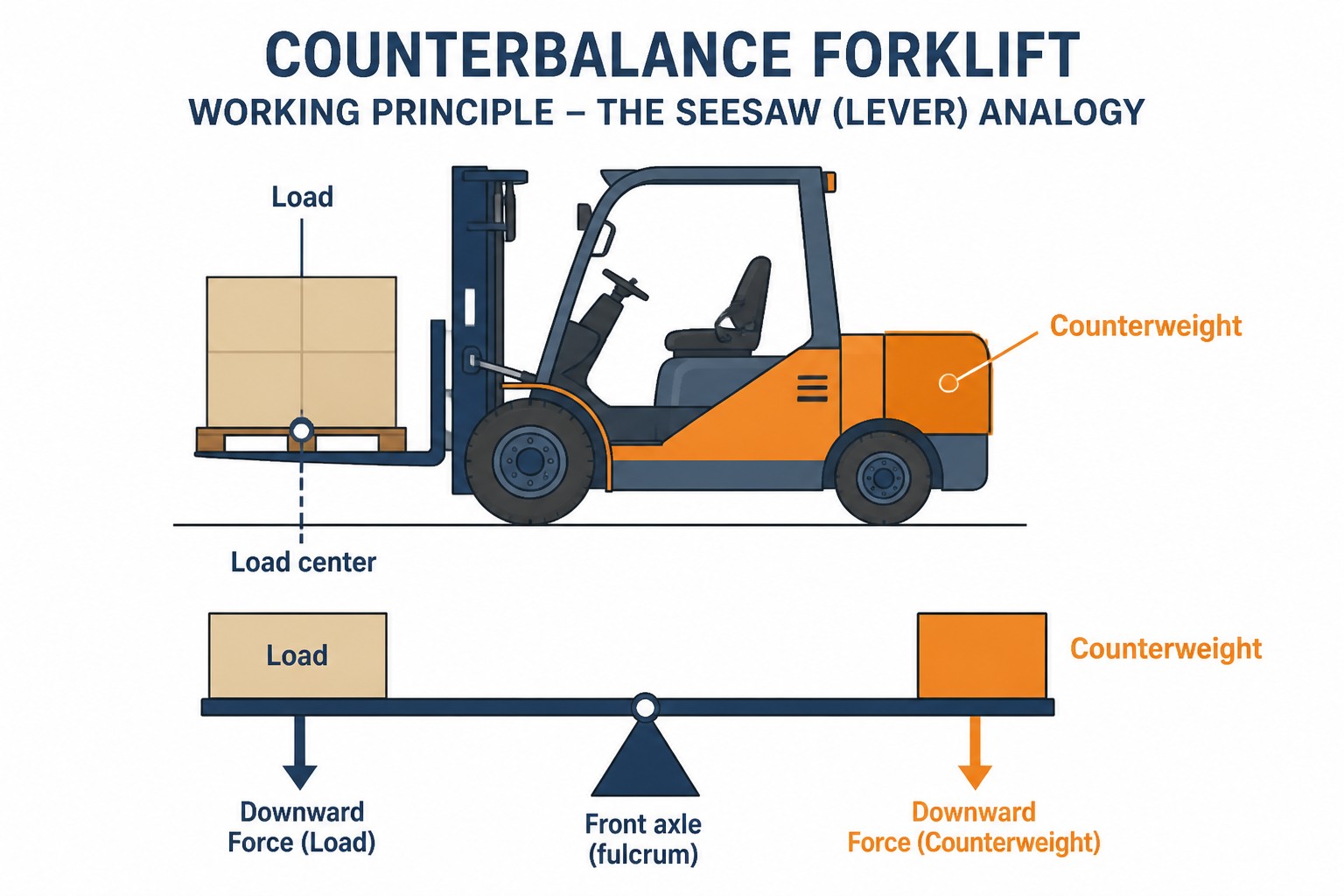
- The fulcrum is the front axle of the truck.
- The load on the forks sits on one side of that fulcrum.
- The counterweight (a cast-iron or steel block, plus the battery in electric models) sits on the other side, behind the rear axle.
As long as the load moment (load weight × distance from the front axle) is smaller than the counterweight moment, the truck stays firmly on the ground. This is why every counterbalance forklift has a load center rating — usually 500 mm (24 in). A truck rated 3,000 kg @ 500 mm load center can safely lift 3,000 kg only if the load’s center of gravity is within 500 mm of the fork face. Longer or unevenly loaded pallets reduce the safe capacity.
Three design consequences follow from this principle:
- No outriggers or legs — the truck can drive nose-first into racking, trailers, and containers.
- The machine is heavy by design — the counterweight typically makes the truck weigh 1.5–2× its rated capacity (see the weight section below).
- Stability depends on the “stability triangle” — the area between the two front wheels and the pivot of the rear axle. Keeping the combined center of gravity inside this triangle is the core of safe operation, per OSHA’s Powered Industrial Trucks eTool.
Counterbalance Forklift vs Other Forklift Types
Under the Industrial Truck Association (ITA) classification system — detailed in OSHA’s forklift types guide — counterbalance forklifts span Class I (electric rider), Class IV (internal combustion, cushion tire), and Class V (internal combustion, pneumatic tire).
| Feature | Counterbalance forklift | Reach truck | Pallet jack/stacker | Rough terrain forklift |
|---|---|---|---|---|
| Load support | Rear counterweight | Outrigger legs + moving mast | Straddle legs | Counterweight + heavy-duty chassis |
| Typical capacity | 1.5–5 t | 1–2.5 t | 1–2 t | 3–10 t |
| Indoor/outdoor | Both | Indoor only | Indoor only | Outdoor / unpaved |
| Aisle requirement | 3.5–4 m | 2.7–3 m | 2.1–2.4 m | Wide / open site |
| Best for | Docks, warehouses, yards | High-bay narrow-aisle racking | Ground-level transport | Construction, agriculture, mining |
Rule of thumb: if your operation loads trucks at a dock, moves pallets between indoor and outdoor areas, and racking height is under ~6 m, a counterbalance forklift is usually the right starting point. For high-bay narrow aisles, look at reach trucks; for unpaved job sites, a rough terrain forklift is the safer choice.
Types of Counterbalance Forklifts
By power source
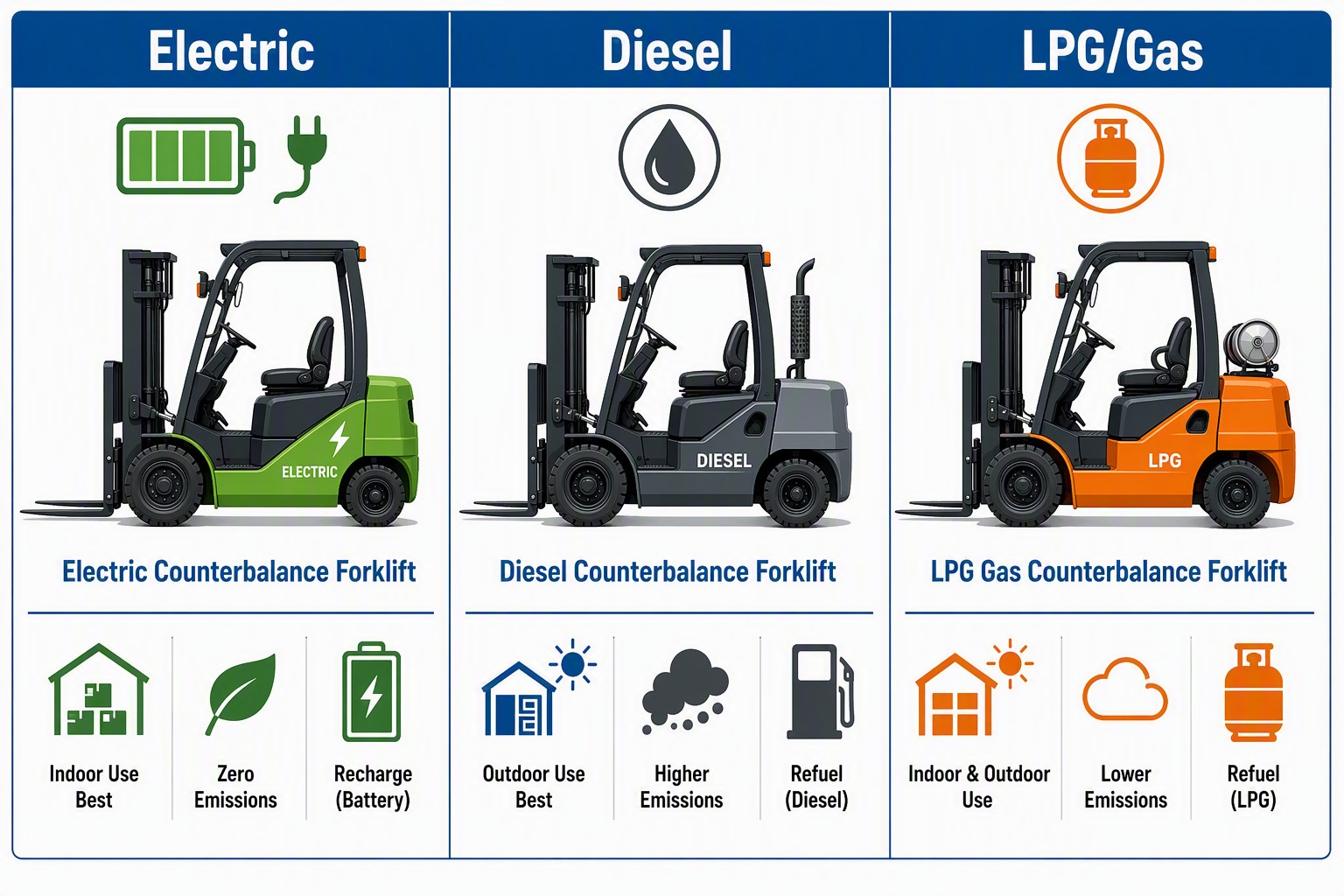
| Type | Strengths | Considerations | Typical use |
|---|---|---|---|
| Electric (Li-ion or lead-acid) | Zero exhaust emissions, low noise, lowest energy cost per hour, less maintenance (no engine oil/filters) | Higher purchase price; charging infrastructure needed | Indoor warehouses, food/pharma, mixed indoor-outdoor |
| Diesel | Highest torque, fast refueling, strong on ramps and long shifts | Exhaust emissions restrict indoor use; noise | Outdoor yards, docks, heavy continuous duty |
| LPG/Gas | Indoor-outdoor flexibility, fast refueling | Fuel storage compliance; emissions higher than electric | Mixed environments with multi-shift work |
Modern Li-ion electric counterbalance forklifts have closed most of the performance gap with diesel in the 1.5–3.5 t range — for a deeper comparison, see our guide to choosing between diesel, natural gas, and electric forklifts.
By operator position
- Sit-down counterbalance forklift — the standard configuration; best for long shifts and travel distances.
- Stand-up counterbalance forklift — the operator stands in a side-facing compartment; faster on/off makes it efficient for high-frequency stop-and-go work in tighter aisles.
By drive configuration
- 3-wheel — a single or dual rear wheel gives a much tighter turning radius; ideal for narrow indoor aisles (mostly electric, 1.5–2 t).
- 4-wheel — better stability and capacity; the default for 2.5 t and above, and for any regular outdoor use.
How Much Does a Counterbalance Forklift Weigh?
A counterbalance forklift typically weighs 1.5 to 2 times its rated lifting capacity. The counterweight is what makes the physics work, so the machine must be heavy.
| Rated capacity | Typical service weight |
|---|---|
| 1.5 t (3,000 lb) | ≈ 2.8–3.5 t |
| 2.5 t (5,000 lb) | ≈ 3.8–4.5 t |
| 3.0 t (6,000 lb) | ≈ 4.3–5.0 t |
| 3.5 t (7,000 lb) | ≈ 4.8–5.6 t |
| 5.0 t (10,000 lb) | ≈ 6.5–8.0 t |
Why this matters in practice:
- Floor loading — mezzanines, dock plates, and older slabs must be rated for the truck + load combined.
- Transport — moving a 3 t forklift between sites requires a truck/trailer rated for ~5 t.
- Elevators — most goods lifts cannot take a counterbalance forklift; plan horizontal transport instead.
(Electric models sit at the heavier end of each range because the traction battery itself acts as part of the counterweight.)
How to Choose the Right Counterbalance Forklift: 6-Point Checklist
From 10+ years of specifying forklifts for buyers in 80+ countries, these are the six questions that decide the right configuration — in order:
- Heaviest real load, not average load. Size for the heaviest pallet you handle weekly, at its actual load center. Undersizing is the #1 cause of premature mast and axle wear.
- Indoor, outdoor, or both? Indoor-only → electric, cushion or solid tires. Mixed → electric or LPG with pneumatic tires. Outdoor-dominant → diesel. (For US indoor use, note that EPA emission standards govern nonroad engine equipment like IC forklifts.)
- Lift height and mast type. Check your top beam height plus 200 mm clearance; if doorways are low, specify a free-lift mast so the forks rise before the mast extends.
- Aisle width. Measure the narrowest right-angle stacking aisle. Under 3.5 m, consider a 3-wheel electric model.
- Duty cycle. Single shift (<4 h/day) → almost any configuration works; multi-shift → Li-ion electric (opportunity charging) or diesel.
- Total cost of ownership, not sticker price. Electric models cost more upfront but typically 30–40% less to run over a 5-year life (energy + maintenance). Ask suppliers for a TCO comparison, not just a quote.
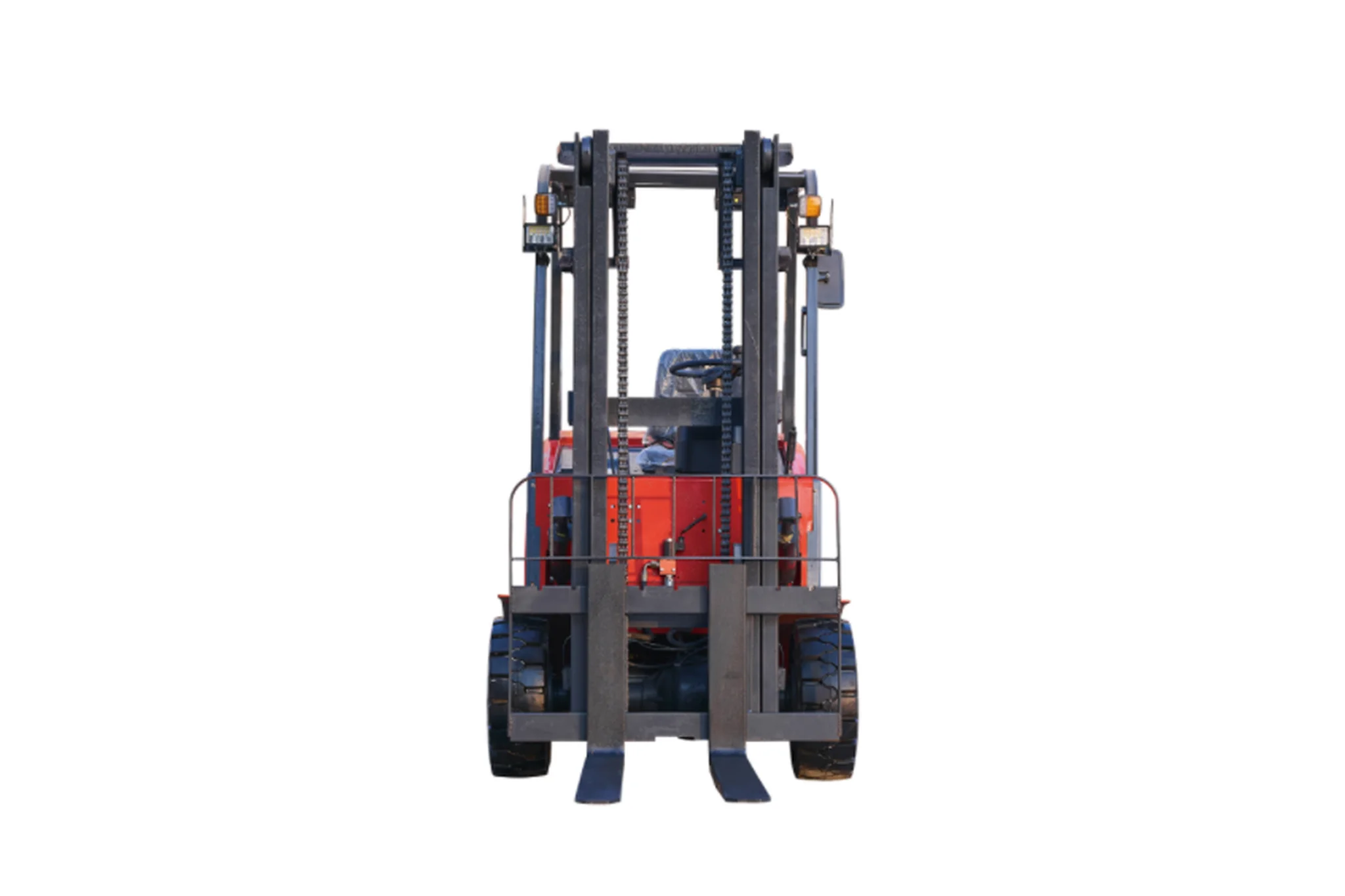
At LT FORKLIFT, the K2 series counterbalance forklifts cover this decision matrix with 2.5–4 t electric models — from the K2 2.5T compact electric for narrow indoor aisles to the K2 4T electric for heavier dock work — plus 3.0T and 3.5T diesel versions for outdoor-dominant duty. All are ISO9001- and CE-certified, factory-direct with OEM/ODM options.
Frequently Asked Questions
What is a counterbalance forklift truck?
A counterbalance forklift truck is a forklift that balances the load on its front forks with a heavy counterweight built into the rear of the machine. It needs no outrigger legs, so it can drive directly up to loads — making it the most versatile and most widely used forklift type in warehouses, docks, and yards.
Where is the fulcrum on a counterbalance forklift located?
The fulcrum is the front axle (the centerline of the front wheels). The load on the forks and the counterweight at the rear pivot around this axle like a seesaw — which is why capacity drops as the load center moves farther forward of the front axle.
How much does a counterbalance forklift weigh?
Between roughly 1.5 and 2 times its rated capacity: a 2.5 t model weighs about 4 t in service; a 3.5 t model about 5–5.6 t. Always check the data plate for the exact service weight before crossing dock plates, mezzanines, or ramps.
What is the difference between a counterbalance forklift and a reach truck?
A counterbalance forklift supports loads with its rear counterweight and works indoors and outdoors, but needs wider aisles (3.5–4 m). A reach truck supports loads with outrigger legs and a moving mast, works in aisles under 3 m and lifts higher (10 m+), but is indoor-only. Docks and mixed operations → counterbalance; high-bay narrow-aisle warehouses → reach truck.
Can a counterbalance forklift be used outdoors?
Yes — with the right configuration. Choose pneumatic tires and a diesel, LPG, or IP54-protected electric model for paved outdoor yards. For unpaved or rough ground, step up to a purpose-built rough terrain forklift instead.
Do you need a license to operate a counterbalance forklift?
In most markets, operators need formal training and certification rather than a government “license” — in the US, OSHA regulation 29 CFR 1910.178 requires employer-certified training and evaluation every 3 years; in the UK, the HSE’s lift-truck training guidance sets the equivalent framework (with voluntary accreditation schemes such as RTITB/AITT). Always verify local regulations before putting operators on a truck.
How long does a counterbalance forklift last?
A well-maintained counterbalance forklift typically delivers 10,000–20,000 operating hours. Electric models usually reach the higher end because they have far fewer moving parts — no engine, transmission, or exhaust system to overhaul. At 2,000 h/year, that is a 5–10 year service life.
David Liu is a Product Solutions Specialist at LT FORKLIFT with over 10 years of forklift sales and application experience. He understands logistics needs across industries and regularly shares customer success stories and best practices. Contact: sales@lt-forklift.com