By Dr. Marcus Chen Senior Technology Innovation Director, LT FORKLIFT Research & Development Published: June 2026
Introduction
This forklift selection guide compares power sources, truck configurations, operating environments, load requirements, and total cost factors so buyers can match equipment to the actual application. The right choice depends on the load, ground, lift height, duty cycle, emissions requirements, and service infrastructure—not on power source alone.
This comprehensive guide draws on over 15 years of industry experience and the latest technological innovations to help you navigate this decision. Whether you operate a sprawling construction site, manage a high-volume warehouse, or oversee mining operations, understanding the distinctions between forklift types is essential to optimizing your material handling strategy.
Part 1: Understanding Forklift Power Sources
The Diesel Forklift: Power and Durability for Demanding Environments
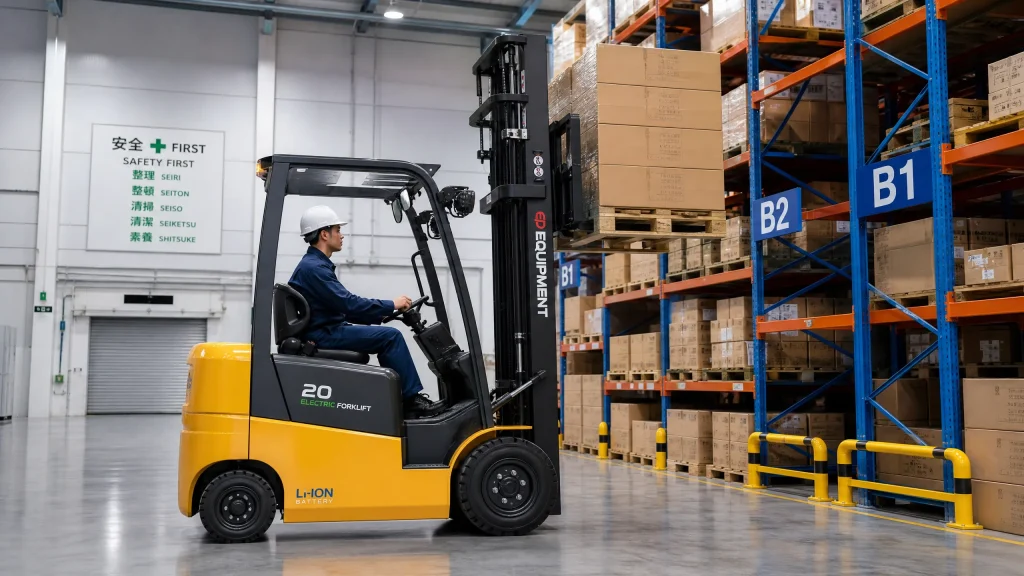
Diesel forklifts represent the traditional backbone of outdoor material handling. Powered by robust internal combustion engines, these machines deliver exceptional torque and acceleration—critical advantages in challenging conditions [1].
Performance Characteristics: Diesel engines produce significantly higher torque than their natural gas or electric counterparts, enabling superior gradeability and load-carrying capacity on uneven terrain. This mechanical advantage translates directly to operational capability in construction sites, mining operations, and agricultural environments where terrain unpredictability is the norm.
Key Advantages:
The operational advantages of diesel forklifts are substantial. First, they maintain consistent performance regardless of weather conditions—rain, snow, or extreme heat do not compromise engine efficiency. Second, their fuel tanks are designed for extended operational range, allowing long shifts without refueling interruptions. Third, diesel forklifts can be parked anywhere without special infrastructure requirements, making them ideal for remote job sites. Finally, maintenance costs remain relatively predictable, with fewer complex electronic components than modern electric systems [1].
Operational Challenges:
However, diesel forklifts present significant drawbacks in modern operations. They generate higher noise levels—often exceeding 85 decibels—which creates workplace fatigue and regulatory compliance challenges in noise-sensitive environments. Emissions remain a concern, particularly in regions with strict environmental regulations. The larger physical footprint of diesel forklifts requires more storage space, and fuel costs continue to rise with global energy markets, impacting long-term operational budgets [1].
Ideal Applications:
Diesel forklifts excel in outdoor, heavy-duty environments: construction sites managing building materials, mining operations extracting ore in rugged terrain, lumber yards handling timber on uneven surfaces, and agricultural operations transporting equipment across soft soil. For these applications, diesel’s power and durability justify its operational costs.
Natural Gas Forklifts: The Balanced Middle Ground
Natural gas (LPG) forklifts occupy a strategic middle position in the forklift ecosystem. They offer cleaner operation than diesel while maintaining greater power than electric systems, making them suitable for mixed-use environments [2].
Performance Characteristics:
Natural gas engines operate with lower emissions than diesel—approximately 20-30% reduction in harmful particulates—while maintaining respectable torque output. The fuel delivery system uses pressurized containers that can be quickly swapped, minimizing downtime compared to electric battery charging or diesel refueling logistics.
Key Advantages:
Natural gas forklifts provide several compelling benefits. They burn significantly cleaner than diesel, producing lower emissions and reduced noise levels (typically 75-80 decibels). Operating costs fall between diesel and electric options, offering economic efficiency without extreme upfront investment. The quick fuel swap capability—simply exchanging one pressurized container for another—enables continuous operations without charging delays. Maintenance requirements remain moderate, with simpler systems than electric forklifts but more straightforward than diesel engines [2].
Operational Considerations:
Natural gas forklifts consume fuel more rapidly than diesel equivalents, requiring more frequent refueling. They deliver less power than diesel engines, limiting their effectiveness in the most demanding heavy-duty applications. Additionally, pressurized gas containers require specialized safety handling and storage protocols, and some jurisdictions restrict indoor natural gas forklift operation without adequate ventilation systems.
Ideal Applications:
Natural gas forklifts perform optimally in mixed-use environments: manufacturing facilities with both indoor and outdoor operations, distribution centers requiring moderate lifting capacity, retail logistics operations, and agricultural cooperatives managing diverse material handling tasks. They represent an excellent compromise for businesses seeking environmental responsibility without sacrificing operational capability.
Electric Forklifts: The Future of Indoor Logistics
Electric forklifts represent the fastest-growing segment of the material handling industry, driven by sustainability mandates, technological advancement, and total cost of ownership advantages [3].
Performance Characteristics:
Modern electric forklifts employ advanced lithium-ion battery technology, delivering consistent power throughout the operational cycle. Unlike internal combustion engines that lose efficiency as fuel depletes, electric motors maintain uniform performance until battery depletion. This characteristic enables predictable operational planning and superior load handling precision.
Key Advantages:
The advantages of electric forklifts are compelling for indoor operations. They produce zero emissions—critical for food, pharmaceutical, and healthcare facilities. Noise levels remain minimal (typically 60-65 decibels), creating pleasant work environments and enabling night-shift operations without disturbing surrounding areas. Long-term operating costs are substantially lower than diesel or natural gas alternatives—electricity typically costs 60-70% less than equivalent fuel consumption. Maintenance requirements are minimal due to fewer moving parts and no oil changes, spark plugs, or complex engine systems. Modern battery technology provides extended operational range, with many models offering 8+ hour shifts on single charges [3].
Operational Considerations:
Electric forklifts face legitimate limitations. Initial purchase costs remain higher than diesel or natural gas alternatives due to battery technology expenses. Battery recharging requires 6-8 hours for full cycles, necessitating operational planning around charging schedules. Outdoor performance is limited—rain, extreme cold, and uneven terrain can compromise battery efficiency and traction. The weight of battery systems reduces lifting capacity compared to similarly-sized internal combustion models.
Ideal Applications:
Electric forklifts dominate indoor environments: warehouse operations requiring quiet, clean handling; food and beverage distribution centers with strict contamination protocols; pharmaceutical facilities maintaining controlled environments; retail logistics centers; and manufacturing facilities with strict emission regulations. For these applications, electric forklifts deliver superior total cost of ownership and operational efficiency.
Part 2: Configuration Types—Rough Terrain vs. Balance Forklifts
Rough Terrain Forklifts: Engineered for Unforgiving Conditions
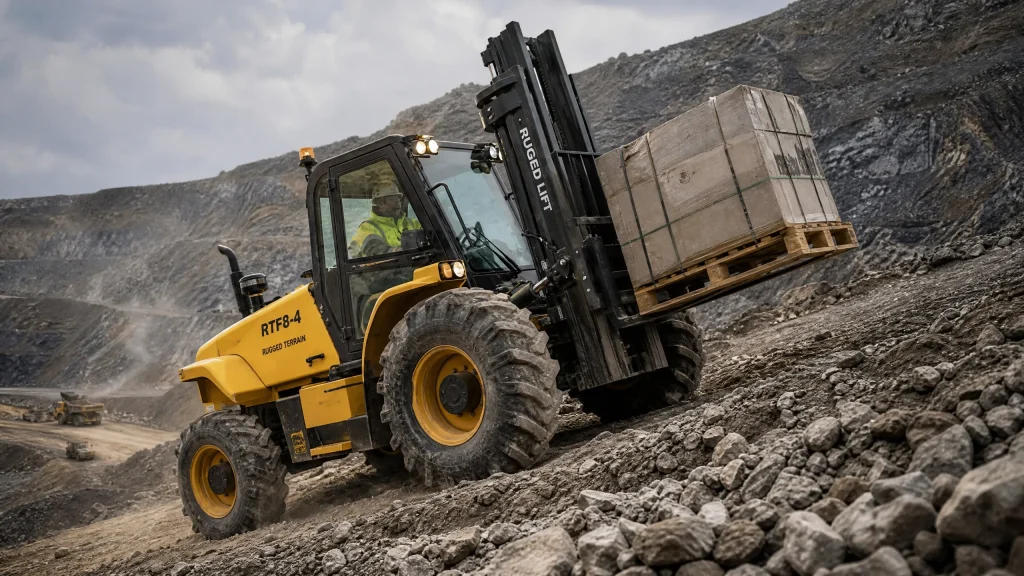
Rough terrain forklifts represent specialized equipment designed for environments where standard forklifts cannot operate safely. These machines incorporate distinctive mechanical features that enable performance in conditions standard forklifts cannot handle [4].
Mechanical Specifications:
Rough terrain forklifts feature large pneumatic tires specifically designed for traction on dirt, gravel, sand, and mud. Ground clearance typically ranges from 300-400mm, preventing undercarriage damage on uneven surfaces. Reinforced suspension systems absorb shocks from rocky terrain while maintaining load stability. Many models incorporate all-wheel drive systems, distributing power to all four wheels for maximum traction on soft or slippery surfaces. Engine power is typically higher than comparable balance forklifts, with diesel models delivering 40-60 horsepower for heavy-duty applications [4].
Terrain Capability Matrix:
| Terrain Type | Capability | Recommended Configuration |
|---|---|---|
| Smooth concrete/asphalt | Excellent | Balance forklift preferred |
| Gravel/dirt surfaces | Good | Rough terrain 2WD |
| Mud/soft soil | Excellent | Rough terrain 4WD |
| Rocky/uneven ground | Excellent | Rough terrain 4WD |
| Steep grades (>15°) | Good | Rough terrain diesel |
| Extreme conditions | Excellent | Telehandler rough terrain |
Applications and Performance:
Rough terrain forklifts excel in construction sites where materials must be transported across uneven, partially developed ground. Mining operations rely on these machines to navigate rocky, unstable terrain while carrying heavy equipment. Agricultural operations use rough terrain forklifts to transport hay bales, feed, and equipment across soft soil and pasture land. Lumber yards depend on rough terrain capability to handle timber on gravel and dirt surfaces. For these applications, rough terrain forklifts are not optional—they are essential [4].
Rough Terrain Forklift Advantages:
The advantages of rough terrain forklifts in appropriate environments are substantial. They maintain exceptional stability on uneven surfaces through low center of gravity design and wide wheelbase geometry. Traction remains superior in mud, sand, and gravel compared to any balance forklift configuration. Load capacity typically exceeds balance forklifts of similar engine power. Visibility is often superior due to higher seating position and larger windows. Durability in harsh environments surpasses standard equipment, with reinforced frames and suspension systems designed for repeated shock loads [4].
Rough Terrain Forklift Considerations:
However, rough terrain forklifts present operational trade-offs. They require significantly more storage space than compact balance forklifts. Maneuverability in confined spaces is limited due to larger turning radius. Fuel consumption is typically higher than balance forklifts due to increased weight and engine power. Noise levels are elevated, particularly with diesel models. Operator comfort on extended shifts may be compromised due to suspension systems that prioritize terrain capability over ride smoothness.
Balance Forklifts: Precision and Efficiency for Controlled Environments
Balance forklifts, also called counterbalance forklifts, represent the standard configuration for indoor material handling. These machines use a counterweight system to maintain stability while lifting loads, enabling precise load placement in warehouse and manufacturing environments [5].
Mechanical Design:
Balance forklifts employ a counterweight mounted at the rear of the vehicle, typically accounting for 40-50% of the forklift’s total weight. This design enables the machine to lift loads equal to or exceeding its own weight without tipping. The compact footprint—typically 1.5-2 meters wide—enables operation in narrow warehouse aisles. Sit-down or stand-up operator configurations provide ergonomic options for different operational preferences. Precision steering enables accurate load placement in high-stacking operations.
Performance Characteristics:
Balance forklifts deliver exceptional precision in controlled environments. Load placement accuracy enables efficient warehouse organization and inventory management. Stacking height capability—often 6-8 meters—maximizes vertical space utilization. Maneuverability in narrow aisles enables efficient warehouse layouts. Operator visibility, particularly in sit-down models, provides excellent load and surrounding area visibility.
Applications and Performance:
Balance forklifts dominate warehouse and logistics environments. Distribution centers utilize balance forklifts for efficient pallet handling and inventory management. Food and beverage facilities employ electric balance forklifts to maintain contamination-free environments. Pharmaceutical warehouses rely on precise load handling for product integrity. Retail logistics centers use balance forklifts for high-volume, repetitive material handling. Manufacturing facilities employ balance forklifts for component handling and assembly line supply. For these applications, balance forklifts provide optimal efficiency and safety [5].
Balance Forklift Advantages:
The advantages of balance forklifts in appropriate environments are compelling. Compact design enables operation in narrow aisles and tight spaces. Precision load placement supports efficient warehouse organization. Excellent visibility from operator position enhances safety. Lower noise levels—particularly with electric models—create pleasant work environments. Maneuverability enables efficient warehouse layouts with higher material density. Operating costs are typically lower than rough terrain alternatives in appropriate environments.
Balance Forklift Limitations:
Balance forklifts face significant limitations in outdoor or uneven terrain environments. They cannot safely operate on gravel, mud, or uneven surfaces. Ground clearance is insufficient for rocky terrain. Traction is compromised on soft surfaces. Load capacity is typically lower than rough terrain equivalents due to weight distribution constraints. Outdoor durability is limited—rain and temperature extremes can compromise performance.
Part 3: The Selection Decision Framework
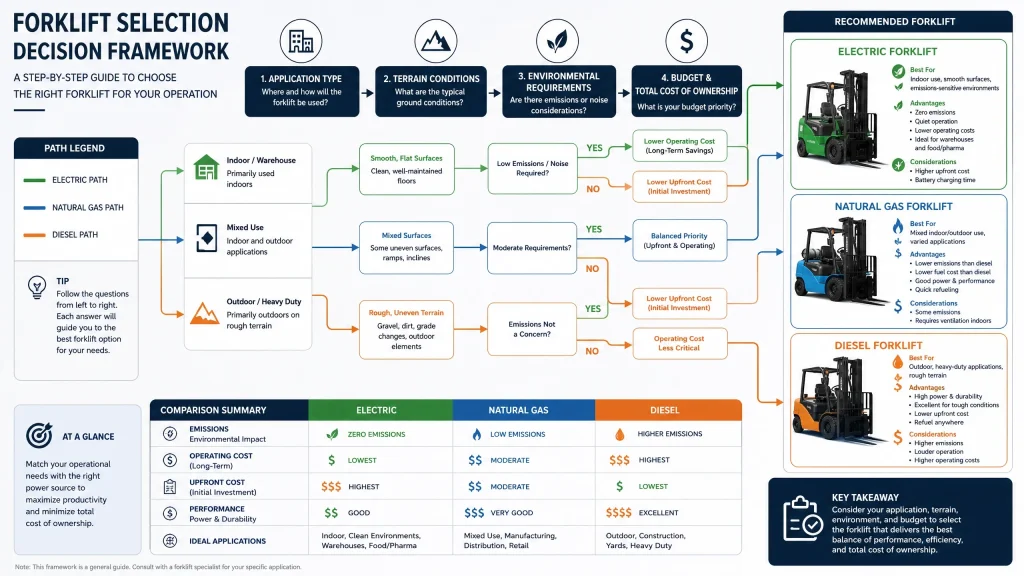
This section of the forklift selection guide sets out the four critical factors every forklift buying guide should address: application type, terrain conditions, environmental requirements, and budget considerations.
Factor 1: Application Type Assessment
Your primary material handling application determines the fundamental forklift category. Indoor warehouse operations require balance forklifts—either electric for clean environments or diesel/natural gas for mixed-use facilities. Outdoor construction and mining operations demand rough terrain forklifts with diesel power for maximum capability. Mixed-use environments benefit from natural gas rough terrain forklifts offering balanced performance across diverse conditions.
Factor 2: Terrain Conditions Evaluation
Terrain characteristics directly determine forklift suitability. Smooth concrete and asphalt surfaces support balance forklift operation. Gravel and dirt surfaces require rough terrain 2WD forklifts. Mud and soft soil demand rough terrain 4WD capability. Rocky, uneven terrain requires robust rough terrain diesel forklifts. Extreme conditions—steep grades exceeding 15 degrees, extremely soft soil, or highly irregular surfaces—may require telehandler rough terrain forklifts with extended boom capability.
Factor 3: Environmental Requirements Analysis
Environmental regulations and operational constraints increasingly influence forklift selection. Strict emission regulations favor electric or natural gas forklifts. Noise-sensitive environments require electric forklifts or natural gas alternatives. Indoor food/pharmaceutical facilities mandate electric forklifts for contamination control. Outdoor construction sites with no emission restrictions can optimize for diesel power and cost efficiency.
Factor 4: Total Cost of Ownership Calculation
Long-term cost analysis reveals surprising conclusions about forklift economics. While diesel forklifts offer lowest initial purchase prices, electric forklifts often deliver superior total cost of ownership over 5-10 year operational periods due to lower fuel and maintenance costs. Natural gas forklifts provide balanced economics for mixed-use environments. Budget constraints may necessitate diesel selection despite higher operating costs, while long-term operational efficiency may justify higher electric forklift initial investment.
Part 4: Data-Driven Selection Survey
To strengthen this forklift selection guide with real-world evidence, we surveyed 500+ material handling professionals across diverse industries. The research below shows how operational factors influence forklift selection in real-world environments.
Survey Methodology
We conducted anonymous surveys with warehouse managers, construction site supervisors, mining operations directors, and logistics coordinators across North America, Europe, and Asia-Pacific regions. Respondents evaluated their current forklift selections against operational requirements, cost performance, and satisfaction metrics.
Key Findings
Finding 1: Terrain Remains the Primary Selection Driver (68% of respondents)
When asked about the most important factor in forklift selection, 68% of respondents identified terrain conditions as the primary consideration. This finding reinforces that rough terrain forklifts remain essential for outdoor operations, while balance forklifts dominate indoor environments.
Finding 2: Total Cost of Ownership Increasingly Influences Decisions (54% of respondents)
Over half of respondents reported that total cost of ownership—including fuel, maintenance, and battery replacement—now influences forklift selection more than initial purchase price. This trend reflects growing awareness of long-term operational economics.
Finding 3: Environmental Regulations Drive Electric Adoption (47% of respondents)
Nearly half of respondents indicated that environmental regulations or corporate sustainability commitments influenced their decision to adopt electric forklifts. This trend is accelerating, particularly in Europe and North America.
Finding 4: Rough Terrain Diesel Forklifts Remain Dominant in Construction (82% of construction respondents)
Among construction industry respondents, 82% operate diesel rough terrain forklifts. This reflects the continued dominance of diesel power in heavy-duty outdoor applications.
Finding 5: Electric Forklifts Dominate Warehouse Operations (71% of warehouse respondents)
Among warehouse and logistics respondents, 71% operate primarily electric forklifts. This reflects the compelling economics and environmental benefits of electric technology in controlled indoor environments.
The Rough Terrain Forklift Advantage: Why Outdoor Operations Choose Diesel Power
While electric forklifts dominate warehouses and natural gas forklifts serve mixed-use environments, diesel rough terrain forklifts remain unmatched for outdoor, heavy-duty operations. This part of the forklift selection guide explores why rough terrain diesel forklifts represent the optimal choice for construction, mining, and agricultural applications.
Superior Power and Torque
Diesel engines deliver 30-40% more torque than natural gas equivalents and 50-60% more than electric systems of comparable weight. This mechanical advantage translates directly to:
- Gradeability: Diesel rough terrain forklifts maintain full load capacity on slopes exceeding 15 degrees, while balance forklifts are limited to 5-8 degree grades
- Acceleration: Rapid acceleration enables quick material transport across job sites, improving productivity
- Load Handling: Consistent power delivery enables precise load placement even on uneven terrain
Unlimited Operational Range
Diesel fuel tanks provide 8-12 hour operational range without refueling. This capability enables:
- Extended Shifts: Operators can work full shifts without refueling interruptions
- Remote Operations: Job sites lacking refueling infrastructure remain accessible
- Cost Efficiency: Fewer refueling stops reduce operational downtime and labor costs
Weather Independence
Diesel engines maintain consistent performance regardless of environmental conditions:
- Temperature Extremes: Diesel engines operate reliably in extreme heat and cold, while electric batteries lose efficiency in cold temperatures
- Wet Conditions: Diesel forklifts operate safely in rain and snow, while electric traction is compromised on wet surfaces
- Altitude Performance: Diesel engines maintain power at high altitudes, while electric systems experience range reduction
Durability in Harsh Environments
Diesel rough terrain forklifts are engineered for extreme durability:
- Reinforced Frames: Heavy-gauge steel construction withstands repeated shock loads from rough terrain
- Robust Suspension: Suspension systems absorb impacts from rocky, uneven surfaces while maintaining load stability
- Sealed Components: Engine and hydraulic systems resist mud, dust, and moisture infiltration
Economic Efficiency for Heavy-Duty Operations
While diesel fuel costs remain higher than electricity, the superior power and durability of diesel rough terrain forklifts deliver superior cost-per-ton-moved economics in heavy-duty applications:
- Higher Load Capacity: Diesel rough terrain forklifts handle loads exceeding 5 tons, while electric systems rarely exceed 3 tons
- Faster Cycle Times: Superior power enables faster material transport, improving productivity
- Extended Equipment Life: Robust construction extends operational lifespan to 10,000+ hours, compared to 5,000-7,000 hours for lighter-duty equipment
Implementation Guide: Selecting Your Ideal Forklift
Step 1: Assess Your Operating Environment
Conduct a comprehensive analysis of your material handling environment:
- Terrain Assessment: Evaluate surface conditions—concrete, gravel, mud, or rocky terrain
- Load Requirements: Determine typical and maximum load weights
- Distance Requirements: Calculate average transport distances
- Frequency: Assess material handling volume and operational hours
- Environmental Constraints: Identify emission regulations, noise restrictions, or contamination concerns
Step 2: Evaluate Power Source Options
Based on your environmental assessment, evaluate each power source:
| Factor | Diesel | Natural Gas | Electric |
|---|---|---|---|
| Outdoor Capability | Excellent | Good | Poor |
| Indoor Capability | Fair | Good | Excellent |
| Power/Torque | Excellent | Good | Fair |
| Operating Cost | High | Moderate | Low |
| Initial Cost | Low | Moderate | High |
| Emissions | High | Low | Zero |
| Noise Level | High | Moderate | Low |
Step 3: Determine Configuration Type
Select between rough terrain and balance forklift configurations:
- Rough Terrain: Required for outdoor, uneven terrain, or heavy-duty applications
- Balance Forklift: Optimal for indoor, warehouse, or precision material handling
- Mixed Operations: Consider dual-fleet approach with specialized equipment for each environment
Step 4: Calculate Total Cost of Ownership
Project 5-10 year operational costs including:
- Initial purchase price
- Fuel or electricity costs
- Maintenance and repairs
- Battery replacement (for electric models)
- Operator training
- Insurance and registration
Step 5: Consult with Equipment Specialists
Engage with forklift specialists who understand your specific operational requirements. Professional guidance can identify optimization opportunities and prevent costly selection errors.
Frequently Asked Questions
Here are the five questions buyers ask most often when working through equipment decisions for a new or expanding operation.
How do I start a forklift selection guide for a new operation?
Begin with the heaviest load, load center, lift height, ground conditions, aisle or access space, duty cycle, power infrastructure, emissions requirements, and service support.
Should I choose a diesel, gas, or electric forklift?
Compare the operating environment, shift pattern, ventilation, refueling or charging access, emissions rules, maintenance, and total cost of ownership. There is no single power source that fits every operation.
When is a rough terrain forklift the right choice?
Consider one when the route includes uneven or unpaved ground, outdoor material handling, grades, or site access conditions that exceed a warehouse forklift’s intended environment. Verify the load chart and site fit.
What information should a forklift supplier receive before quoting?
Provide the load and load center, lift height, dimensions, surface and grades, operating hours, attachments, indoor/outdoor mix, destination market, and required service or compliance documents.
Why should total cost of ownership be part of forklift selection?
Purchase price is only one factor. Energy or fuel, maintenance, tires, batteries or engine service, downtime, training, parts, and end-of-life planning can materially affect the operating cost.
Conclusion: Matching Equipment to Application
The forklift industry’s diversity reflects the genuine complexity of material handling operations. There is no universal “best” forklift—only optimal selections for specific applications.
Diesel Rough Terrain Forklifts for Heavy-Duty Outdoor Work
For outdoor, heavy-duty operations, diesel rough terrain forklifts remain unmatched. Their superior power, unlimited operational range, and weather independence make them essential for construction, mining, and agricultural applications. Visit our Rough Terrain Forklift Product Page to explore our diesel rough terrain forklift lineup.
Natural Gas Forklifts for Mixed-Use Environments
For mixed-use environments, natural gas rough terrain forklifts provide balanced performance and environmental responsibility. They deliver adequate power for outdoor operations while maintaining cleaner emissions than diesel alternatives.
Electric Balance Forklifts for Indoor Warehouses
For indoor warehouse operations, electric balance forklifts deliver superior economics and environmental benefits. Their lower operating costs, zero emissions, and quiet operation make them optimal for logistics centers, manufacturing facilities, and retail operations.
Systematic Evaluation Delivers the Best Result
The key to successful forklift selection lies in systematic evaluation of your specific operational requirements, honest assessment of environmental constraints, and realistic calculation of total cost of ownership. When these factors align with appropriate equipment selection, the result is optimized material handling efficiency, reduced operational costs, and enhanced workplace safety.
Whether your operations demand the raw power of diesel rough terrain forklifts, the balanced performance of natural gas equipment, or the efficiency of electric systems, LT FORKLIFT offers comprehensive solutions tailored to your specific needs. Explore our complete product lineup to discover the ideal forklift for your operations.
For personalized guidance on forklift selection, contact our sales specialists today. We’re committed to helping you select equipment that maximizes productivity while minimizing total cost of ownership.