What Is an Electric Counterbalance Forklift?
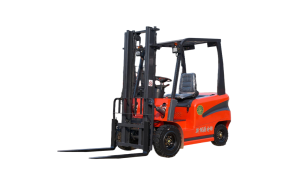
An electric counterbalance forklift is a battery-powered forklift that uses a rear counterweight to balance loads carried on the front forks. Unlike a reach truck, it does not rely on outrigger legs to support the load. This layout allows the operator to approach pallets, trailers, loading areas, and production lines directly while the traction battery supplies the electric drive system.
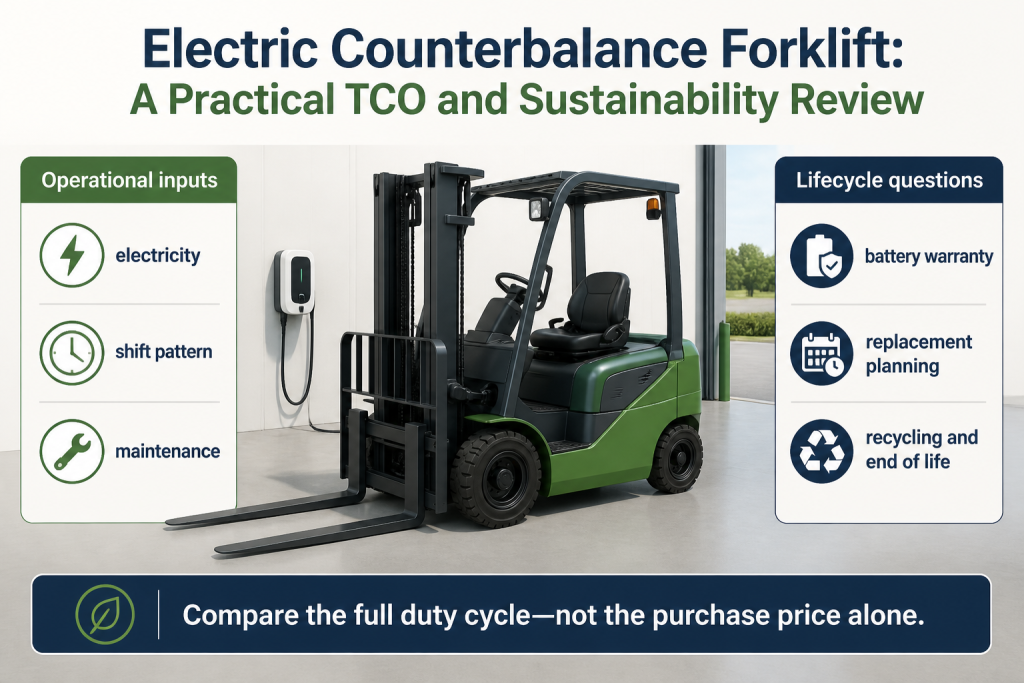
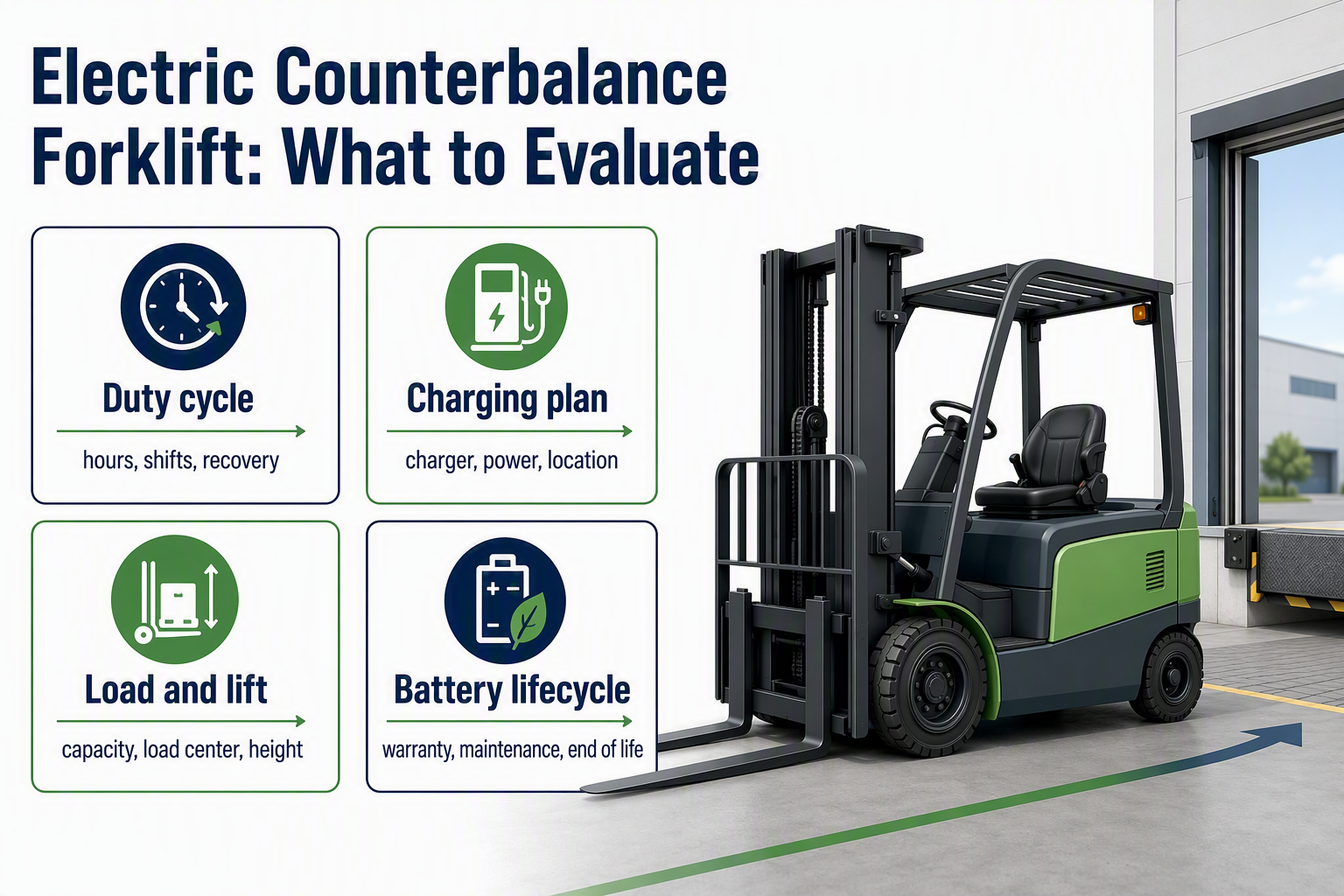
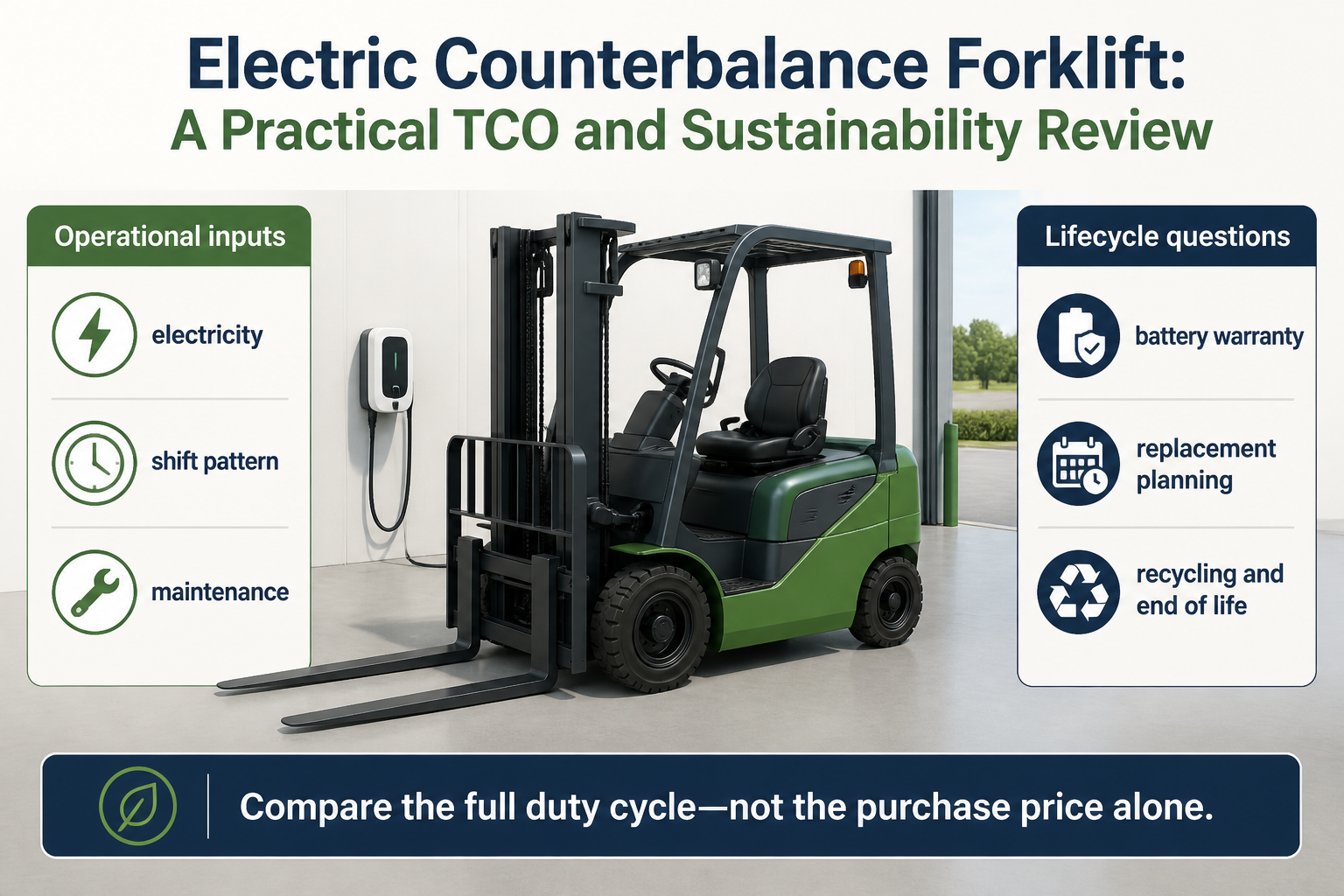
For B2B buyers, the important question is not simply whether a forklift is electric. The correct evaluation must include the load, load center, lift height, duty cycle, floor and weather conditions, charging plan, maintenance support, and battery lifecycle. A battery-powered truck can be a strong fit for indoor and mixed operations, but the site must be able to support its energy and operating requirements.
Quick answer: Choose an electric counterbalance forklift when clean operation, low noise, indoor maneuverability, and a workable charging plan matter more than long unplanned outdoor shifts or immediate refueling.
Sarah Johnson, Sustainability & Environmental Affairs Manager at LT FORKLIFT, focuses on how equipment choices affect green logistics, energy planning, and long-term operating responsibility.
When Should You Choose an Electric Counterbalance Forklift?
An electric counterbalance forklift is commonly considered for operations that need:
- No direct tailpipe emissions during operation;
- Lower operating noise in warehouses, production areas, and distribution centers;
- Controlled indoor material handling;
- Frequent starts, stops, and precise load placement;
- A charging area with suitable electrical capacity;
- A documented plan for battery maintenance, warranty, replacement, and end of life.
It may be suitable for warehouses, manufacturing facilities, food and beverage operations, retail distribution, and paved loading areas. However, an electric truck is not automatically the right choice for every outdoor route. Rain exposure, soft ground, long travel distances, extreme temperatures, heavy attachments, and multi-shift duty can change the required configuration.
For a general explanation of the counterweight principle, see What Is a Counterbalance Forklift?.
How Do Electric Counterbalance Forklifts Compare with Diesel Models?
The comparison should focus on the actual work cycle rather than a single headline benefit. Electric and diesel trucks solve different operating problems.
| Decision factor | Electric counterbalance forklift | Diesel counterbalance forklift |
|---|---|---|
| Local exhaust emissions | No direct tailpipe emissions during operation | Combustion emissions during operation |
| Noise | Usually lower operating noise | Usually higher engine and exhaust noise |
| Energy supply | Requires charging equipment and electrical planning | Requires fuel storage or refueling access |
| Routine powertrain maintenance | No engine oil, exhaust, or fuel-filter service | Engine, fuel, exhaust, and emissions-system maintenance |
| Shift planning | Requires charging or battery recovery planning | Refueling is generally faster, subject to site rules |
| Indoor suitability | Often preferred where clean operation matters | Depends on ventilation, emissions rules, and local requirements |
| Outdoor capability | Depends on tires, protection, ground, weather, and duty cycle | Often selected for demanding outdoor work |
| Lifecycle questions | Battery warranty, capacity retention, recycling, and electricity source | Fuel consumption, emissions compliance, maintenance, and engine lifecycle |
This table is a decision framework, not a universal ranking. The best choice depends on the site and the specific truck configuration.
How Should You Evaluate the Duty Cycle?
Duty cycle is the relationship between the work a forklift performs and the time and energy available to perform it. Before requesting a quotation, document:
- Operating hours: How many hours does the truck work per shift and per day?
- Shift pattern: Is the operation single-shift, multi-shift, or variable?
- Load profile: What are the typical and heaviest loads, and what is the load center?
- Travel distance: How far does the truck travel between loading, storage, and dispatch points?
- Lift activity: How often does the truck lift, lower, stack, and reposition loads?
- Surface conditions: Is the floor smooth concrete, paved outdoor surface, or mixed terrain?
- Recovery time: Are there natural breaks during which the battery can be charged?
A lithium-ion forklift may support opportunity-charging strategies in some operations, but the charger, battery, electrical supply, and manufacturer instructions must be matched to the truck. Do not assume that a battery can support a full multi-shift operation without a documented energy plan.
What Charging Infrastructure Does the Site Need?
Charging is an operational system, not just an accessory. A responsible charging plan should cover:
Charger selection
Confirm the charger type, output, connection, and compatibility with the exact battery system. The supplier should provide the charging requirements for the final configuration rather than a generic estimate.
Electrical capacity
The facility should confirm that its electrical service can support the planned chargers alongside existing machinery, lighting, HVAC, and other loads. A qualified electrician should review the installation before equipment arrives.
Charging location
Choose a location that supports safe access, traffic separation, ventilation requirements, cable management, housekeeping, and protection from unsuitable weather exposure. The charging area should not obstruct pedestrian routes or emergency access.
Recovery windows
Map breaks, shift changes, loading pauses, and planned maintenance windows. A battery plan should explain when energy is recovered, what happens during an extended peak period, and whether a spare battery or additional truck is required.
Operating controls
Document who can connect the charger, how damage is reported, how charging status is checked, and what operators should do when the battery reaches a low state of charge. These procedures belong in the site’s training and maintenance system.
The U.S. Department of Energy’s Alternative Fuels Data Center guidance on electric vehicles explains the basic relationship between battery-electric equipment, charging equipment, and electricity planning. Forklift buyers should apply the same planning discipline to the specific industrial truck and facility.
How Do Load and Lift Requirements Affect Selection?
Electric power does not remove the need for a proper capacity review. The buyer should provide the supplier with:
- Rated load and heaviest real load;
- Load center and pallet dimensions;
- Required lift height and mast type;
- Attachment type and attachment weight;
- Aisle width and turning space;
- Floor loading limits;
- Door, dock, ramp, and trailer dimensions;
- Required travel speed and operating pattern.
The final load chart is more important than a general product label. A truck rated for a particular capacity at one load center may have a lower allowable capacity when the load extends farther forward, an attachment is added, or the load is raised to a greater height.
LT FORKLIFT’s product center lists K2 electric counterbalance models in 2.5-ton, 3-ton, 3.5-ton, and 4-ton configurations, with the published product pages identifying lithium-ion electric power and a 3,000 mm lift height for the listed models. Confirm the current datasheet, load chart, battery specification, and destination-market requirements before ordering.
What Are the Sustainability Questions Beyond “Electric”?
Electric power can reduce local exhaust emissions, but a sustainability review should cover the complete operating lifecycle.
Electricity source
The environmental profile of an electric forklift depends partly on how the electricity is generated. A site using renewable electricity may have a different lifecycle profile from a site using a carbon-intensive grid. Record the energy source used in the calculation instead of making a universal claim.
Battery production and maintenance
Ask for battery chemistry, warranty terms, expected operating conditions, maintenance requirements, and capacity-retention information. The supplier should identify which claims apply to the exact battery and forklift configuration.
Replacement planning
Battery replacement affects budget, downtime, safety planning, and lifecycle impact. Build replacement assumptions into the total cost model, but do not assume a fixed service life without manufacturer documentation.
End-of-life handling
The battery should have a documented recycling, return, or disposal pathway. The European Commission’s battery policy and lifecycle overview explains why battery production, use, collection, recycling, and end-of-life management are central to a circular-economy approach.
Equipment utilization
The most sustainable truck is not necessarily the one with the lowest operating emissions in isolation. A properly sized truck that completes the required work safely and reliably can avoid unnecessary replacement, rework, idle time, and premature equipment turnover.
What Maintenance Does an Electric Forklift Need?
Electric equipment still needs disciplined maintenance. The maintenance plan should address:
- Battery condition and manufacturer-approved inspection;
- Charger, connector, and cable condition;
- Tires, forks, mast, chains, and hydraulic systems;
- Brakes, steering, warning devices, and visibility systems;
- Fasteners, guards, and overhead protection;
- Software or telematics updates where applicable;
- Pre-shift inspections and defect reporting;
- Periodic examinations required by the destination market.
Removing engine oil changes does not remove safety or mechanical maintenance. A well-maintained electric counterbalance forklift protects uptime, battery performance, and operator safety.
How Should You Compare Total Cost of Ownership?
A useful total cost of ownership model should compare the same period and the same workload for each candidate truck.
| Cost area | Electric questions | Diesel questions |
|---|---|---|
| Acquisition | Truck, battery, charger, installation | Truck, fuel system, accessories |
| Energy | Electricity tariff, demand charges, charging losses | Fuel price, storage, delivery, consumption |
| Maintenance | Battery, charger, tires, hydraulics, electrical systems | Engine, fuel, exhaust, filters, tires, hydraulics |
| Downtime | Charging availability, recovery, spare battery | Refueling, service intervals, parts availability |
| Safety | Charging procedure, battery handling, traffic controls | Fuel handling, exhaust, ventilation, traffic controls |
| Lifecycle | Warranty, replacement, recycling | Engine lifecycle, emissions equipment, disposal |
Use site-specific assumptions. A generic claim that one power source is always cheaper or greener is not a substitute for a documented operating model.
Frequently Asked Questions
What is an electric counterbalance forklift?
An electric counterbalance forklift is a battery-powered forklift with a rear counterweight that balances the load carried on the front forks. It is commonly evaluated for indoor and paved material-handling operations where clean operation, low noise, and precise control are important.
Are electric counterbalance forklifts suitable for outdoor work?
They can be suitable for some paved outdoor or mixed operations when the tires, weather protection, ground conditions, battery system, and duty cycle match the site. Unpaved ground, severe weather, long continuous shifts, or heavy-duty applications may require a different configuration.
How long can an electric counterbalance forklift operate?
Operating time depends on battery capacity, load, travel distance, lift frequency, temperature, tire condition, operator behavior, and shift pattern. Request an application-specific energy estimate rather than relying on a generic runtime statement.
What should I include in an electric forklift charging plan?
Include charger compatibility, electrical capacity, charging location, traffic and safety controls, recovery windows, operator procedures, maintenance, and a contingency plan for peak demand or unexpected downtime.
Are lithium-ion forklifts more sustainable than diesel forklifts?
They may reduce local exhaust emissions and noise in suitable operations, but the full comparison should include electricity generation, battery production, maintenance, replacement planning, recycling, duty cycle, and the actual site requirements.
What information should a supplier provide before I buy?
Request the exact load chart, battery and charger specification, operating assumptions, warranty, maintenance schedule, energy requirements, dimensions, safety documentation, compliance information, service coverage, and battery end-of-life guidance.
Conclusion: Select the System, Not Only the Truck
An electric counterbalance forklift can support cleaner and quieter material handling, but its success depends on the complete operating system. Buyers should connect the truck specification with the load, lift height, duty cycle, charging infrastructure, electricity plan, maintenance process, and battery lifecycle.
Sarah Johnson’s sustainability recommendation is simple: compare the full duty cycle before selecting the power source. A well-matched electric forklift can support responsible B2B logistics, while a poorly planned charging or battery program can create avoidable cost and operational risk.
For a broader power-source comparison, read the forklift selection guide. To discuss a configuration for your facility, contact LT FORKLIFT.
About the Author
Sarah Johnson is the Sustainability & Environmental Affairs Manager at LT FORKLIFT Sustainability Division. She focuses on green logistics, carbon-conscious operations, renewable energy applications, and practical sustainability planning for material-handling businesses.