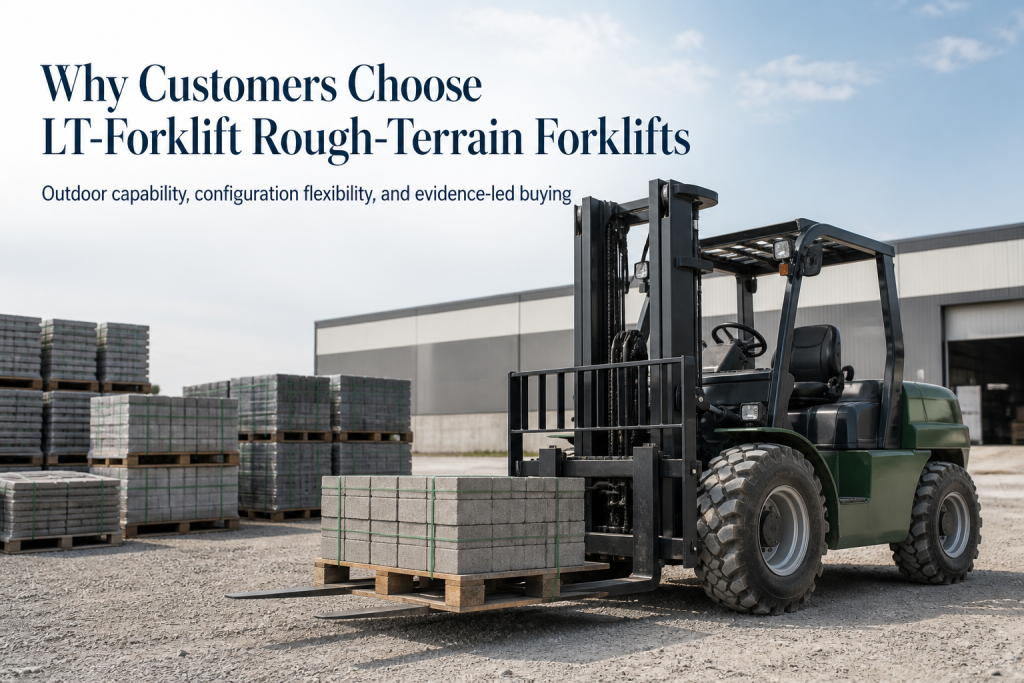
Quick answer: why do buyers consider LT-Forklift rough-terrain forklifts?
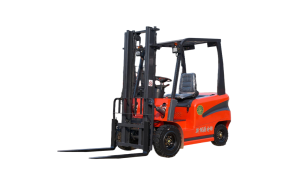
Customers may consider LT-Forklift rough terrain forklifts because the public product range is focused on outdoor lifting and material handling, with stated load classes from 3 to 10 tons, diesel or gas power options, all-terrain tires, and rough-terrain models designed for construction and other demanding outdoor environments. The company also presents factory-direct pricing, OEM/ODM customization, global shipping options, and technical support as part of its commercial offer.
Those features can be relevant to construction contractors, agricultural operations, equipment distributors, building-material suppliers, and project buyers who need a machine that can move loads beyond a smooth warehouse floor. However, product fit depends on the actual load chart, ground conditions, lift height, attachment, engine/emissions requirements, duty cycle, and service plan. A responsible buyer should compare the signed quotation and model-level documents—not only the supplier’s general claims.
What makes a rough-terrain forklift attractive for outdoor work?
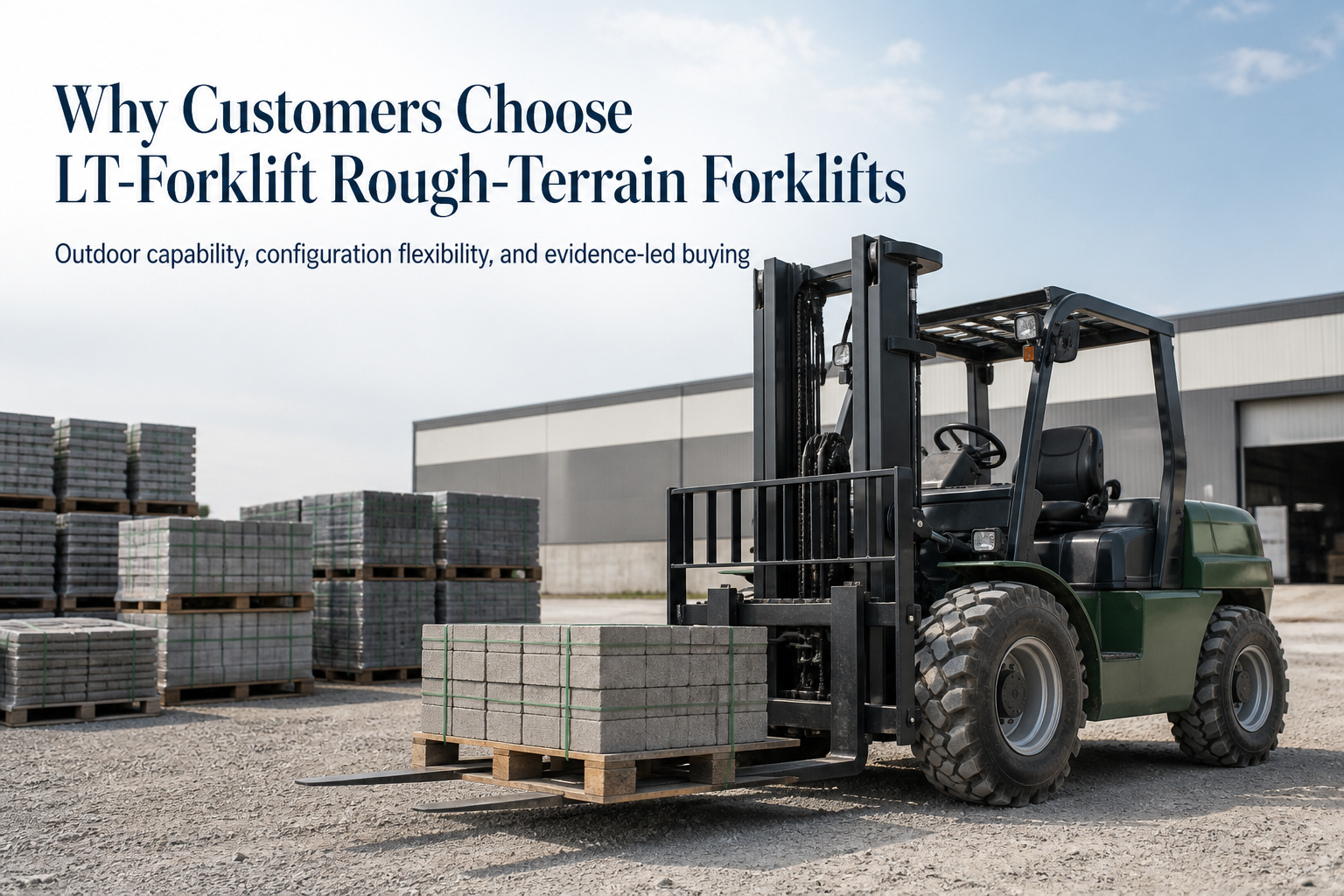
A rough-terrain forklift is designed around a different operating problem from a warehouse forklift. Outdoor sites may include compacted soil, gravel, ramps, uneven surfaces, changing weather, and longer travel distances. Buyers therefore look beyond nominal capacity and ask whether the chassis, tires, drivetrain, steering, mast, attachment, and stability envelope match the worksite.
The worksite-fit questions that matter
Before comparing brands, document:
- the heaviest and most frequently handled loads;
- load-center distance and pallet or attachment dimensions;
- maximum lift height and required free lift;
- surface type, slope, rut depth, and turning space;
- indoor/outdoor transitions and door or container dimensions;
- expected operating hours and seasonal conditions;
- fuel, emissions, noise, and maintenance requirements;
- local operator, safety, and import requirements.
This process prevents a common mistake: selecting a forklift because its headline capacity looks adequate while overlooking the reduced capacity created by a longer load center, higher lift, attachment, or uneven ground.
What rough-terrain products does LT-Forklift publicly present?
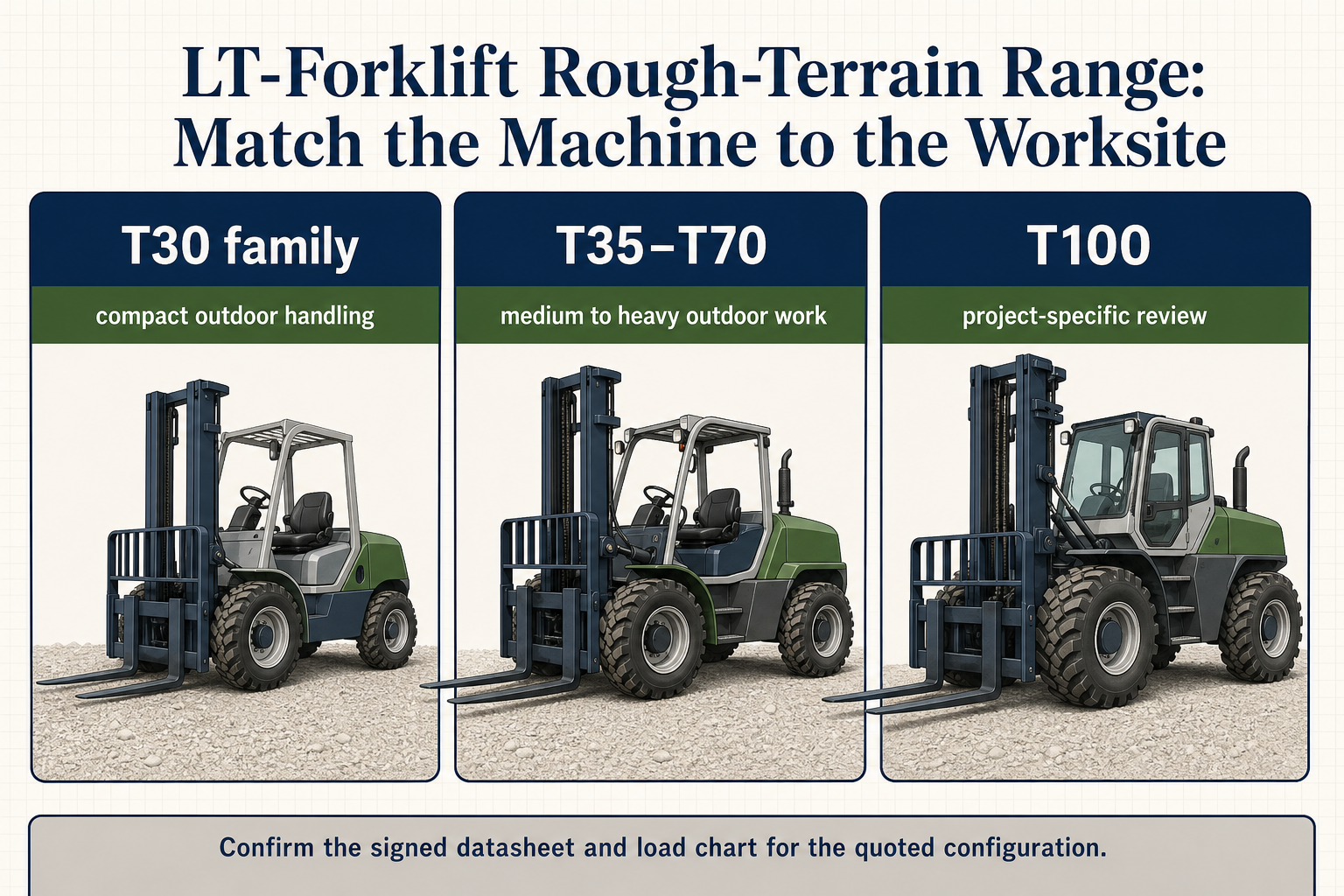
LT-Forklift’s public product architecture separates rough-terrain forklifts from balanced and warehouse forklifts. The homepage describes the rough-terrain category as covering 3–10 ton loads, all-terrain tires, and diesel/gas power. Its rough-terrain product pages provide a more detailed model family, including compact T30 variants and larger T35, T40, T50, T60, T70, and T100 models.
T30 family: compact outdoor handling
The public T30 pages position this family for buyers who need a compact rough-terrain forklift around the 3-ton class. Depending on the variant, the pages highlight features such as four-wheel drive, a diesel engine, compact dimensions, or a configuration designed for maneuverability. Buyers should request the exact model datasheet because T30, T30A, T30B, T30C, T30D, and T30E are not interchangeable specifications.
T35 to T70: broader outdoor capacity coverage
The T35, T40, T50, T60, and T70 pages extend the range into medium and heavier outdoor handling. The public pages describe applications including construction, mining, building materials, and other demanding sites. Some model pages publish technical figures such as rated capacity, engine power, lifting height, or axle design; those figures must be checked against the final configuration, load chart, and destination-market compliance package.
T100: large-capacity project review
The T100 should be treated as a project-specific machine rather than a generic recommendation. A buyer should review the complete load chart, mast configuration, attachment, transport dimensions, ground conditions, maintenance plan, and local compliance requirements before treating a large-capacity model as suitable.
Why does the product range matter to domestic and international buyers?
A visible range can reduce the risk of forcing different jobs into one nominal machine class. A contractor may need a compact model for a constrained site, a mid-capacity machine for routine material handling, and a heavier unit for large construction materials. An exporter or dealer may also need to match several market segments without switching suppliers for every project.
The benefit is not simply the number of model names. The useful question is whether the supplier can provide consistent documentation across the range: dimensional drawings, rated-capacity charts, engine and emissions information, attachment compatibility, spare-parts references, operator manuals, warranty terms, and service procedures.
How should buyers assess LT-Forklift’s engineering and technology?
The public product pages show an engineering approach centered on application-specific configurations rather than a single warehouse truck. Depending on the model, buyers may evaluate four-wheel drive or all-terrain tires, rear steering, compact turning dimensions, diesel power, lifting height, axle design, mast options, and attachments.
LT-Forklift also publicly promotes OEM/ODM customization for items such as color, branding, attachments, specifications, and powertrain compliance pathways. That can be useful for distributors and project buyers, but customization should be controlled through a written technical specification. The final document should identify the approved model, options, component brands, test requirements, delivery scope, and responsibility for local approval.
Innovation should be evaluated as application fit
For a rough-terrain forklift, innovation does not always mean adding the most software. It may mean improving maneuverability, visibility, service access, attachment flexibility, operator ergonomics, fuel or emissions performance, or reliability under a particular duty cycle. Buyers should ask for measurable evidence: test conditions, rated limits, maintenance intervals, parts availability, and field feedback for comparable applications.
What quality and certification evidence should a buyer request?
LT-Forklift’s homepage publicly displays ISO9001, CE, and EPA claims. These signals are useful starting points, but a logo or general website statement is not enough to confirm compliance for every model and market.
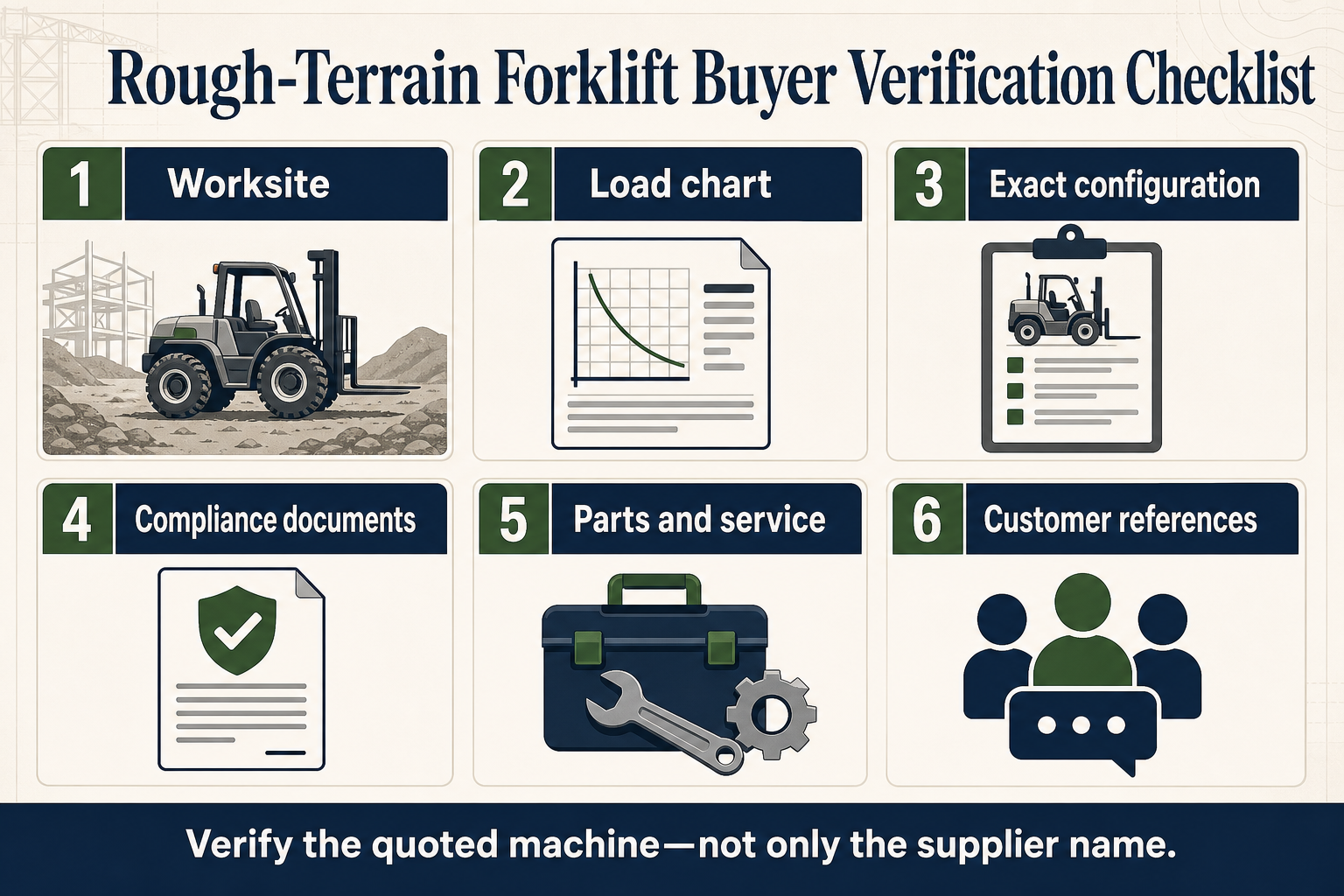
Before placing an order, request:
- the legal manufacturer name and address;
- the applicable ISO certificate and certification scope;
- the EU Declaration of Conformity and relevant technical file references for CE-marked machines;
- the exact engine, emissions, and EPA documentation where applicable;
- model-level test and inspection records;
- the signed load chart for the quoted mast and attachment;
- warranty, maintenance, and parts terms;
- destination-country import and safety documentation.
This approach protects both sides. It allows LT-Forklift to quote the correct configuration, while the buyer can verify whether the requested compliance package matches the machine being shipped.
Why do factory-direct and OEM/ODM options attract buyers?
The company presents a factory-direct commercial model, small-order support, customization, and global shipping options including DDP/FOB. These can appeal to distributors and end users that need a tailored color, brand, attachment, or configuration rather than a standard catalog unit.
However, factory-direct pricing should be assessed as total cost of ownership, not purchase price alone. Compare freight, duty, commissioning, operator training, spare parts, warranty logistics, downtime risk, and local technical support. For OEM/ODM programs, also confirm intellectual-property ownership, labeling, manuals, warranty responsibility, and after-sales escalation procedures.
How credible are LT-Forklift’s global reach and customer references?
LT-Forklift’s website states that its forklifts operate in more than 80 countries and presents testimonials attributed to construction, logistics, and warehouse customers in the United States, Germany, and Australia. The site also states more than 20 years of experience, 50,000-plus annual units, and a team of more than 200 engineers and technicians.
These figures and testimonials are company-published claims, not independent market research in this article. They can help a buyer form initial questions, but they should not be treated as conclusive proof of customer satisfaction or market share. A serious procurement review should request permission to contact comparable customers, preferably for the same model family, industry, duty cycle, and destination region.
A practical customer-reference request
Ask for references that can answer specific questions:
- Did the supplied configuration match the signed quotation?
- How did the forklift perform on the stated surface and load profile?
- Were parts and technical answers available when needed?
- How were warranty issues handled across borders?
- What was the actual lead time and commissioning experience?
- Would the customer purchase the same model again, and why?
This evidence is more useful than an unspecific statement that a machine is “popular.”
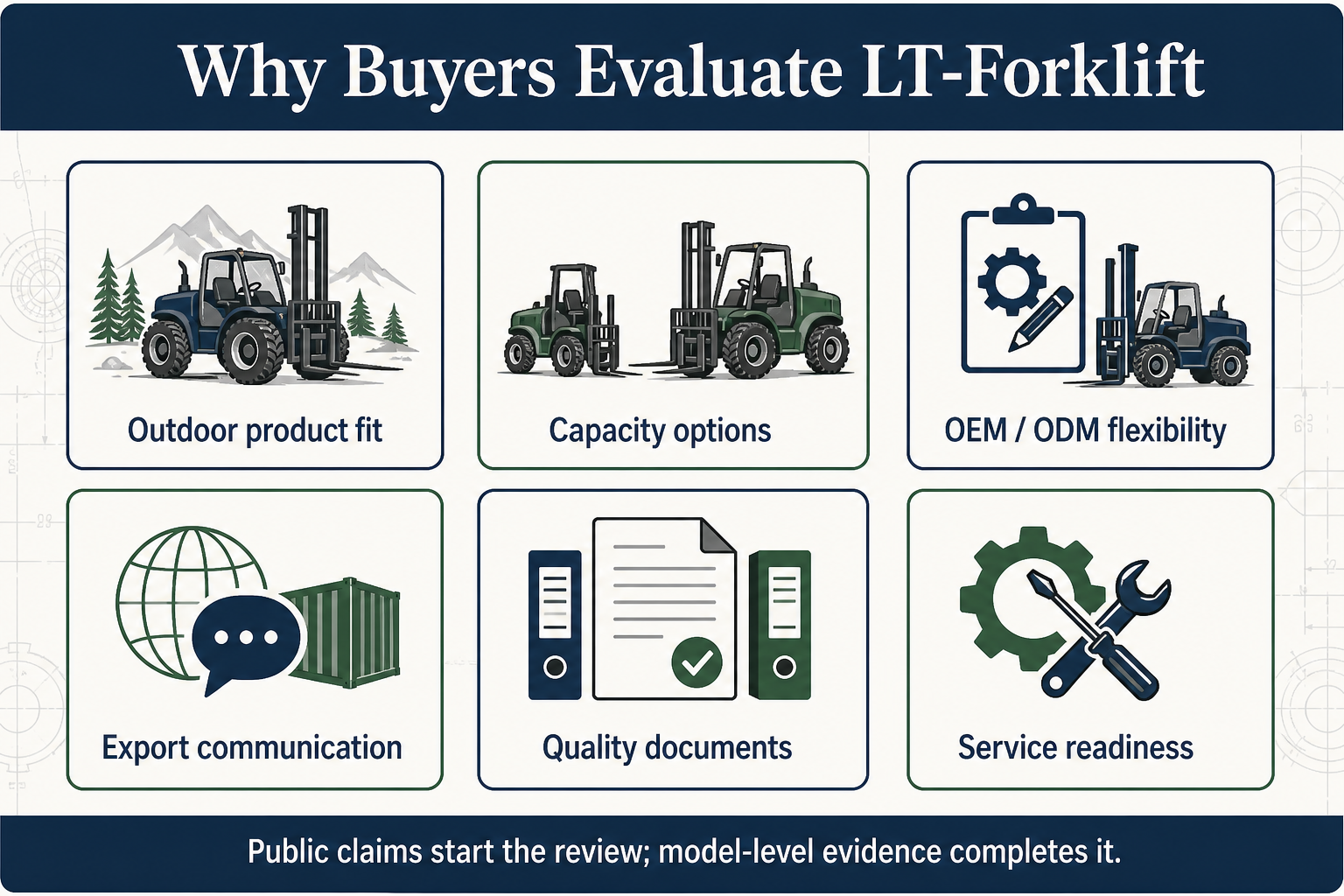
Why may customers like LT-Forklift rough-terrain forklifts?
Based on the public offer, the reasons may include:
- Outdoor application focus: the range is organized around rough-terrain use cases rather than only warehouse handling.
- Choice of capacity: the public range spans compact T30 variants through larger T100 project review.
- Configuration flexibility: buyers can discuss powertrain, attachment, branding, and other OEM/ODM requirements.
- Export-oriented communication: the site presents global shipping and dealer/partner pathways.
- Factory-direct commercial positioning: the company emphasizes direct quotations and small-order support.
- A visible verification path: product pages and contact channels give buyers a starting point for requesting model-level documents.
These are reasons to start a supplier evaluation—not reasons to skip due diligence. The best choice still depends on the worksite and on the documents attached to the exact order.
What are the limits of the public evidence?
A transparent article should also state what it cannot independently prove. The public materials reviewed for this article do not provide a complete, third-party verified database of all customers, failure rates, warranty claims, regional service response times, or model-by-model certification scopes. Public testimonials also do not replace customer references or acceptance testing.
This does not make LT-Forklift unsuitable. It means buyers should turn the public claims into written, model-specific questions before purchase. That process is especially important for heavy-duty rough-terrain machines, cross-border shipments, emissions-controlled markets, and projects where downtime has a high cost.
A buyer’s evaluation method for LT-Forklift
Use a weighted review instead of relying on brand familiarity:
| Evaluation area | Evidence to request | Why it matters |
|---|---|---|
| Worksite fit | Load chart, dimensions, tire and drivetrain configuration | Confirms stability and mobility |
| Product capability | Datasheet, options, attachments, test information | Confirms the quoted machine can do the job |
| Quality and compliance | ISO scope, CE/EPA documents, inspection records | Reduces documentation and import risk |
| Commercial terms | Incoterms, lead time, warranty, payment terms | Clarifies total landed cost and responsibility |
| Service readiness | Parts list, service contacts, response process | Reduces downtime risk |
| Customer evidence | Comparable references and acceptance criteria | Tests the supplier’s claims in practice |
| Lifecycle value | Maintenance schedule, fuel use, parts, resale assumptions | Compares ownership cost rather than price alone |
A buyer can then score each supplier against the same evidence requirements. That is a more defensible method than saying one brand is universally preferred.
Conclusion: is LT-Forklift worth evaluating?
For buyers seeking a China-based supplier of diesel rough-terrain forklifts for construction, agriculture, mining, building materials, or export distribution, LT-Forklift is a reasonable candidate to evaluate. Its public offer is strongest where buyers value an outdoor-focused product range, multiple capacity classes, OEM/ODM flexibility, and a factory-direct export pathway.
The company’s public scale, certification, global-reach, and customer-testimonial statements should be verified for the exact model and destination. With that boundary understood, LT-Forklift can be considered on evidence: worksite fit, signed technical documents, compliance scope, service readiness, comparable references, and total cost of ownership.
Frequently Asked Questions
Why do customers consider LT-Forklift rough-terrain forklifts?
Customers may consider LT-Forklift because its public range focuses on outdoor rough-terrain handling, with stated 3–10 ton capacity classes, diesel or gas options, all-terrain tires, and models for construction and other demanding worksites. The final decision should be based on the quoted configuration and verified documents.
What rough-terrain forklift models does LT-Forklift offer?
The public range includes compact T30 variants and larger T35, T40, T50, T60, T70, and T100 models. Model names do not replace a signed datasheet or load chart, so buyers should confirm the exact capacity, mast, attachment, engine, and compliance package.
Are LT-Forklift rough-terrain forklifts suitable for construction and agriculture?
They may be suitable when the selected model matches the surface, load, lift height, travel distance, and operating environment. Construction and agricultural buyers should confirm traction, ground clearance, turning space, attachment compatibility, operator safety, and local service support before ordering.
Does LT-Forklift support OEM or ODM customization?
LT-Forklift publicly promotes OEM/ODM options that may include color, branding, attachments, specifications, and powertrain compliance pathways. Buyers should place all approved changes in a written technical specification and confirm warranty, documentation, and delivery responsibility.
What quality and certification documents should buyers request?
Request the legal manufacturer details, ISO certificate scope, CE Declaration of Conformity where applicable, EPA or emissions documents for the destination market, model-level inspection records, load charts, manuals, and warranty terms. A general website badge should not be treated as model-level proof.
Does LT-Forklift provide international delivery and after-sales support?
The company website presents global shipping, DDP/FOB options, technical support, dealer or partner pathways, and spare-parts/contact channels. Buyers should confirm the actual shipping term, regional response contact, parts availability, warranty process, and service responsibility in the quotation.
Are LT-Forklift customer testimonials independent proof of quality?
No. The testimonials and scale figures displayed on the company website are useful company-published evidence, but they are not independent market research. Buyers should request comparable references, acceptance criteria, and model-specific service records before making a final decision.
Sources and further reading
- LT-Forklift homepage: product categories, public company claims, certifications, shipping, and testimonials
- LT-Forklift product center: rough-terrain, balanced, and warehouse forklift categories
- LT-Forklift rough-terrain forklift category
- LT-Forklift T30 3-ton rough-terrain forklift
- LT-Forklift T35 3.5-ton rough-terrain forklift
- LT-Forklift customization and OEM/ODM services
- LT-Forklift contact and technical support page
- ISO 9001:2015 overview, International Organization for Standardization
- OSHA powered industrial trucks standard, 29 CFR 1910.178