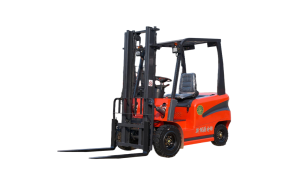
Introduction
South America is becoming an important market for diesel rough terrain forklifts, with Brazil driven by construction, ports, warehousing, and industrial activity, while Peru’s demand is closely connected to mining and remote-site operations. This article examines the market drivers, applications, supply-chain conditions, and supplier considerations shaping diesel rough terrain forklift demand in Brazil and Peru. Latin America’s forklift market is projected to reach USD 4.5 billion by 2033, growing at a 9.6% compound annual growth rate, according to [1] Grand View Research. “Latin America Forklift Market Size & Outlook, 2026-2033.”.
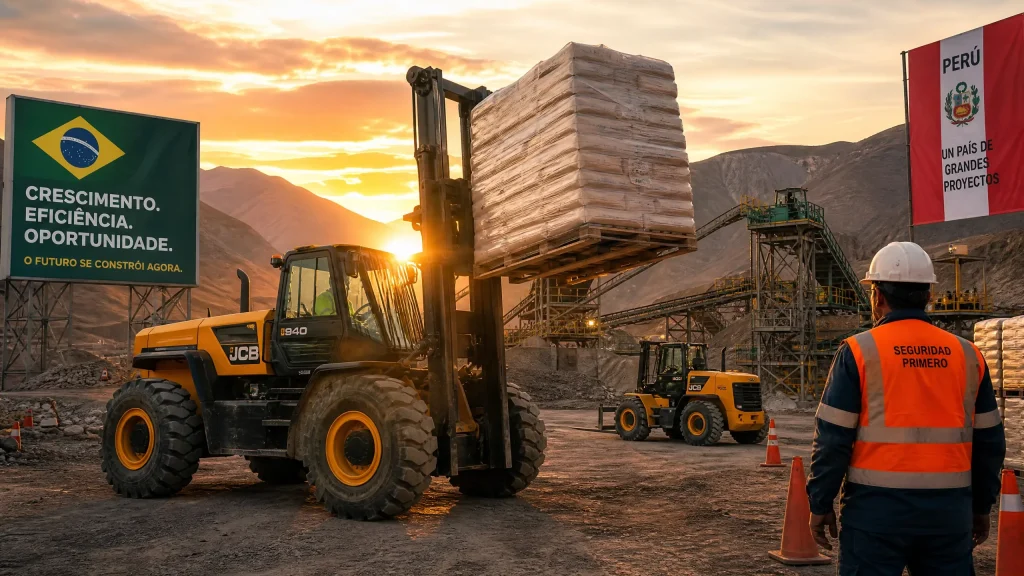
As an industry analyst specializing in global logistics and material handling trends, I’ve observed firsthand how diesel rough terrain forklifts are becoming indispensable across South American industries. From the bustling ports of Brazil to the high-altitude mining operations of Peru’s Andes, these machines are solving critical operational challenges that standard equipment simply cannot address. This comprehensive analysis explores the market dynamics, real-world applications, and supply chain implications of diesel rough terrain forklifts in South America’s two largest markets.
Part 1: Brazil’s Forklift Market Explosion
Market Scale and Growth Trajectory
Brazil dominates South America’s material handling equipment sector, commanding the largest forklift market in the region. The Brazilian forklift market, valued at USD 1.2 billion in 2024, is projected to reach USD 4.18 billion by 2035, representing an extraordinary 12% compound annual growth rate . [2] Spherical Insights. “Brazil Forklift Market Size, Forecast, Analysis To 2035.”This growth rate significantly exceeds the broader Latin American average of 9.6%, positioning Brazil as the engine of regional market expansion.
To contextualize this growth, Brazil’s construction equipment market alone expanded from 57,029 units in 2024 to a projected 72,219 units by 2030, with an estimated market value of USD 6.50 billion growing at 5.7% annually .[3] Grand View Research. “Brazil Construction Equipment Market | Industry Report, 2030.” The forklift rental market specifically has emerged as a high-growth segment, expanding from USD 1.73 billion in 2025 to a projected USD 3.07 billion by 2030, growing at an impressive 12.18% CAGR .[4] Mordor Intelligence. “Brazil Forklift Rental Market Size, Share, 2025-2030 Outlook.”
Primary Growth Drivers in Brazil
E-Commerce and Warehousing Expansion
Brazil’s e-commerce sector has undergone revolutionary transformation over the past five years. The rise of digital commerce has created unprecedented demand for efficient material handling solutions, particularly in distribution centers and logistics hubs. Modern warehouses require equipment capable of handling diverse product types, varying load weights, and demanding operational schedules. While electric forklifts dominate urban warehouse environments, diesel rough terrain forklifts play a critical role in outdoor storage yards, port operations, and inter-facility logistics where rough surfaces and extended operational ranges are essential.
Construction and Infrastructure Development
Brazil’s ongoing infrastructure modernization creates substantial demand for construction equipment, including rough terrain forklifts. Major construction projects, urban development initiatives, and infrastructure expansion require equipment capable of operating on uneven, undeveloped terrain. Construction sites frequently present challenging conditions—compacted soil, gravel surfaces, temporary access roads, and outdoor material storage areas—where diesel rough terrain forklifts demonstrate clear operational advantages over standard warehouse equipment.
Port and Logistics Operations
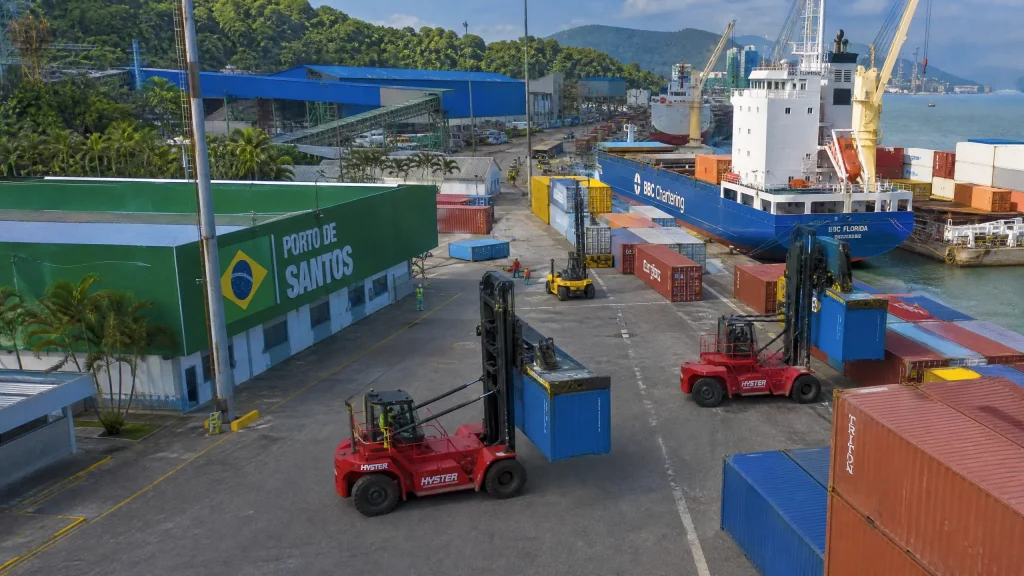
Brazil’s ports, particularly the Port of Santos (the largest in South America), handle millions of containers annually. Port operations require heavy-duty material handling equipment capable of sustained operation in demanding environments. Diesel rough terrain forklifts excel in port environments where they must navigate uneven dock surfaces, operate continuously throughout extended shifts, and maintain reliability under intensive use. The combination of diesel power and articulated steering provides the stability and traction necessary for safe, efficient port operations.
Industrial Automation and Modernization
Brazilian industrial facilities are increasingly investing in modern material handling systems. Companies across automotive, aerospace, food and beverage, chemical, and manufacturing sectors are upgrading equipment to improve safety, enhance productivity, and meet international standards. This modernization trend benefits both electric forklifts for controlled indoor environments and diesel rough terrain forklifts for outdoor and mixed-use applications.
Government Support and Regulatory Environment
The Brazilian government actively promotes sustainable industrial practices and has implemented incentive programs for electric vehicles, including electric forklifts. However, these incentives have not diminished demand for diesel equipment in rough terrain applications. Rather, they’ve created a complementary market where companies deploy electric forklifts in controlled warehouse environments while maintaining diesel rough terrain fleets for outdoor operations.
Carbon reduction regulations and energy-saving measures are changing purchasing decisions, but they’re driving adoption of efficient diesel engines rather than eliminating diesel from the market. Modern diesel rough terrain forklifts incorporate advanced engine technologies that reduce emissions while maintaining the power and reliability essential for demanding applications.
Part 2: Peru’s Mining-Driven Equipment Demand
Mining as the Economic Foundation
Peru’s economy is fundamentally tied to mining. The country, according to the cited source, ranks as the world’s second-largest copper producer and possesses substantial reserves of gold, silver, zinc, lead, and other critical minerals.[5] U.S. Department of Commerce. “Peru – Mining Equipment and Machinery.” Mining investment in Peru totaled USD 5.4 billion in 2022, with major projects worth USD 53.7 billion still awaiting development . This massive investment pipeline ensures sustained demand for specialized equipment, including diesel rough terrain forklifts.
High-Altitude Mining Operations
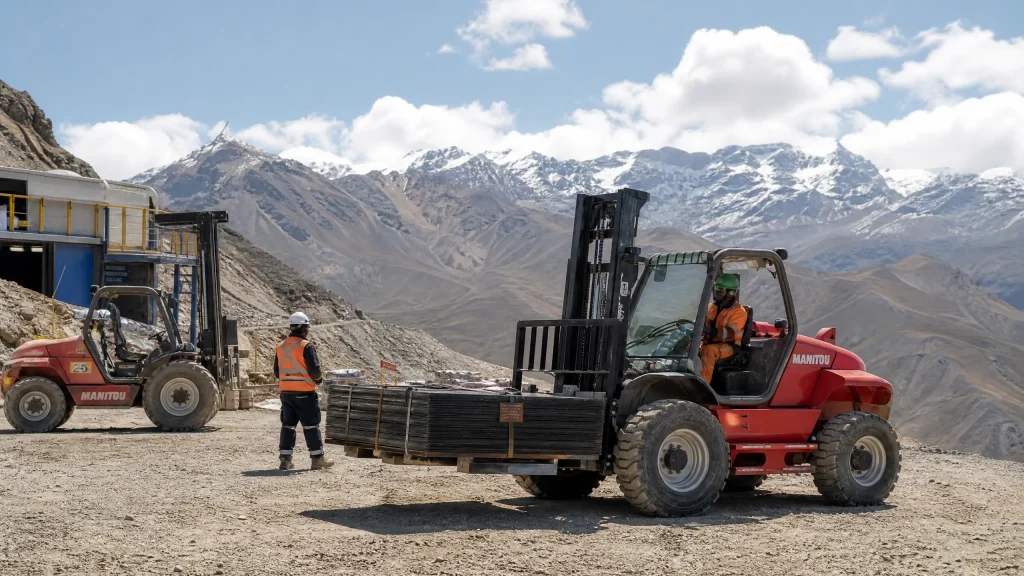
Peru’s mining operations present unique challenges that make diesel rough terrain forklifts essential. According to the cited source, the country’s major mining operations occur in the Andean mountains at altitudes exceeding 3,000 meters (10,000 feet). These high-altitude environments present extreme conditions:
Terrain Challenges: Rocky, uneven surfaces with minimal infrastructure. Diesel rough terrain forklifts with articulated steering maintain stability and traction where standard equipment would struggle or fail.
Altitude Effects: Thin air reduces engine efficiency for standard equipment. Diesel engines, particularly those with turbocharging, maintain performance at altitude where naturally aspirated engines lose power.
Climate Extremes: Cold temperatures, intense UV radiation, and seasonal weather variations demand equipment durability. Diesel rough terrain forklifts are engineered for harsh environmental conditions.
Remote Operations: Mining sites often operate far from infrastructure. Diesel fuel availability and the extended operational range of diesel forklifts make them practical solutions where electric equipment would require frequent charging infrastructure.
Peru’s Equipment Demand Profile
Peru’s mining sector specifically demands higher load capacity products, both in dump trucks and specialized material handling equipment .[6] GB Reports. “Mining Equipment and Technology in Peru.” The demand for rough terrain capability is non-negotiable—equipment must navigate steep grades, rocky surfaces, and unstable terrain while maintaining load security and operator safety.
Supply Chain Implications
Peru’s mining equipment market presents both opportunities and challenges. Logistics risks are significant, with high supply chain costs affecting equipment availability and pricing. However, this creates opportunities for suppliers who can establish reliable distribution networks and local support infrastructure. For mining material handling at remote sites, diesel rough terrain forklifts, with their proven durability and lower maintenance complexity compared to electric systems, are well-suited to Peru’s challenging logistics environment.
Part 3: Comparative Market Analysis
Market Size and Growth Comparison
| Metric | Brazil | Peru | Regional Average |
| Forklift Market Size (2024-2025) | USD 1.2 billion | Part of USD 2.2B Latin America | USD 2,162.9 million |
| Projected Growth (CAGR) | 12% (2024-2035) | Estimated 8-10% | 9.6% (2026-2033) |
| Primary Driver | E-commerce, Warehousing, Construction | Mining, Infrastructure | Diversified |
| Diesel Rough Terrain Role | Outdoor logistics, ports, construction | Mining operations, remote sites | Critical for rough terrain |
| Market Maturity | Mature, growing rapidly | Developing, high growth potential | Mixed |
Application Divergence
Brazil’s Market Characteristics:
•Diverse end-use sectors (construction, automotive, aerospace, food & beverage, retail, logistics)
•Mix of urban warehousing (electric) and outdoor operations (diesel)
•Established distribution networks and dealer infrastructure
•Competitive market with multiple suppliers
•Growing emphasis on sustainability and efficiency
Peru’s Market Characteristics:
•Mining-concentrated demand (copper, gold, silver operations)
•High-altitude, remote operations requiring specialized equipment
•Developing distribution infrastructure
•Limited local manufacturing capacity
•Strong equipment durability requirements
Competitive Dynamics
Both markets attract major global equipment manufacturers including Toyota Material Handling, Hyster-Yale Group, Crown Equipment Corporation, Komatsu, Caterpillar, Jungheinrich, KION Group, and Anhui Heli . However, market positioning differs significantly:
In Brazil: Competition focuses on efficiency, sustainability features, and total cost of ownership. Dealers emphasize service networks and financing options. Electric forklifts compete aggressively with diesel in warehouse applications, but diesel rough terrain forklifts maintain distinct market segments.
In Peru: Competition emphasizes durability, reliability in extreme conditions, and equipment availability. Dealers focus on technical support and spare parts availability. Diesel rough terrain forklifts face less direct competition from electric alternatives, as mining operations demand capabilities that electric systems cannot provide.
Part 4: Why Diesel Rough Terrain Forklifts Remain Important in South America
Superior Power and Performance
Diesel engines deliver significantly greater power output than electric alternatives, providing the torque necessary for steep grades, heavy loads, and challenging terrain. In Brazil’s construction sites and Peru’s mining operations, this power advantage translates directly to operational capability. Diesel rough terrain forklifts can maintain consistent performance under demanding conditions where electric equipment experiences performance degradation. Buyers comparing configurations can review the main rough terrain forklift types and classes to match equipment to their operating conditions.
Extended Operational Range
While electric forklifts typically operate for 8 hours on a single charge, diesel rough terrain forklifts can operate continuously as long as fuel is available. In Brazil’s port operations and Peru’s remote mining sites, this extended range eliminates operational constraints. Equipment can work through extended shifts or multiple shifts without downtime for recharging.
Infrastructure Independence
Diesel forklifts operate independently of electrical infrastructure. This independence is critical in Peru’s remote mining operations and Brazil’s developing areas where electrical charging infrastructure may be unavailable or impractical. Diesel fuel availability, while sometimes challenging in remote locations, is generally more accessible than electrical infrastructure.
Durability and Reliability
Diesel engines are renowned for durability and longevity. Rough terrain forklifts equipped with diesel engines are engineered to withstand punishing conditions without breaking down. In Brazil’s demanding port environments and Peru’s extreme mining conditions, this reliability directly impacts operational efficiency and safety. The simpler mechanical design of diesel engines, compared to complex electric systems, often results in lower maintenance requirements and longer operational life.
Cost Considerations
For rough terrain applications, diesel forklifts typically offer lower initial investment costs compared to advanced electric systems. For Brazilian SMEs and Peruvian mining operations, this cost advantage makes diesel equipment the practical choice. Additionally, diesel fuel costs in South America remain competitive with electricity costs for intensive material handling operations.
Part 5: Real-World Applications and Case Studies
Brazil: Port Operations at Scale
Brazil’s ports, particularly Santos, handle container volumes that demand continuous, reliable material handling. Diesel rough terrain forklifts operate on dock surfaces that are far from warehouse-smooth. These machines navigate uneven concrete, compacted soil, and temporary access roads while maintaining load stability and operator safety. The combination of articulated steering and diesel power enables port operators to maintain productivity while managing the challenging physical environment.
Brazil: Construction Site Logistics
Major construction projects throughout Brazil require equipment capable of operating on undeveloped terrain. Diesel rough terrain forklifts move building materials, equipment, and supplies across construction sites where surfaces are unprepared and conditions are constantly changing. The machines’ ability to navigate obstacles, climb grades, and maintain stability on uneven surfaces makes them indispensable for construction logistics.
Peru: Copper Mining at High Altitude
Peru’s copper mining operations in the Andes represent some of the most demanding applications for rough terrain forklifts. At the high altitudes typical of these Andean operations, equipment must maintain performance in thin air while navigating steep mountain terrain. Diesel rough terrain forklifts with turbocharging maintain power at altitude while their articulated steering ensures stability on rocky, sloped surfaces. These machines move ore, equipment, and supplies in conditions that would be impossible for standard forklifts.
Peru: Gold Mining Operations
Similar to copper mining, Peru’s gold mining operations require equipment capable of extreme performance. Remote locations, high altitudes, and challenging terrain make diesel rough terrain forklifts essential for operational success. The machines’ durability and reliability are critical factors in maintaining production schedules in these demanding environments.
Part 6: Supply Chain Dynamics and Market Challenges
Brazil’s Logistics Advantages
Brazil benefits from established distribution networks, multiple dealer locations, and reliable spare parts availability. The competitive market ensures equipment pricing remains reasonable and service quality remains high. However, import dependency for advanced models creates pricing pressures and potential supply chain disruptions.
Peru’s Logistics Challenges
Peru faces significant logistics challenges that impact equipment availability and pricing. High supply chain costs, limited local manufacturing capacity, and remote operation sites create supply chain complexity. However, these challenges also create opportunities for suppliers who can establish reliable distribution networks and technical support infrastructure.
Economic and Political Factors
Brazil: Economic fluctuations and inflation affect equipment purchasing decisions, but the large, diversified market provides stability. Government policies supporting sustainable practices influence equipment specifications but don’t eliminate diesel from the market.
Peru: Political uncertainty regarding mining projects can create investment volatility. Anti-mining protests and environmental concerns occasionally disrupt operations, but long-term mining investment trends remain positive. The government’s commitment to mining development and the substantial pipeline of pending projects ensure sustained equipment demand.
Regulatory Environment
Both countries maintain regulatory frameworks governing equipment safety, emissions, and operational standards. Brazil’s regulations are more stringent and align with international standards. Peru’s regulations are developing but increasingly align with international norms. These regulatory trends support adoption of modern diesel rough terrain forklifts that incorporate advanced engine technologies and safety features.
Part 7: Market Outlook and Future Trends
Projected Growth Trajectory
Brazil’s forklift market is expected to grow at 12% annually through 2035, driven by continued e-commerce expansion, construction activity, and industrial modernization. Peru’s market, while smaller, is projected to grow at 8-10% annually, driven by mining investment and infrastructure development.
Technology Integration
Both markets are experiencing integration of telematics, IoT sensors, and smart monitoring systems. Diesel rough terrain forklifts are increasingly equipped with fleet management systems that track performance, maintenance needs, and operational efficiency. This technology integration improves safety, reduces downtime, and optimizes total cost of ownership.
Sustainability Trends
While electric forklifts are growing in urban warehouse environments, diesel rough terrain forklifts are incorporating advanced engine technologies that reduce emissions while maintaining performance. Hybrid systems are emerging as a middle ground, combining diesel engines with electric motors for improved efficiency. However, for true rough terrain applications, diesel engines remain the optimal solution.
Market Consolidation
The forklift market in both countries is experiencing gradual consolidation, with major global manufacturers strengthening market positions through acquisitions and partnerships. However, regional and local manufacturers continue to serve niche markets, particularly in Peru where equipment durability and local support are critical factors.
Part 8: Strategic Implications for Equipment Suppliers
Brazil Market Strategy
Success in Brazil requires:
•Established distribution network with multiple dealer locations
•Competitive pricing and flexible financing options
•Strong after-sales service and spare parts availability
•Product range spanning both electric warehouse equipment and diesel rough terrain forklifts
•Compliance with Brazilian environmental and safety regulations
Suppliers should focus on building relationships with construction companies, port operators, and logistics providers. The competitive market demands differentiation through service quality, reliability, and total cost of ownership advantages.
Peru Market Strategy
Success in Peru requires:
•Specialized expertise in high-altitude, extreme-condition equipment
•Robust supply chain and local support infrastructure
•Deep understanding of mining industry requirements
•Equipment durability and reliability as primary value propositions
•Flexibility in financing and equipment customization
Suppliers should focus on establishing partnerships with major mining companies and equipment distributors. The concentrated mining market allows for targeted relationship building and customized solutions.
Regional Opportunities
Both markets present opportunities for suppliers who can:
•Develop local manufacturing or assembly capacity to reduce costs and improve supply chain reliability
•Invest in dealer training and technical support infrastructure
•Create financing solutions tailored to regional market conditions
•Develop specialized equipment variants optimized for local applications
•Build brand recognition through industry participation and thought leadership
Part 9: Conclusion
South America’s diesel rough terrain forklift market is at an inflection point. Brazil’s explosive growth—driven by e-commerce, construction, and port operations—creates substantial opportunities for equipment suppliers. Peru’s mining-focused demand, while more concentrated, offers compelling long-term growth potential as mining investment continues.
Diesel rough terrain forklifts are not being displaced by electric alternatives in these markets. Rather, they’re becoming increasingly essential as operations become more demanding, terrain more challenging, and operational requirements more specialized. The combination of diesel power, articulated steering, and proven durability makes these machines indispensable for South American industries.
For equipment suppliers, the message is clear: South America’s rough terrain forklift market offers significant growth opportunities for companies willing to invest in market understanding, local infrastructure, and customer relationships. The companies that succeed will be those that recognize the distinct requirements of each market and develop tailored solutions that address local operational challenges.
The future of South American material handling belongs to suppliers who understand that one-size-fits-all approaches fail in markets as diverse and demanding as Brazil and Peru. Success requires market-specific strategies, local expertise, and unwavering commitment to equipment reliability and customer support.
For more information about diesel rough terrain forklift solutions optimized for South American applications, contact our market research team or explore our comprehensive product portfolio, or browse our rough terrain forklift product center.
Frequently Asked Questions
What are diesel rough terrain forklifts used for in South America?
They are evaluated for outdoor material handling in construction, ports, industrial yards, agriculture, and mining where ground conditions, operating hours, access, and fuel infrastructure influence equipment selection. The right configuration depends on the actual load, surface, and local requirements.
Why are diesel rough terrain forklifts considered for mining applications in Peru?
Mining sites can combine uneven ground, long travel routes, heavy loads, and limited charging infrastructure. Diesel equipment may be considered for these conditions, but buyers still need a site assessment, load chart, maintenance plan, and destination-market compliance review.
Are diesel rough terrain forklifts suitable for Brazil’s ports and construction sites?
They may be suitable for outdoor yards, construction areas, and other demanding sites when the tires, capacity, ground clearance, powertrain, and safety controls match the application. Smooth indoor warehouse work may require a different forklift configuration.
How should a buyer compare Brazil and Peru forklift requirements?
Compare the operating surface, load and load center, lift height, shift pattern, fuel access, service support, regulations, and distribution conditions. Brazil may involve more diversified construction, logistics, and industrial use cases, while Peru-specific projects may require closer review of mining-site access and support logistics.
What should suppliers verify before quoting a diesel rough terrain forklift?
Suppliers should verify the destination country, load and load center, lift height, ground and grade conditions, tire and drivetrain requirements, duty cycle, emissions rules, attachment needs, parts support, and the final load chart.
Can electric forklifts replace diesel rough terrain forklifts in every South American application?
No universal replacement rule applies. Electric equipment can be attractive in suitable indoor or infrastructure-supported operations, while diesel may remain under consideration for demanding outdoor routes or sites without practical charging access. The decision should use a documented total-cost and site-fit comparison.
About the Author

Emma Williams is the Chief Industry Analyst at LT FORKLIFT Market Research, specializing in global logistics and material handling equipment trends. With over 8 years of experience analyzing supply chain dynamics and equipment markets across multiple continents, Emma provides strategic insights that help equipment manufacturers, distributors, and end-users navigate complex market conditions. Her analysis of emerging markets, particularly in Latin America and Asia, has been cited by leading logistics publications and industry conferences. Emma holds advanced certifications in supply chain management and market analysis, and regularly contributes to industry publications on material handling trends and market forecasting.