Forklift Fleet Decarbonization: An ESG Manager’s Guide
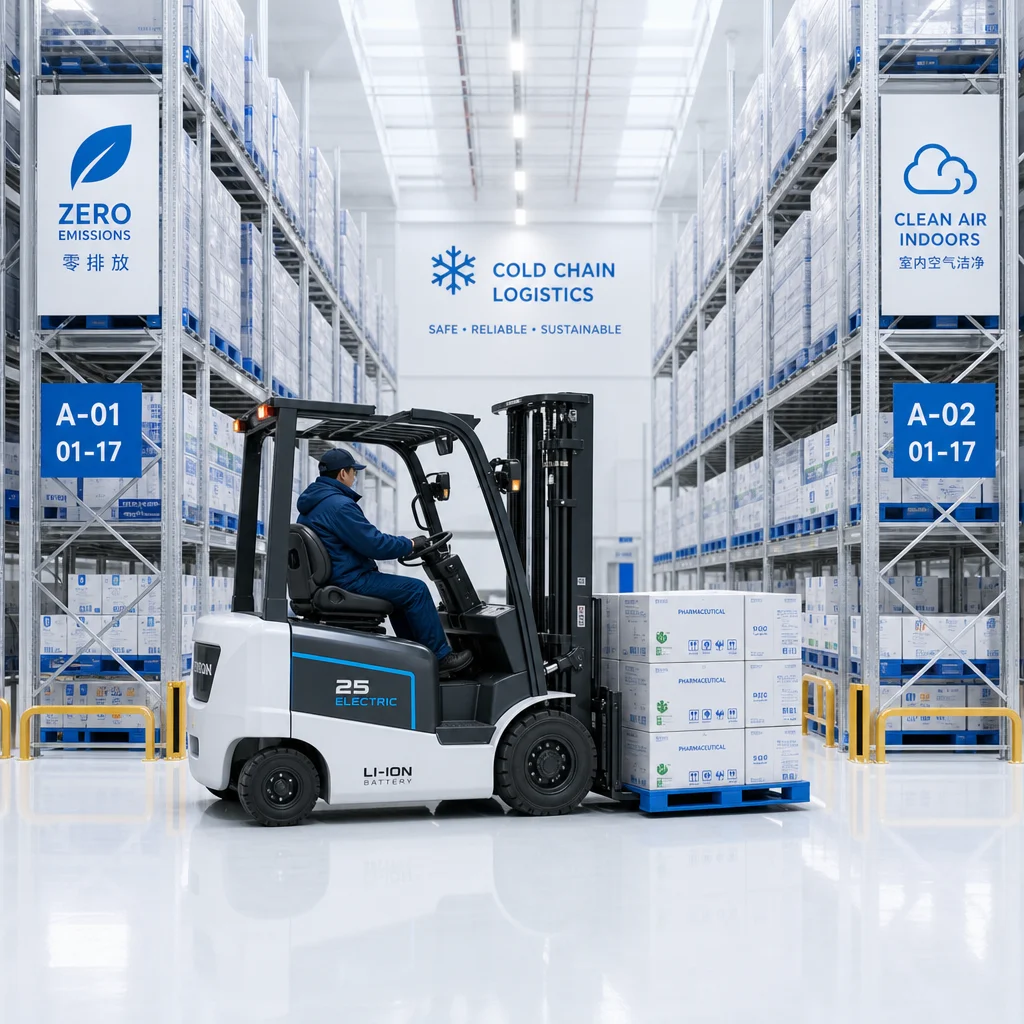
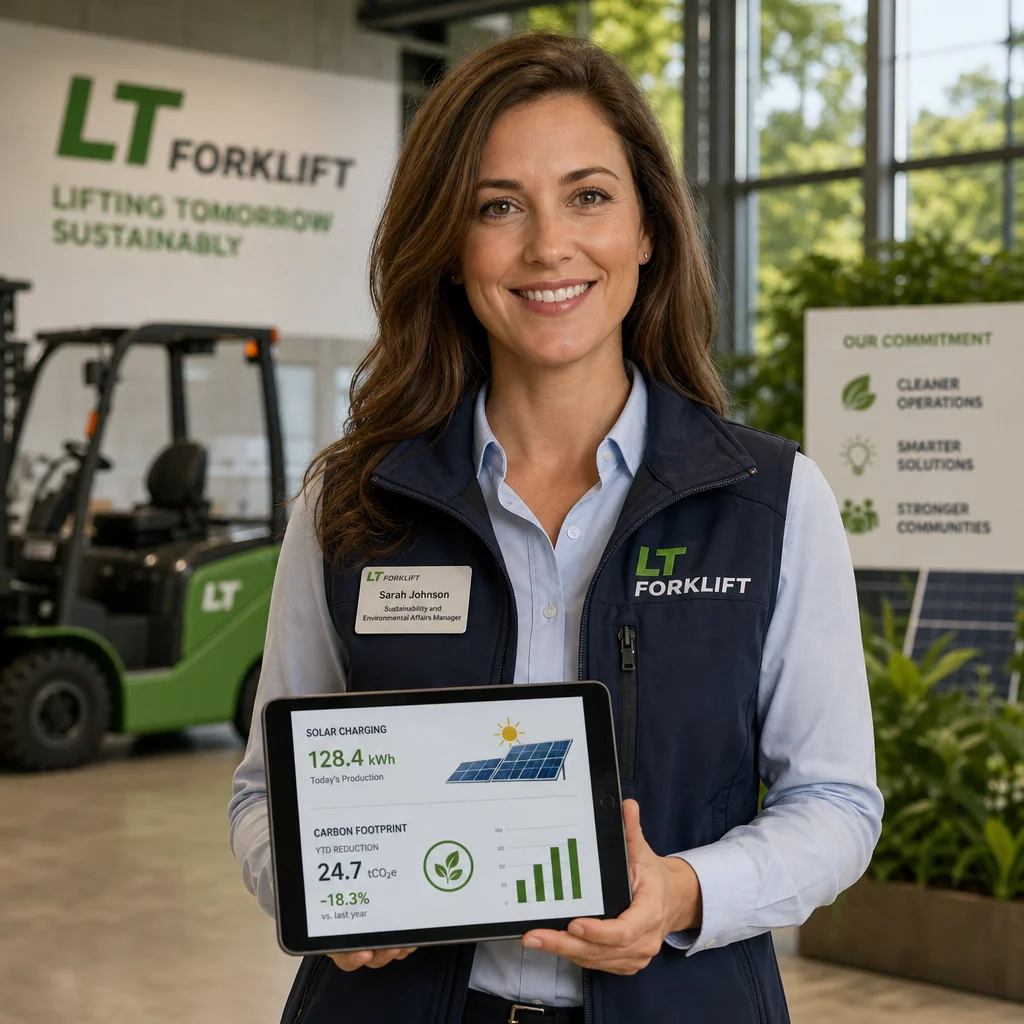
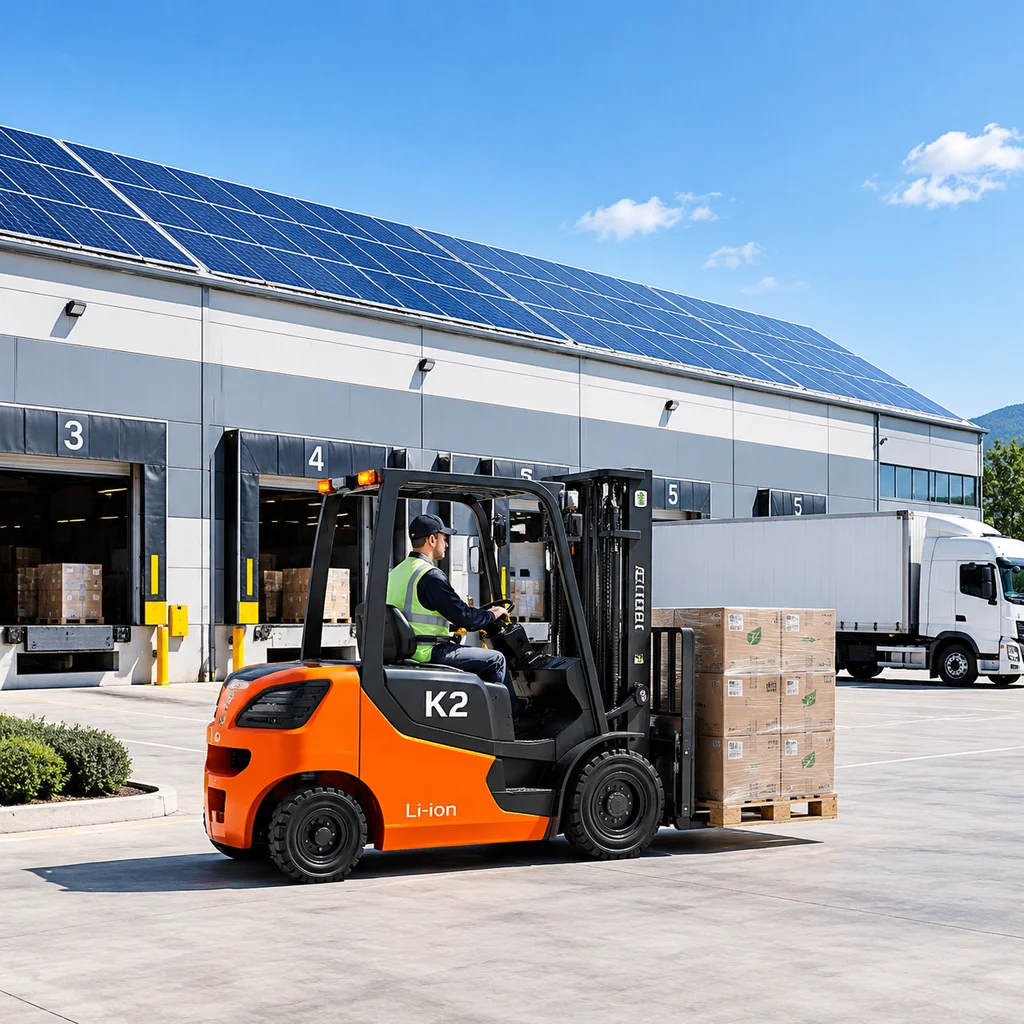
Forklift fleet decarbonization is a practical pathway to reduce Scope 1 combustion emissions, improve indoor air quality, control energy costs, and strengthen ESG reporting. This guide from Sarah Johnson, Sustainability and Environmental Affairs Manager at LT FORKLIFT, connects Li-ion electrification, carbon audits, solar microgrids, and green-fleet ROI.
Scope 1 and Scope 2 carbon audits
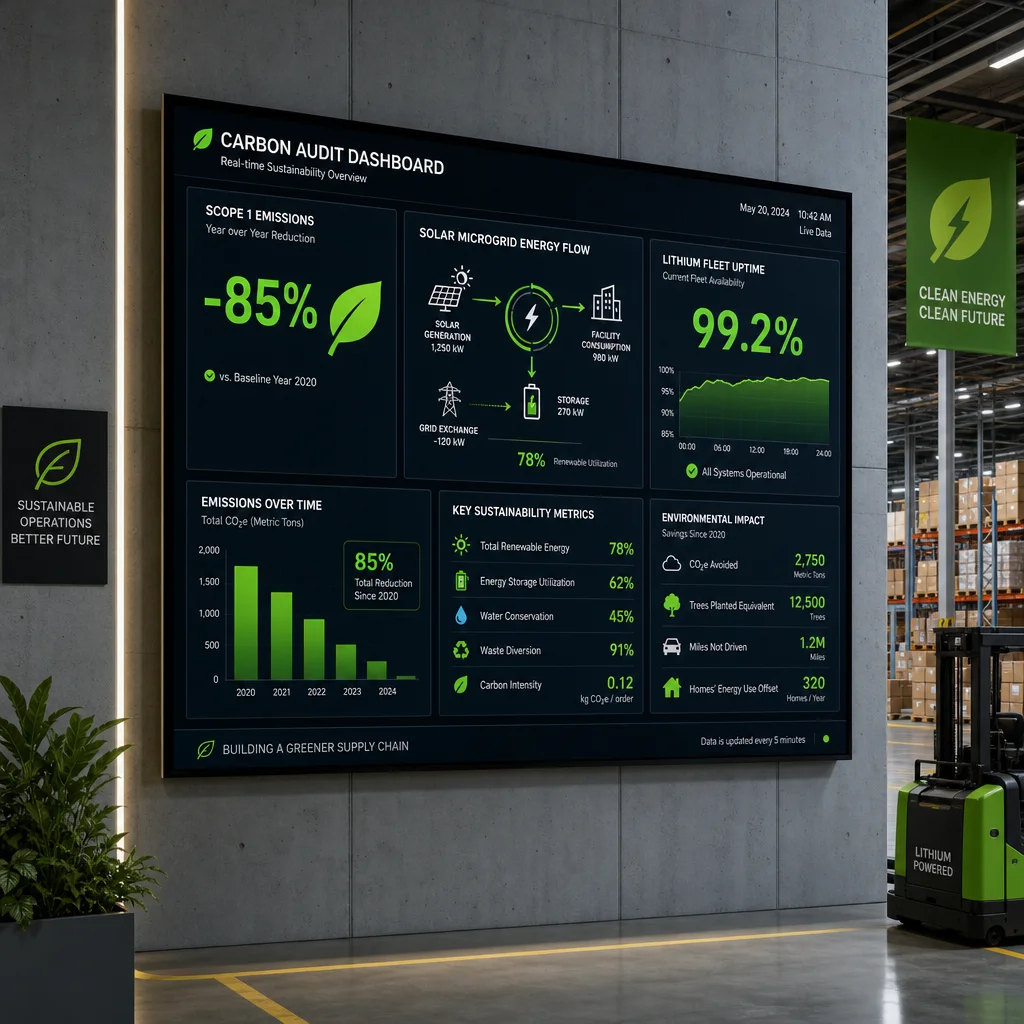
Diesel and LPG forklifts generally create direct mobile-combustion Scope 1 emissions. Battery-electric forklifts eliminate tailpipe emissions at the truck and move operating energy to purchased electricity, which is normally reported as Scope 2. A defensible baseline reconciles fuel invoices, utility meters, charger data, telematics, maintenance records, operating hours, payload, and pallets moved. Report location-based and market-based electricity results according to the organization’s accounting policy, and document renewable certificates or exported solar power to avoid double counting.
Li-ion electrification and solar microgrids
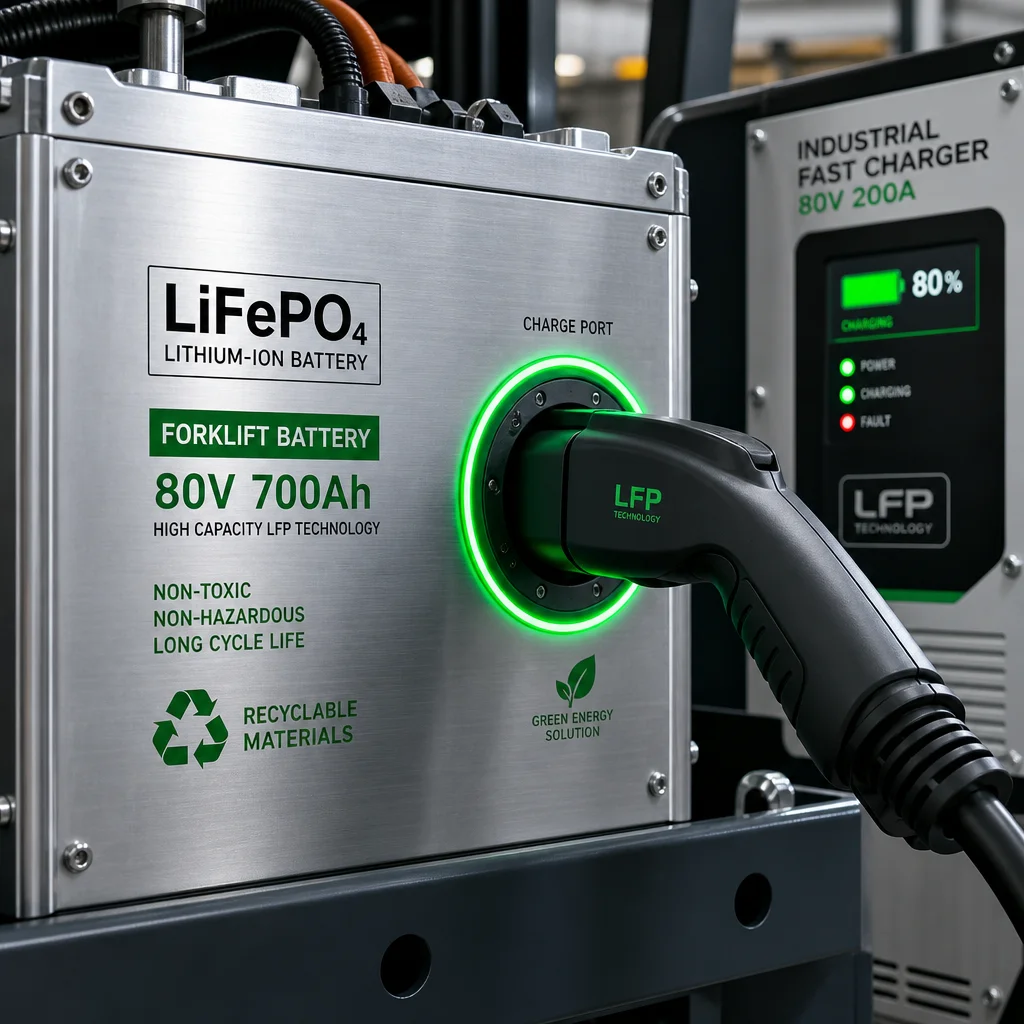
Li-ion and LiFePO4 batteries can support opportunity charging, high utilization, predictable maintenance, and zero tailpipe emissions. Select chemistry and charger capacity from the real duty cycle: shift length, lift cycles, temperatures, payload, idle time, and available charging windows. Pair chargers with load management, safe cable routing, metering, emergency procedures, and battery state-of-health monitoring. Solar generation and storage can reduce grid imports and demand peaks, but sizing must use interval data rather than annual energy totals.
Carbon and green-ROI comparison
| Pathway | Planning emissions | Reporting category | Key audit evidence |
|---|---|---|---|
| Diesel | Direct fuel combustion | Scope 1 | Fuel invoices, tank records, telematics |
| Grid electric | Grid factor × charger kWh | Scope 2 | Utility bills, submetering, charger data |
| Solar microgrid | Residual grid/import energy plus documented lifecycle assumptions | Scope 2 policy dependent | PV, storage, import/export, certificate records |
| Five-year model item | Diesel baseline | Grid-electric transition | Solar-assisted LFP transition |
|---|---|---|---|
| Truck, battery, charger and energy CAPEX | Baseline | Higher upfront CAPEX | Highest upfront CAPEX |
| Fuel versus electricity | Fuel-price exposure | Electricity tariff exposure | Lower imports plus demand management |
| HVAC and maintenance | Baseline | Potential savings | Potential savings |
| Payback period | Not applicable | Model from measured duty cycle | Model from solar yield, tariff and storage |
| Chemistry | Cycle life | Sustainability consideration | Recycling |
|---|---|---|---|
| LFP | Typically long, application dependent | Thermally stable; no lead; manage cold charging | Use approved recovery and supplier take-back |
| Lead-acid | Typically shorter, application dependent | Lead, acid, watering and ventilation controls | Mature recycling, but compliant collection is essential |
| NMC | Application dependent | High energy density; robust thermal management required | Verify nickel, cobalt, lithium and copper recovery chain |
Four-step roadmap and audit checklist
- Baseline: inventory trucks, fuels, batteries, chargers, shifts, energy, maintenance, and work output; define boundaries and evidence owners.
- Diagnose: measure duty cycles, idle time, payload, temperatures, charging windows, electrical capacity, safety controls, and renewable potential.
- Implement: pilot the highest-impact segment, commission chargers and controls, train operators and technicians, and establish battery take-back.
- Verify: reconcile meters, invoices, telematics, and work orders monthly; separate Scope 1 reductions from Scope 2 changes; review KPIs quarterly.
Trusted resources and fleet next steps
Use the GHG Protocol Corporate Accounting and Reporting Standard for accounting boundaries and terminology, the EPA SmartWay supply chain sustainability program for logistics context, and U.S. Department of Energy industrial fleet electrification data for electricity and charging considerations.
Explore zero-emission lithium-ion counterbalance forklifts, review customized green fleet solutions, or request a fleet decarbonization audit. A measured baseline turns electrification into a verifiable Scope 1 reduction and a durable operating improvement.