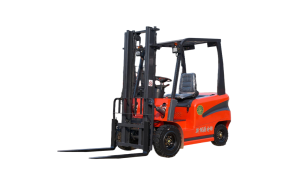
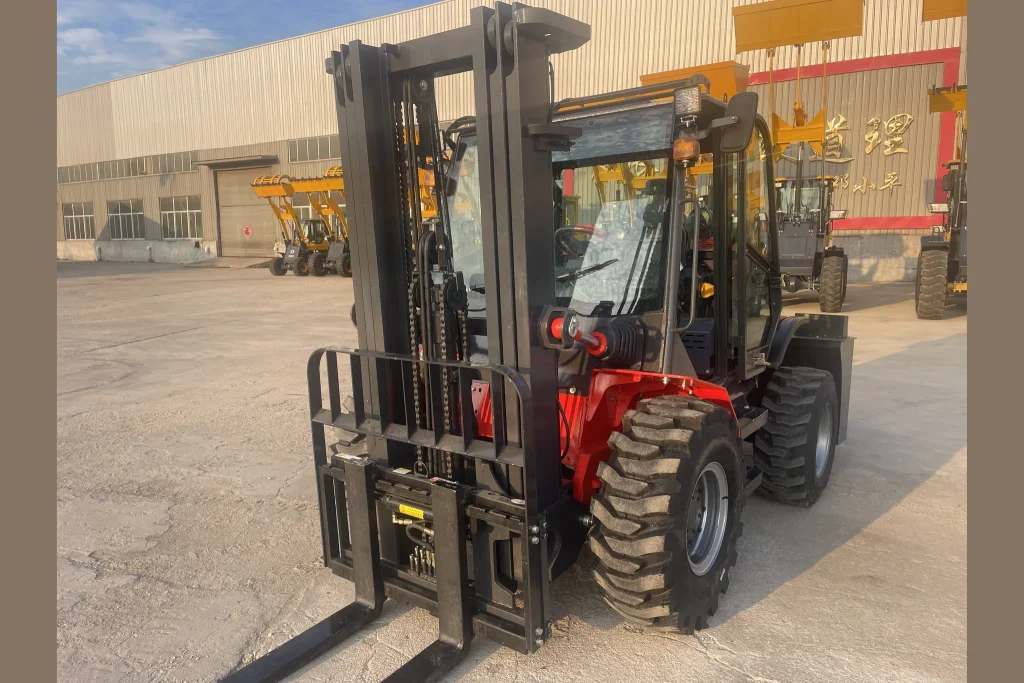
A rough terrain forklift is a powered industrial truck designed to move and lift loads on outdoor, uneven, or unpaved ground. Compared with a warehouse forklift, it typically uses a higher-clearance chassis, off-road tires, and an outdoor-oriented powertrain and drivetrain. The right model depends on more than lifting capacity: buyers must also match the truck to ground conditions, load center, lift height, turning space, and duty cycle.
This guide explains what a rough terrain forklift is, what Class VII means, the main types available, and how to choose a configuration for construction, agriculture, mining, quarrying, and outdoor material handling.
By David Liu, Product Solutions & Applications Specialist at LT FORKLIFT, with 10+ years of forklift sales and application experience across international customer operations.
What Is a Rough Terrain Forklift?
A rough terrain forklift is an outdoor lift truck engineered for surfaces that are less predictable than a finished warehouse floor. These surfaces may include compacted construction ground, gravel, soil, slopes, farm roads, quarry floors, or other outdoor work areas.
The design priorities, therefore, differ from those of an indoor counterbalance forklift:
- Ground clearance: helps the chassis pass over uneven surfaces.
- Off-road tires: provide traction and absorb more surface irregularity than warehouse cushion tires.
- Outdoor power and drivetrain: support work away from charging infrastructure and on changing grades.
- Load visibility and lift control: help operators place materials at a construction site, yard, or outdoor storage area.
- Robust chassis and axles: support repeated work in demanding environments.
A rough terrain forklift is not automatically the best choice for every outdoor task. However, a conventional counterbalance forklift may serve a paved loading dock better, while a narrow-aisle warehouse requires a different truck altogether. The ground, load, and workflow should determine the specification.
What Class Is a Rough Terrain Forklift?
In the US OSHA powered industrial truck classification, a rough terrain forklift truck is Class VII. OSHA’s classification page lists Class VII as “Rough Terrain Forklift Trucks” and separates it from Class I electric rider trucks, Class IV internal-combustion trucks with solid or cushion tires, and Class V internal-combustion trucks with pneumatic tires.
See the OSHA Types & Fundamentals guide for the complete classification list and the OSHA powered industrial truck standard for US requirements covering powered industrial truck design, use, and operator training.
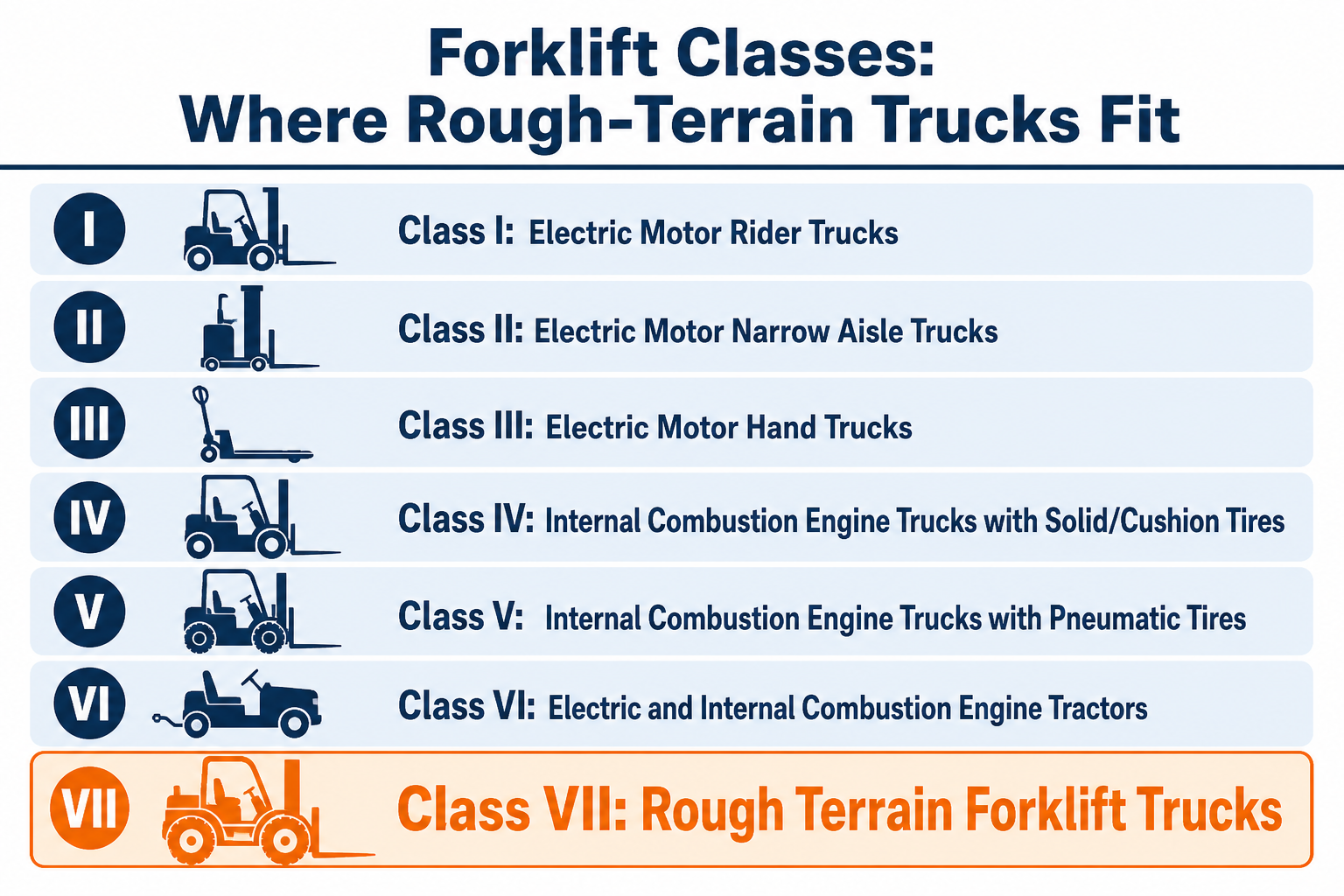
Class VII is a classification, not a complete buying specification. Two Class VII trucks can differ significantly in capacity, lift height, tire configuration, steering, chassis size, and application suitability. Treat the class as a starting point, then select the truck around the actual worksite.
What Are the Basic Types of Rough Terrain Forklifts?
The phrase “rough terrain forklift” covers several practical configurations. The most useful way to distinguish them is by worksite role rather than by marketing name.
1. Standard rigid-frame rough terrain forklifts
These trucks use a conventional forklift layout with a rigid chassis, front forks, a counterweight, and an outdoor tire package. They are a practical fit for construction sites, agricultural operations, outdoor storage yards, and general material handling where the operator needs to approach and lift a pallet or load directly.
LT FORKLIFT’s T30 is a 3-ton rough terrain forklift listed for construction, mining, and agricultural applications. Its product page identifies a Yunnei 490 engine, four-wheel drive, 3,000 kg load capacity, and 3,000 mm lift height. Confirm the final configuration and local compliance requirements with the supplier before ordering.
2. Compact rough terrain forklifts
Compact variants are intended for work areas where the buyer still needs outdoor capability but has less turning space or access width. The T30A and T30D are listed by LT FORKLIFT as compact 3-ton rough terrain forklifts; the T30C is listed as an ultra-compact 3-ton model.
Compact does not mean suitable for every narrow aisle. Before specifying one, measure the narrowest turning path, doorway, ramp, and loading position. Turning radius, overall width, fork length, and load center all affect the real operating envelope.
3. Tractor-style rough terrain forklifts
A tractor-style configuration is intended for a particular combination of towing, site mobility, or agricultural workflow. LT FORKLIFT lists the T30B as a 3-ton tractor rough terrain forklift. Buyers should confirm whether the intended work is primarily pallet lifting, towing, or a mixed task before choosing this layout.
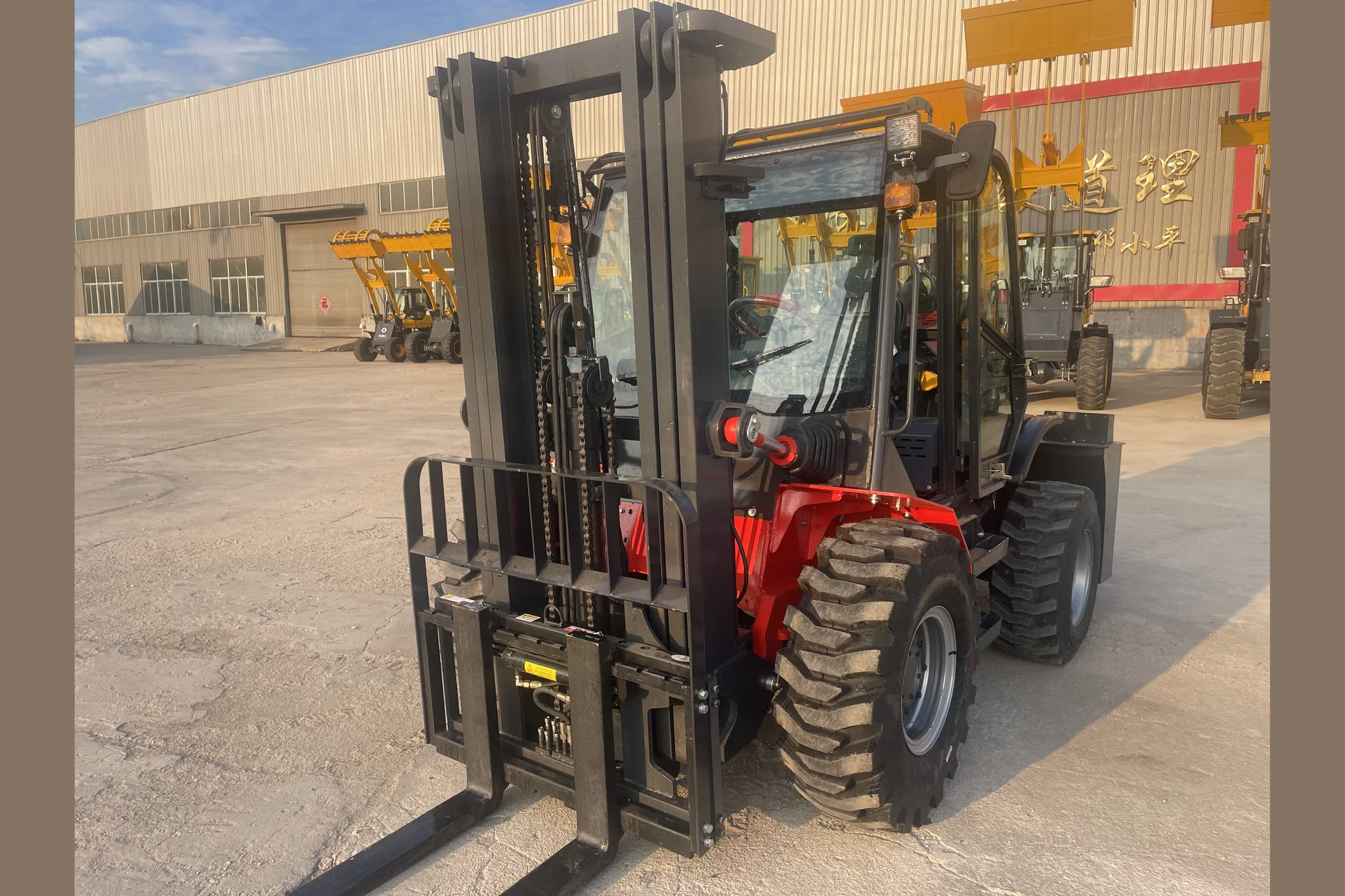
4. All-terrain forklifts with specialized steering
Some outdoor trucks are designed to improve maneuverability in confined or changing work areas. LT FORKLIFT’s T30E is listed as a 3-ton all-terrain forklift with rear steering, all-wheel drive, mixed tire configuration, a 1,500 mm minimum turning radius, and a 3,000 kg load capacity.
5. Heavy-duty rough terrain forklifts
Heavy-duty models are used when load capacity, lift height, or site conditions exceed the requirements of a 3-ton truck. LT FORKLIFT’s product range lists the T35, T40, T50, T60, T70, and T100 from 3.5 to 10 tons.
The listed T100 is a 10-ton rough terrain forklift with a 92 kW engine, 4,000 mm lift height, and diesel power. Its product page positions it for mining, quarrying, and large-scale industrial operations. Those are manufacturer-published product facts; buyers should request a current datasheet, load chart, and application review before final specification.
How Does a Rough Terrain Forklift Differ from a Warehouse Forklift?
The key difference is the operating environment. A warehouse forklift is optimized for smooth floors, controlled traffic, and predictable aisle geometry. A rough terrain forklift is selected for outdoor surfaces, site access, and changing ground conditions.
| Feature | Rough terrain forklift | Warehouse counterbalance forklift |
|---|---|---|
| Primary environment | Outdoor, uneven, unpaved, or changing ground | Smooth indoor floors and paved yards |
| Typical tire approach | Off-road or pneumatic tire configuration | Cushion, solid, or warehouse-oriented tire configuration |
| Ground clearance | Higher outdoor clearance | Optimized for floor efficiency and stability |
| Common applications | Construction, agriculture, mining, quarrying, outdoor yards | Warehouses, docks, production lines |
| Space requirement | Open site or wider turning area | Planned aisles and dock lanes |
| Selection priority | Ground, grade, traction, load, lift height | Aisle, rack height, battery/fuel, load center |
A conventional counterbalance forklift may still be appropriate outdoors on smooth, paved surfaces. Move to a rough terrain forklift when the ground condition, grade, traction requirement, or site access creates a material operating risk for a warehouse-oriented truck.
For a comparison with indoor truck types, see LT FORKLIFT’s counterbalance forklift complete guide.
How Do You Choose the Right Rough Terrain Forklift?
Use the following sequence before asking for a quotation. It keeps the discussion focused on measurable operating requirements rather than a model name alone.
1. Define the heaviest load and its load center
Start with the heaviest load the truck must handle, not the average load. Record the load’s dimensions, center of gravity, pallet or attachment type, and whether the load is stable during travel.
A forklift’s rated capacity is tied to a specified load center and configuration. A longer load, an attachment, or a raised load can change the safe capacity. Ask the supplier for the load chart and the capacity at your actual load center.
2. Map the ground conditions
Describe the route, not just the destination:
- paved yard or compacted soil;
- gravel, mud, sand, or rocky surface;
- slopes, ramps, potholes, or drainage channels;
- indoor-outdoor transitions;
- seasonal changes that affect traction.
A truck that works well on a compacted site may require a different tire, drivetrain, or operating plan on soft ground. If the ground is highly irregular, include a site assessment in the buying process.
3. Set the required lift height and clearance
Measure the highest placement point, the lowest doorway or overhead obstruction, and the clearance available above the load. Specify both the normal lift height and any occasional maximum height.
Do not select a mast from lift height alone. The mast, load backrest, fork length, overhead guard, and load dimensions must work together at the actual site.
4. Choose the power and drivetrain around the worksite
OSHA’s power-source guidance distinguishes internal-combustion trucks, which may use diesel, gasoline, LPG, or other fuels, from electric trucks using an onboard battery. Rough terrain operations commonly require an outdoor-oriented power source, but the final choice depends on the environment, emissions requirements, shift pattern, refueling access, and local rules.
For the T-series range, LT FORKLIFT lists diesel power for the T30 through T100 rough terrain models. Confirm engine emissions requirements, fuel type, noise restrictions, and service support for the destination country before ordering.
5. Check turning space and steering behavior
Measure the narrowest turning area, not only the site width. Include the load, fork length, rear swing, and the clearance needed to approach a trailer or stack.
Specialized steering can be valuable in constrained areas. For example, the T30E product page lists rear-axle steering and a 1,500 mm minimum turning radius. Treat that as a product-specific published figure, not a general rough terrain forklift benchmark.
6. Match capacity to duty cycle
Record operating hours per day, days per week, travel distance, number of lifts per hour, average travel surface, and the proportion of work performed at full capacity. A truck used intermittently on a construction site has a different duty cycle from one moving heavy loads continuously in a quarry.
Ask the supplier to explain maintenance intervals, wear items, parts availability, operator visibility, and service response for your region. As a result, these factors influence total operating cost as much as the purchase price.
Which Rough Terrain Forklift Fits Each Application?
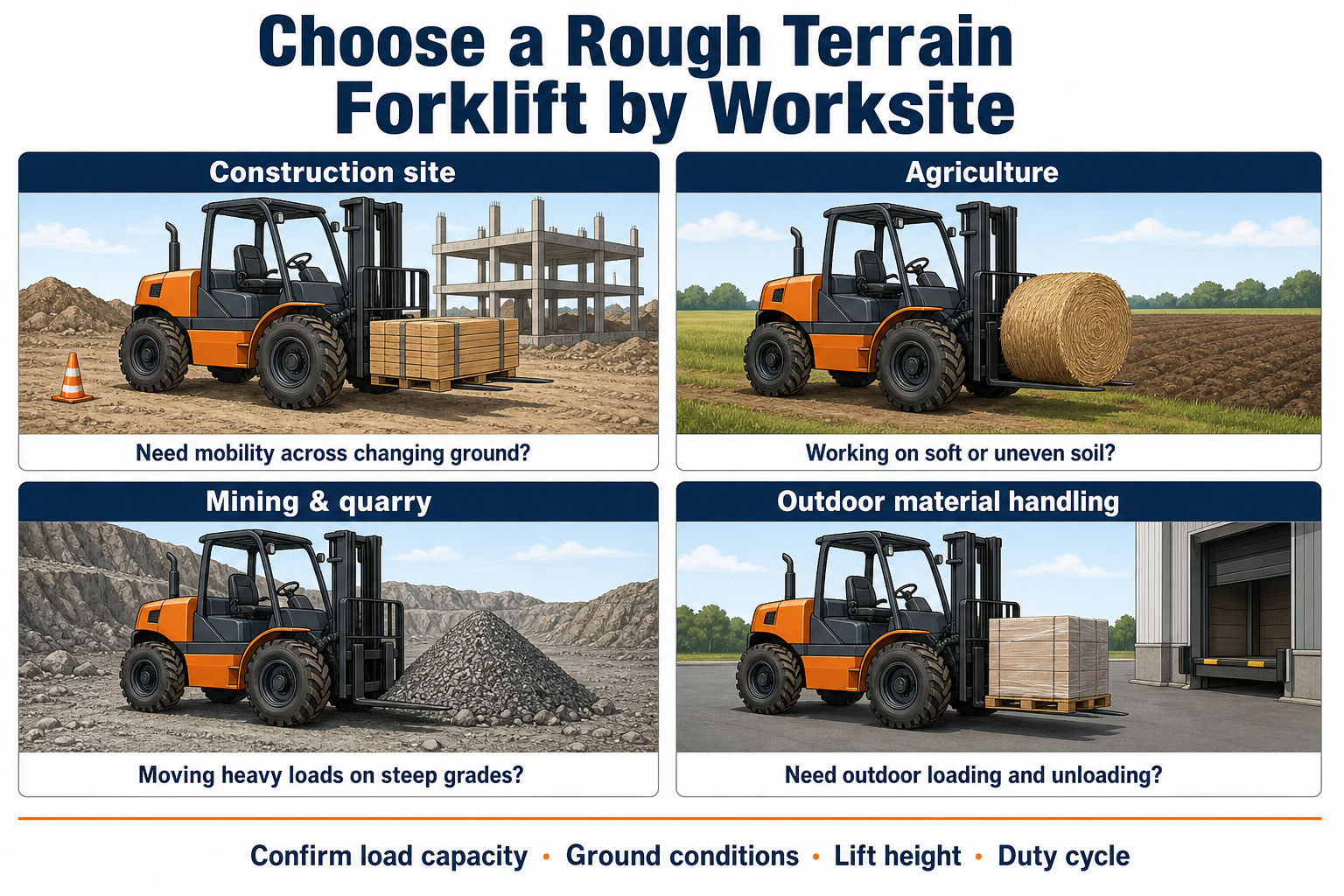
Construction
Construction sites often change as the project develops. Prioritize ground clearance, traction, site access, load visibility, and a capacity that matches concrete products, steel, pallets, or building materials. Recheck the route after major site changes rather than assuming the original assessment remains valid.
Agriculture and forestry
Agricultural and forestry work may include soft ground, changing weather, long travel distances, and limited infrastructure. Confirm tire suitability, turning room, service access, and the truck’s ability to approach storage areas without damaging the ground or load.
Mining and quarrying
Mining and quarrying place greater demands on load capacity, gradeability, ground condition, durability, and site safety. Heavy-duty models such as the T50–T100 range may be relevant depending on the load and lift requirement, but the correct selection requires a load chart and application review rather than capacity range alone.
Outdoor loading and unloading
For a paved yard or loading dock, compare a rough terrain forklift with a conventional counterbalance forklift. If the truck must regularly transition between paved and unpaved surfaces, a rough terrain configuration may provide the operating margin required. If work is limited to smooth indoor floors, a warehouse or electric counterbalance model may be more efficient.
What Safety Requirements Should Buyers Consider?
A rough terrain forklift is not a substitute for operator training or site controls. In the US, OSHA’s powered industrial truck standard covers design, use, maintenance, and operator training requirements. The standard also addresses capacity information, truck markings, modifications, and designated locations.
In the UK, the Health and Safety Executive lift-truck guidance covers managing lift trucks, training, thorough examination, and related questions. Buyers operating in other markets should check the applicable national authority and local requirements.
Before delivery, establish:
- operator training and authorization;
- pre-shift inspection procedures;
- pedestrian and vehicle separation;
- site speed and route rules;
- load stability and attachment controls;
- dock, ramp, and trailer procedures;
- planned maintenance and thorough examination;
- emergency and recovery procedures.
Never infer that a truck is safe for a specific site solely from its Class VII designation or load capacity. The truck, attachment, load, surface, operator, and workplace controls must be considered together.
Frequently Asked Questions
What is a rough terrain forklift?
A rough terrain forklift is an outdoor lift truck designed to move and lift loads on uneven, unpaved, or changing ground. It is typically selected with higher ground clearance, off-road tires, and an outdoor-oriented drivetrain and power source.
What class is a rough terrain forklift?
Under OSHA’s powered industrial truck classification, rough terrain forklift trucks are Class VII. The class identifies the truck category; it does not by itself specify capacity, lift height, tires, steering, or suitability for a particular worksite.
What are the basic types of rough terrain forklifts?
Common practical types include standard rigid-frame trucks, compact models, tractor-style configurations, all-terrain trucks with specialized steering, and heavy-duty models. The best type depends on the application, ground, load, turning space, and lift requirement.
Can a rough terrain forklift be used on paved surfaces?
Yes, many rough terrain forklifts can operate on paved outdoor surfaces. However, buyers should compare tire wear, turning space, speed, indoor/outdoor transitions, and whether a conventional counterbalance forklift would be more efficient for predominantly paved or indoor work.
What is the difference between a rough terrain forklift and an all-terrain forklift?
The terms often overlap in product marketing, but the exact meaning depends on the manufacturer. “Rough terrain” emphasizes outdoor ground capability, while “all-terrain” may highlight broader mobility or a specialized steering and tire configuration. Compare the published specifications and application limits instead of relying on the label alone.
How do I choose the capacity of a rough terrain forklift?
Choose capacity from the heaviest actual load, its load center, attachment weight, lift height, and the ground conditions. Request a capacity chart for the exact configuration and verify the rating at the load center you will use.
Are rough terrain forklifts diesel powered?
Many rough terrain models use diesel power, especially for outdoor and heavy-duty work, but the available power source depends on the manufacturer and market. LT FORKLIFT lists diesel power for its T30–T100 rough terrain range. Confirm the final engine, emissions, fuel, and compliance specification before purchase.
Does a rough terrain forklift require special operator training?
Operators need training and authorization appropriate to the truck and workplace. In the US, OSHA’s powered industrial truck requirements include employer training and evaluation. The training should cover the actual truck, attachments, terrain, loads, and site hazards—not just a generic classroom session.
Conclusion
The right rough terrain forklift is defined by the worksite, not by the name alone. Start with the load and load center, map the ground and grades, set the lift height, measure turning space, choose the power source, and then compare models against the duty cycle.
For US buyers, Class VII is the relevant OSHA category for rough terrain forklift trucks. Within that category, LT FORKLIFT offers T-series models from 3 to 10 tons, including compact, tractor-style, all-terrain rear-steering, and heavy-duty configurations. Request the current datasheet, load chart, compliance information, and application review before placing an order.
Explore LT FORKLIFT rough terrain forklift models or contact the solutions team for a configuration review.
Author
David Liu is a Product Solutions Specialist at LT FORKLIFT with over 10 years of forklift sales and application experience. He understands logistics needs across industries and regularly shares customer success stories and best practices.