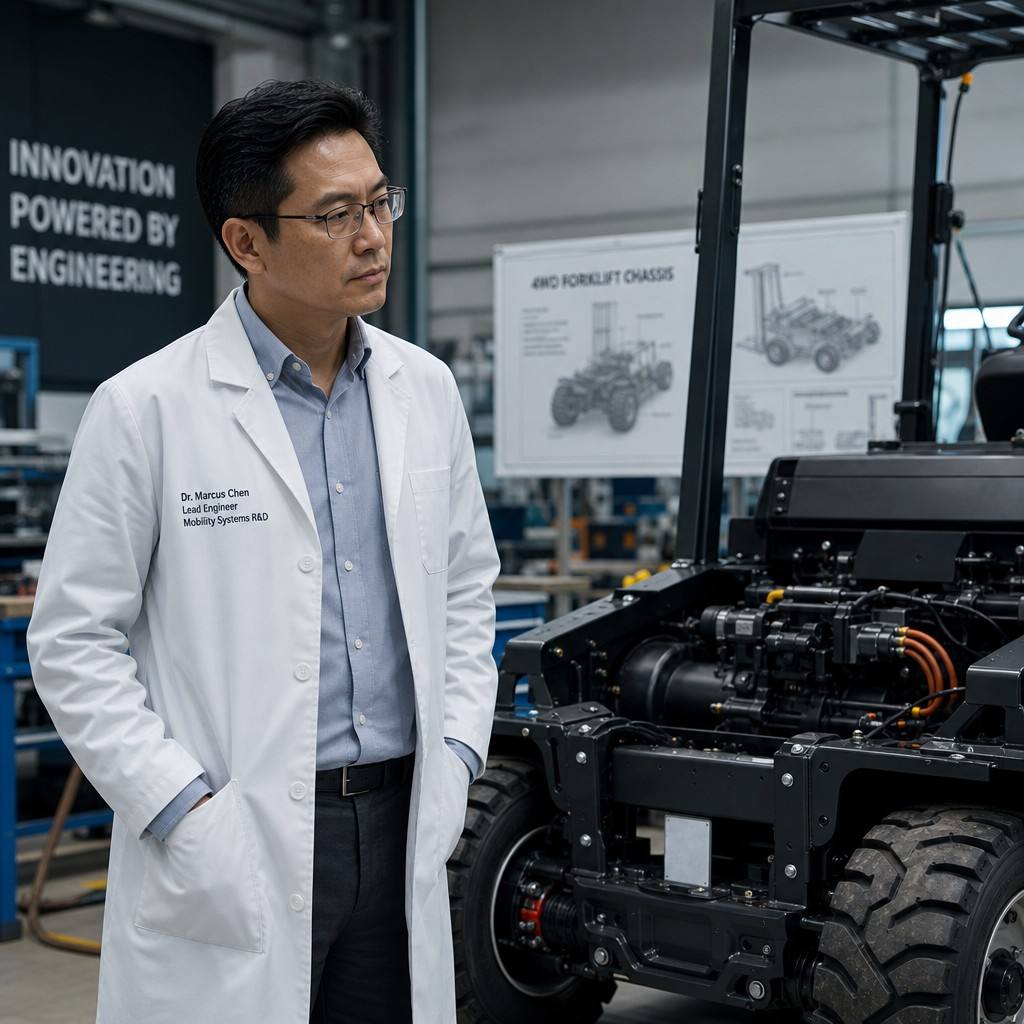
By Dr. Marcus Chen, Senior Technology Innovation Director at LT FORKLIFT
Introduction: The Invisible Backbone of Global Trade
In the complex, fast-moving world of global logistics, the forklift is often seen as a simple mechanical tool—a “beast of burden” designed to move pallets from point A to point B. However, in my 15 years as a Senior Technology Innovation Director at LT FORKLIFT, I have come to see the forklift differently. To an engineer, a forklift is a high-precision node in a global network, a sophisticated intersection of structural physics, thermodynamics, and energy management. Forklift engineering reliability depends on how power, materials, stability, safety, and maintenance are designed to work together in the actual operating environment.
Today, we stand at a crossroads. The transition from internal combustion (IC) to electrification, the demand for higher safety standards, and the need for equipment that can survive the most brutal environments on earth are forcing a radical evolution in forklift engineering reliability. This guide is a deep dive into that evolution—how we build the machines that build the world.
I. The Mechanics of Power: Engineering the Rough Terrain Advantage
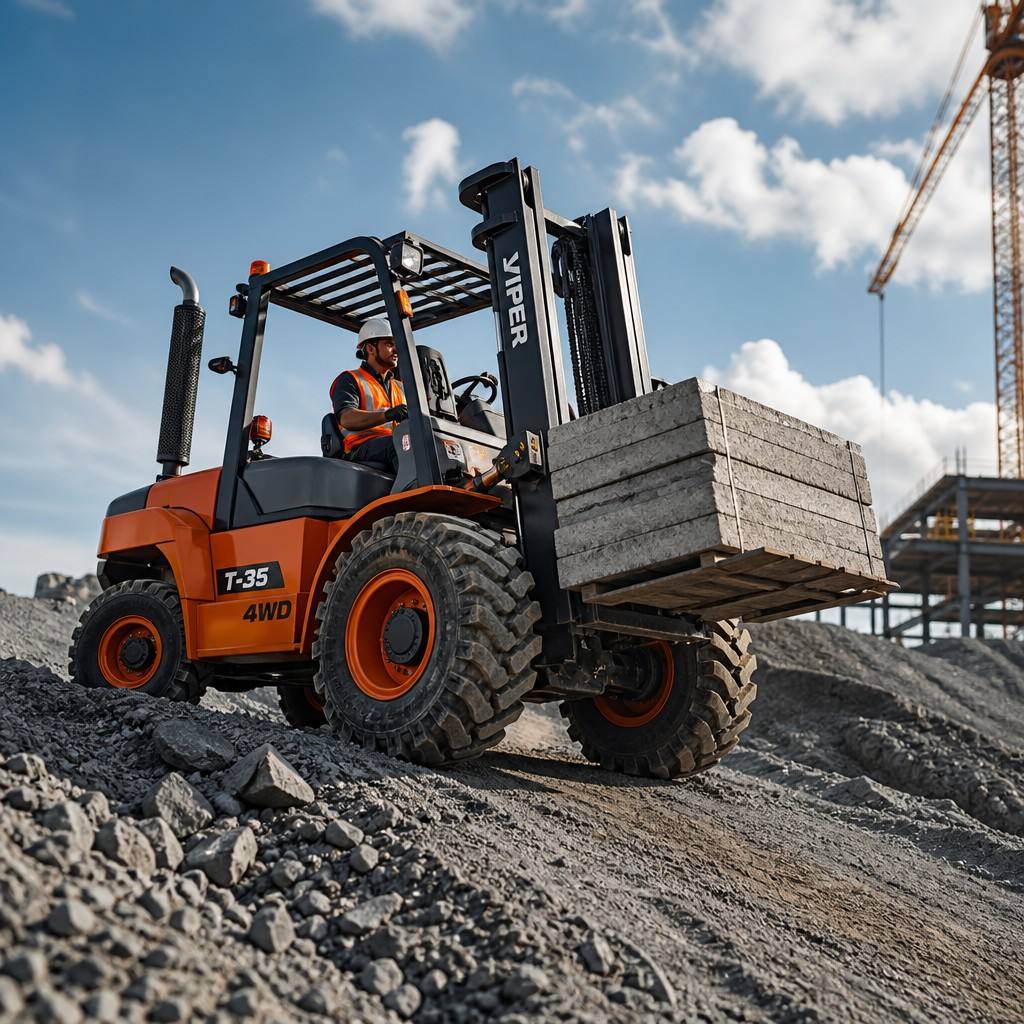
The true measure of an engineer’s skill isn’t found in a clean, level warehouse. It is found in the mud, the gravel, and the steep inclines of remote construction sites. This is the realm of the Rough Terrain Forklifts, where rough-terrain engineering must balance traction, stability, and durability on every job site.
1. The Physics of All-Terrain Traction
When designing our flagship T-series, we started with the problem of “Torque Vectoring.” In a standard forklift, power is often wasted on the wheel with the least resistance. On a 30-degree gravel incline, that leads to failure. We engineered a Full-time 4WD system with Intelligent Differential Locks. This ensures that even if one wheel is suspended in the air or buried in mud, 100% of the available torque is diverted to the wheels with actual traction.
2. Ground Clearance and Stability
Most industrial forklifts have a ground clearance of barely 150mm. Our T-series targets a minimum of 280mm to 450mm. This requires a complete re-thinking of the “Center of Gravity” (CoG). By lowering the engine mount and optimizing the counterweight distribution, we’ve achieved a stability index that meets the highest ISO forklift safety standards.
II. Materials Science: The Metallurgy of Durability
Why do some forklifts last five years while others last fifteen? The answer lies in the atomic level of the steel.
1. High-Strength Low-Alloy (HSLA) Steel
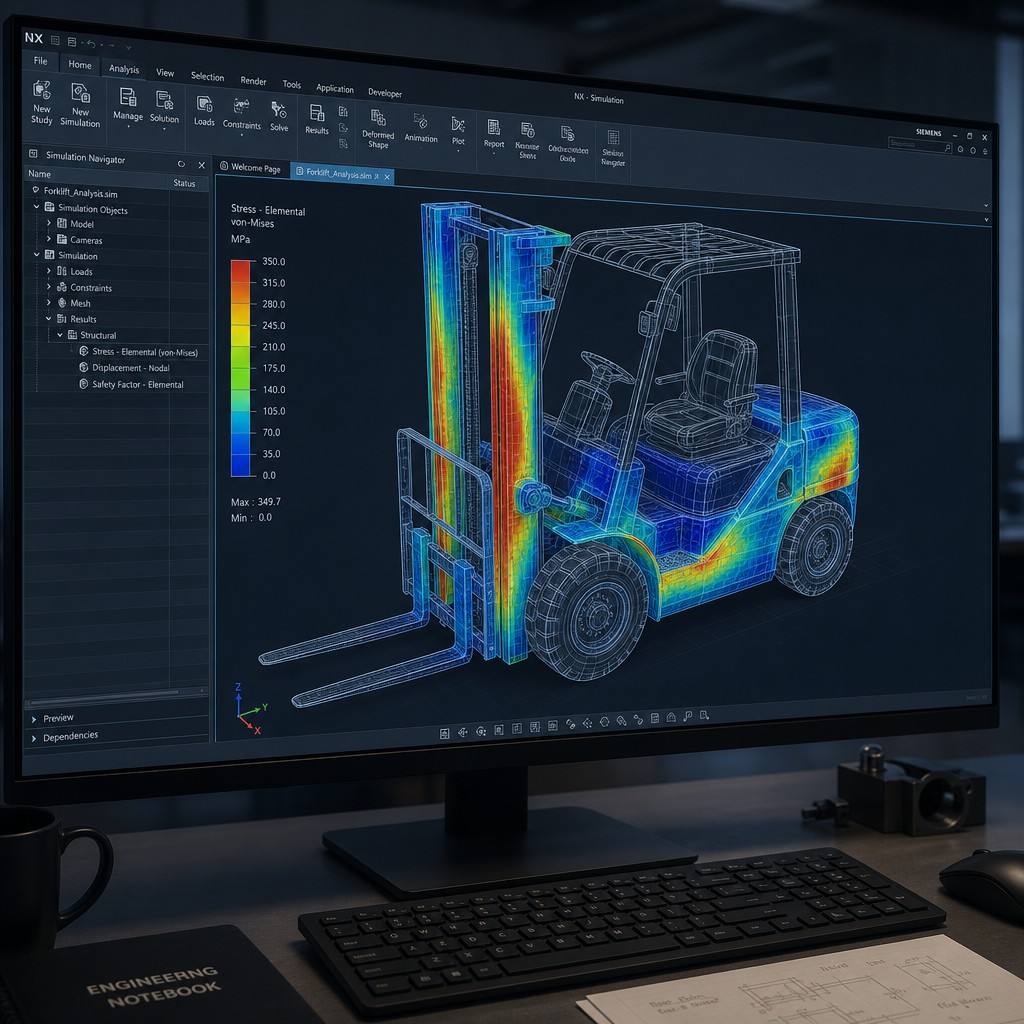
In our R&D lab, we moved away from standard carbon steel for the critical “Stress Nodes” of the mast and chassis. We now use HSLA Steel. This material provides a 30% higher strength-to-weight ratio. What does this mean for the end-user? It means the machine is lighter (saving fuel) but can handle 20% more dynamic loading without the risk of metal fatigue.
2. Precision Welding and Ultrasonic Testing
Every joint in an LT FORKLIFT frame is welded using automated robotic arms to ensure consistent penetration. We then subject 100% of our load-bearing welds to Ultrasonic Testing. We look for microscopic air bubbles and inclusions that the human eye cannot see. Reliability is the absence of hidden flaws.
III. The Li-ion Revolution: A New Energy Paradigm
Electrification is the single biggest shift in our industry’s history. But at LT FORKLIFT, we don’t just put batteries in a box; we build an Electric Powertrain Ecosystem.
1. Beyond the Battery: The Liquid-Cooled BMS
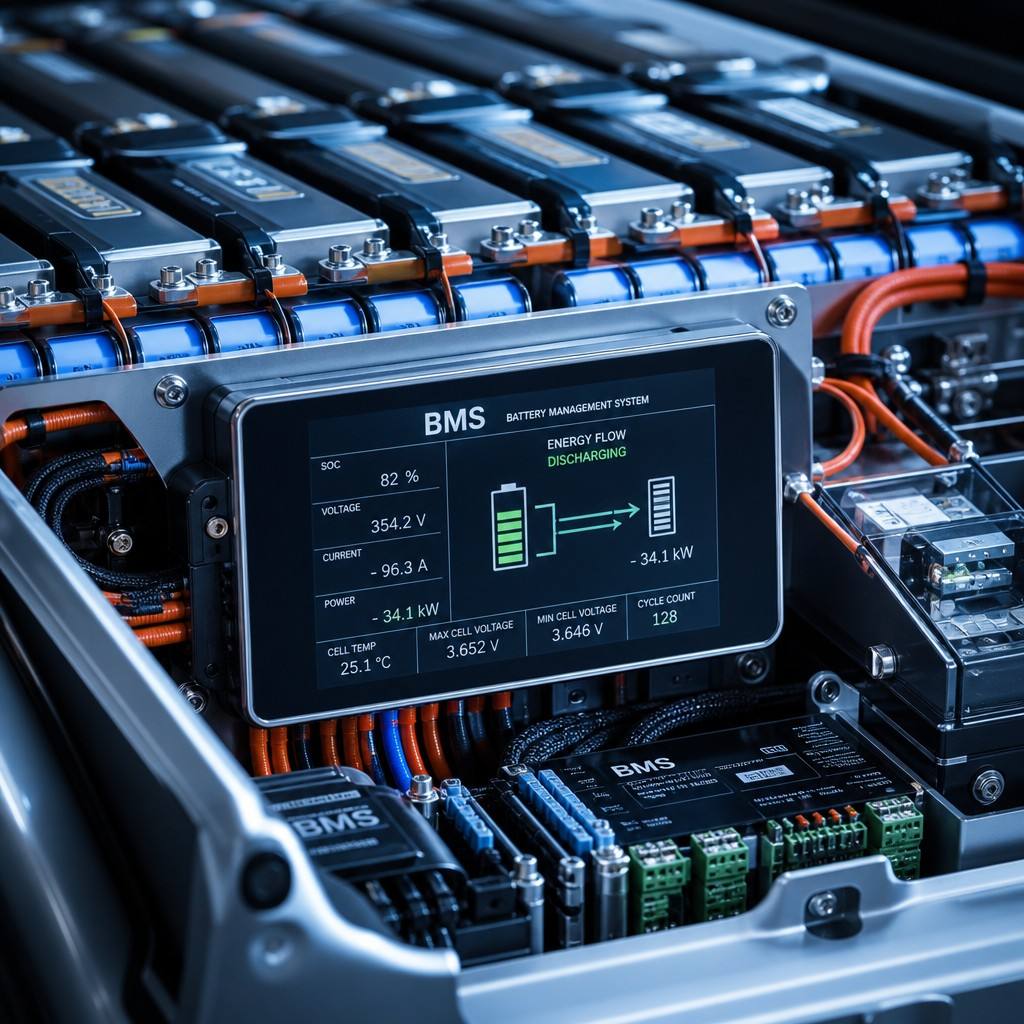
The enemy of any battery is heat. In high-intensity warehouse operations, a standard air-cooled battery will degrade rapidly. Our K2-series features a Liquid-Cooled Battery Management System (BMS). This technology, often reserved for high-end electric vehicles, keeps the lithium-ion cells at an optimal 30°C. According to research from the U.S. Department of Energy, maintaining these temperatures can extend the battery’s cycle life by up to 50%.
2. Opportunity Charging and Uptime
The old “Lead-Acid” model required 8 hours of charging and 8 hours of cooling. In a 24/7 logistics hub, that is unacceptable. Our lithium-ion forklift systems allow for Opportunity Charging—a 15-minute charge during a coffee break can provide up to 2 hours of operational time. We have effectively engineered “Range Anxiety” out of the warehouse.
IV. The Financial Engineering of TCO (Total Cost of Ownership)
As an Innovation Director, I am often asked: “Why does advanced engineering cost more upfront?” My answer is always the same: “Because it costs significantly less over the next five years.”
1. Mean Time Between Failures (MTBF)
We track the MTBF for every hydraulic pump and control valve. By sourcing German-engineered valves and Japanese-made seals, we have successfully extended the standard service interval from 250 hours to 500 hours. This simple engineering decision cuts your maintenance downtime in half while making preventive maintenance easier to schedule.
2. Energy Efficiency Ratios
Diesel engines are powerful, but they are inefficient. Only about 30% of the fuel’s energy is converted into movement. Our Li-ion K2 series operates at over 90% energy efficiency. When you calculate the fuel savings over 10,000 hours of operation, the “expensive” electric forklift often pays for itself within the first 24 months.
V. Engineering for the Extremes: Global Customization
A forklift in a refrigerated warehouse in Norway faces different challenges than a forklift in a copper mine in the Atacama Desert. Our Customization Division solves these geographic puzzles.
1. High-Altitude Calibration
At 4,000 meters in the Andes, the air is thin. Standard internal combustion engines lose power and overheat. We developed a High-Altitude Compensation System that recalibrates the turbocharger boost pressure in real-time. We ensure that our clients in the mining sector maintain 100% of their lifting capacity, regardless of the elevation.
2. Thermal Management in Desert Heat
In environments where ambient temperatures exceed 50°C, cooling becomes the primary engineering challenge. We use oversized radiators and high-flow hydraulic coolers. We don’t just guess; we use Computational Fluid Dynamics (CFD) to simulate airflow through the engine bay before a single piece of steel is cut.
VI. Safety and Human-Centric Design
A machine is only as effective as the person operating it. If an operator is fatigued, productivity drops and operator safety risks rise. This is why we adhere to the strictest OSHA safety guidelines.
1. Ergonomics as an Efficiency Metric
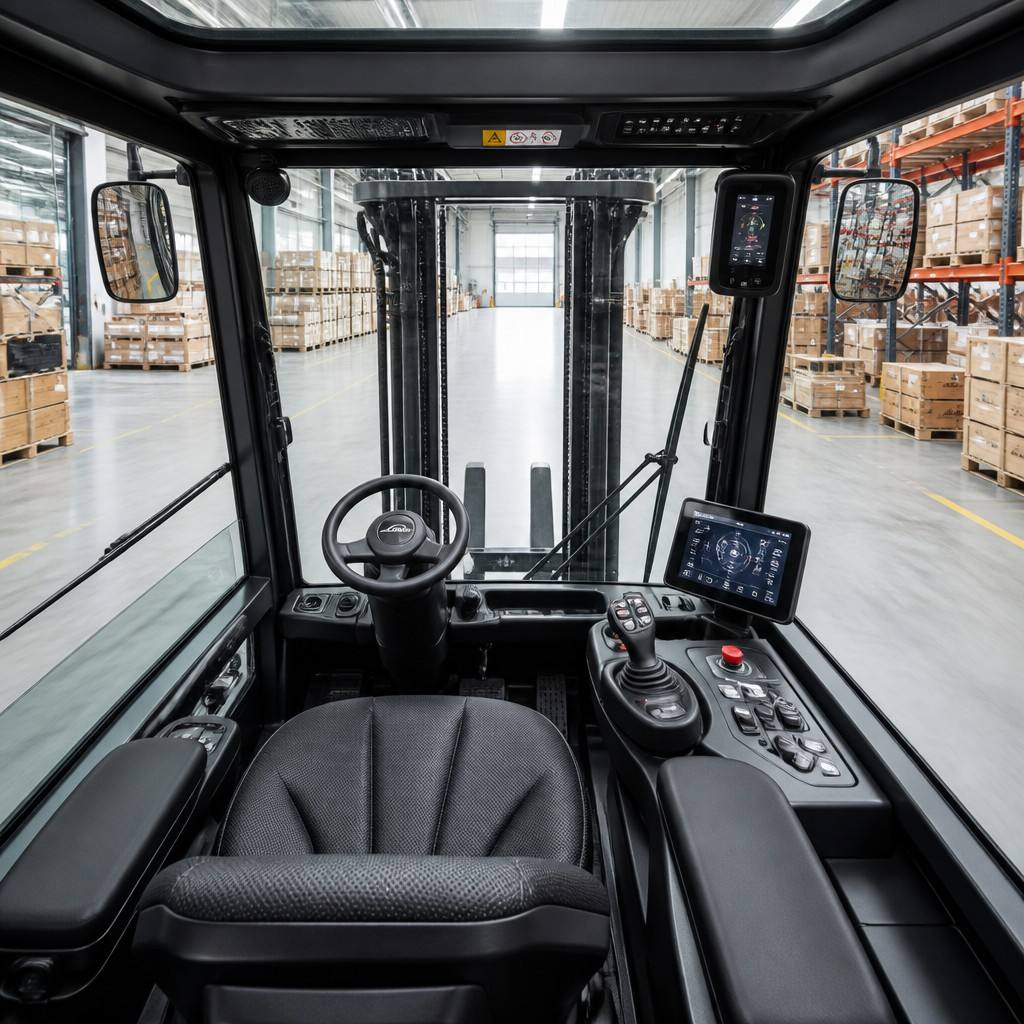
We spent two years redesigning our cabin. We moved the levers to a fingertip-control panel and installed air-suspension seats that neutralize vibration. Why? Because a comfortable operator is an alert operator. Our data shows that improving cabin ergonomics can reduce operator-related errors by up to 15%.
2. Smart Safety Systems
While we are not yet at the stage of fully autonomous AI, we have integrated Active Safety Assistance. Our sensors monitor the “Load Moment Indicator” in real-time. If an operator attempts a lift that exceeds the safety envelope, the system automatically slows the hydraulic speed and provides an audible warning. We build the “Safe Boundary” into the machine’s DNA.
VII. The Future of Forklift Engineering Reliability: Connectivity and the Intelligent Fleet
The future of forklift engineering reliability is digital. We are currently integrating IoT (Internet of Things) telematics into every new model. This allows fleet managers to track everything from fuel consumption to shock impacts from their smartphones.
Imagine a machine that tells you it needs a new hydraulic filter before it fails. That is the future we are building at LT FORKLIFT.
Conclusion: A Commitment to the Core
Engineering is not about the pursuit of the “newest” thing; it is about the pursuit of the “best” thing. Whether we are refining the torque curve of a diesel engine or optimizing the cooling fins of a Li-ion battery, our goal in forklift design remains the same: to build a machine that you can trust when the world is watching.
Reliability is not an accident. It is an engineering choice, and forklift engineering reliability is the benchmark we hold every machine to.
Want to dive deeper into our engineering white papers? Contact us today and let’s discuss how we can engineer the perfect solution for your specific operational challenges.